
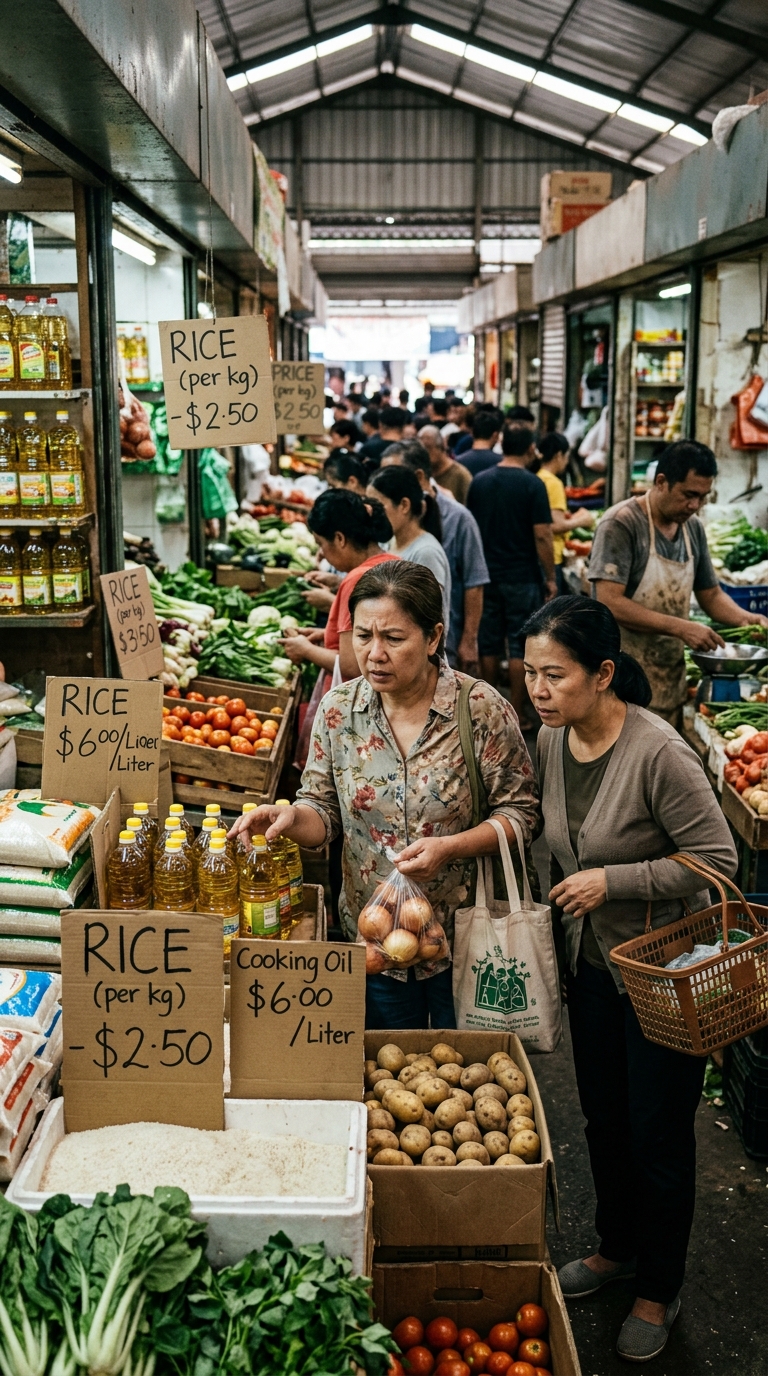
Even when global commodity markets stabilize, families still feel the pressure of expensive meals, fragile harvests and uncertain supply chains.
Food prices remain one of the most sensitive measures of economic stress.
The Food and Agriculture Organization tracks international prices for major food commodities through its Food Price Index, while also monitoring cereal supply and demand. Those global indicators matter because they influence import bills, government budgets and household spending, especially in countries dependent on food imports.
But the price of food is not determined only by global markets. Local currency movements, fuel costs, conflict, drought, floods, tariffs, transport disruptions and retail margins all shape what families pay. A stable global wheat price does not guarantee affordable bread in a country with a weak currency or damaged roads.
For low-income households, food inflation is immediate and personal. Families reduce protein, skip fresh produce, buy smaller quantities or rely on cheaper staples. Children may eat less diverse diets. Older people may cut meals to protect younger relatives. Nutrition declines before hunger becomes visible.
Governments face difficult choices. Subsidies can protect consumers but strain budgets. Export bans may lower domestic prices temporarily but disrupt global supply. Strategic grain reserves can help, but only if managed transparently. Cash transfers can support families more directly, but require administrative capacity.
Climate volatility has made planning harder. Heat, floods and shifting rainfall patterns affect harvests. Farmers face higher input costs for fertilizer, fuel and seeds. Livestock producers respond to feed prices. Food systems are connected, so pressure in one area can spread quickly.
Conflict remains one of the most destructive forces in food security. It prevents planting, blocks transport, damages markets and displaces farmers. Humanitarian agencies can deliver emergency food, but they cannot replace functioning agriculture and trade.
Urban families feel food insecurity differently from rural ones. They may have less ability to produce their own food and depend on wages that do not keep pace with prices. In cities, food stress often appears in crowded markets, debt and reduced diet quality.
The politics are volatile because food is daily evidence of whether governments are protecting living standards. Rising prices can trigger protests, undermine trust and shape elections. Leaders know that the cost of bread, rice or cooking oil can carry more political force than abstract economic growth.
The long-term solution is not only producing more food. It is building resilient systems: better storage, climate-smart farming, fair trade, social protection, rural infrastructure and reduced waste.
Food security begins in fields and ports, but it ends at the family table. That is why food prices remain more than an economic indicator. They are a test of social stability.
“””
