
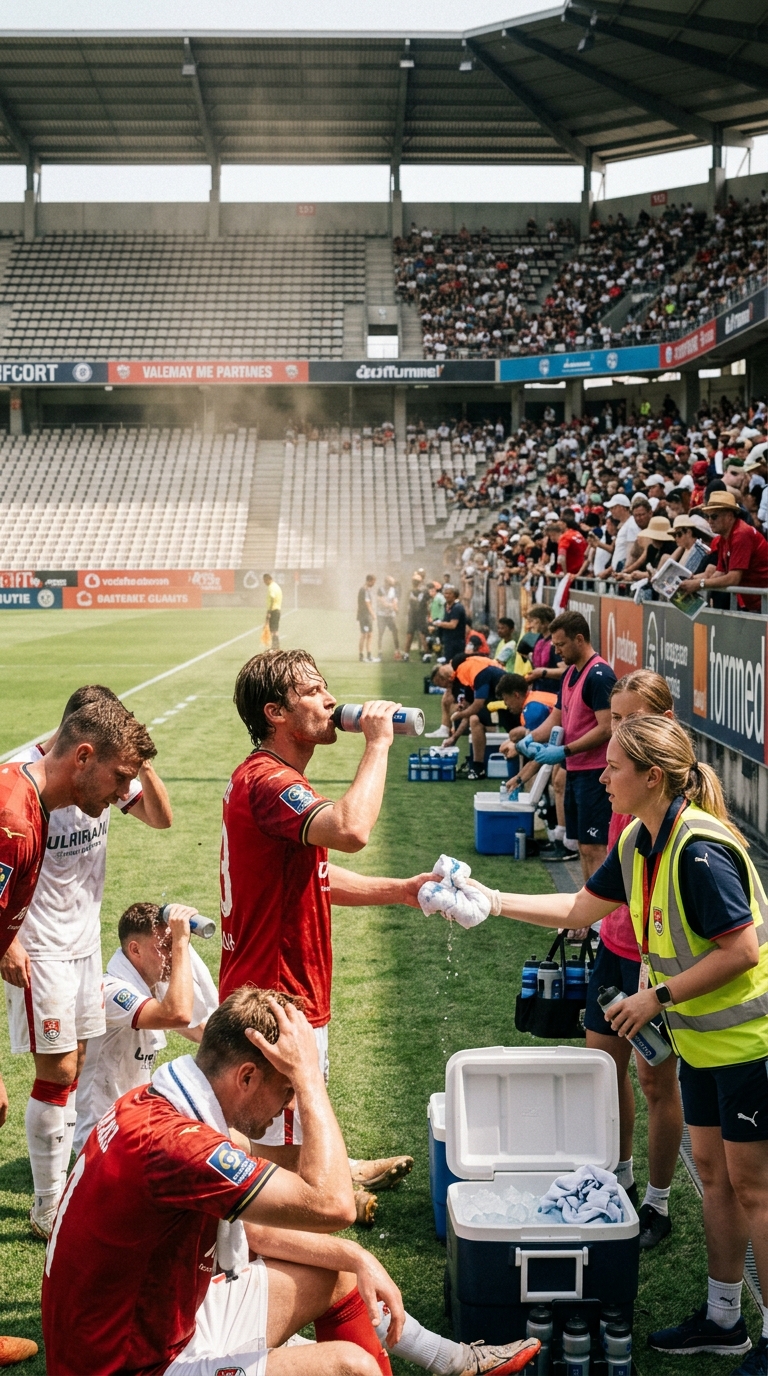
As temperatures rise, leagues and event organizers are learning that athlete safety, fan experience and sporting fairness now depend on climate adaptation.
Sport has always been shaped by weather. Rain changes football. Wind changes cycling. Snow defines skiing. But extreme heat is different because it threatens the body’s ability to function.
As global temperatures rise, heat management is becoming a central issue for event organizers. The WHO-backed “Beat the Heat” initiative, developed with FIFA, focuses on protecting workers, spectators and communities from heat, air pollution and ultraviolet exposure at major events.
For athletes, heat is not simply uncomfortable. It can reduce performance, increase fatigue and raise the risk of heat illness. In endurance sports, tennis, football and outdoor competitions, scheduling decisions can influence both safety and results.
Fans are also exposed. Large crowds waiting outside stadiums, walking long distances, drinking alcohol or lacking shade can face serious health risks. A modern sports event must plan for water, cooling zones, medical response, shaded queues and emergency communication.
Climate adaptation also affects fairness. If one match is played in extreme afternoon heat and another under cooler evening conditions, the competitive environment is not equal. Organizers increasingly face pressure to schedule with physiology in mind, not only television windows.
Winter sports face the opposite side of the same crisis. Warmer conditions can soften snow, shorten seasons and limit suitable host locations. The future of some events may depend on earlier schedules, permanent venues or expensive snow management.
The sports industry has symbolic power. Stadiums, clubs and athletes can make climate risks visible to audiences who may ignore policy reports. But symbolism is not enough. Sport must also reduce its own footprint through travel planning, energy use and venue design.
Extreme heat is forcing sport to acknowledge that the playing field is no longer separate from the planet around it.
The future champion may still be the strongest athlete. But increasingly, the safest and fairest competition will depend on whether organizers understand the climate they are asking athletes to compete in.
“””
