A new Nature Climate Change study links the region’s sharp ice decline to ocean heat and atmospheric circulation, warning that weakened sea ice could reinforce climate feedbacks far beyond Antarctica.
For decades, Antarctic sea ice seemed to resist the warming trend that was transforming the Arctic. While northern sea ice shrank dramatically, the floating ice around Antarctica expanded in some years and confounded climate models. That apparent stability is now giving way to a more troubling picture: a rapid decline in Antarctic sea ice that scientists say may be tied to deeper ocean heat, stronger wind-driven mixing and a possible shift in the way the Southern Ocean interacts with the atmosphere.
A study published in Nature Climate Change has added new evidence to one of the most urgent questions in polar science: why did Antarctic sea ice fall so abruptly after 2015, and what could that mean for the global climate system? The research argues that the decline was not simply a temporary weather anomaly. Instead, it points to a combination of long-developing ocean conditions and atmospheric forces that helped expose the underside of the sea ice to warmer water from below.
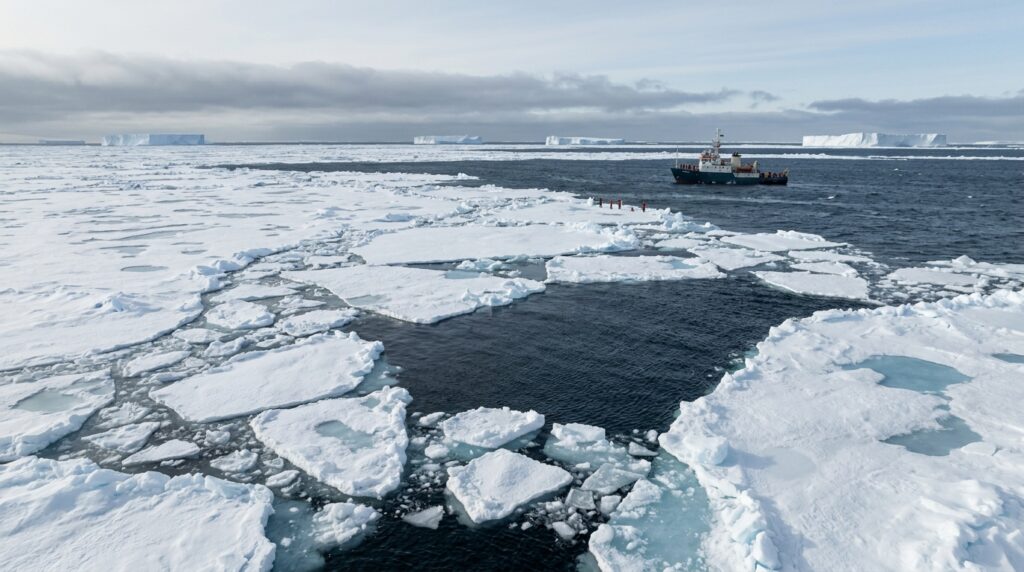
The study focuses on the period between 2015 and 2017, when Antarctic sea ice moved from unusually high levels to record lows. The change was dramatic because it occurred in a region where year-to-year variability had long complicated efforts to detect a clear climate signal. The authors found that a layer of cold water known as Antarctic Winter Water had thinned in the decade before the collapse, reducing its ability to act as a barrier between sea ice and warmer, saltier deep water.
That barrier matters. In the Southern Ocean, warmer Circumpolar Deep Water lies below colder surface layers. When the ocean is strongly stratified, the warm water is partly insulated from the sea ice above. But when stratification weakens, wind and turbulence can mix the ocean more easily, allowing heat from below to move upward. The study suggests that by 2015, the system had already become more vulnerable. Strong winds then helped trigger mixing that brought deeper heat closer to the surface and contributed to sea ice loss.
The findings do not mean a single storm or one season caused the decline. They describe a sequence in which the ocean was prepared over years and then pushed by atmospheric circulation into a new configuration. The researchers used a large collection of hydrographic observations from the Southern Ocean, along with atmospheric reanalysis, to reconstruct changes in temperature, salinity and vertical mixing. Their conclusion is that the ocean and atmosphere acted together.
This matters because Antarctic sea ice is not just a regional feature. It is part of Earth’s climate machinery. Sea ice reflects sunlight, insulates the ocean from the atmosphere, influences storm tracks, shapes ocean circulation and supports ecosystems that depend on the timing and extent of seasonal ice. When sea ice retreats, darker ocean water absorbs more solar energy. That can amplify warming through a feedback known as the ice-albedo effect.
The Antarctic case is especially important because the Southern Ocean absorbs a large share of the excess heat and carbon dioxide generated by human activity. Changes in sea ice can affect how heat, carbon and freshwater move through the ocean. Less ice can allow greater exchange between ocean and atmosphere in some seasons, while changes in salinity and mixing can influence the circulation patterns that help regulate climate across the planet.
Scientists have long warned that polar feedbacks can magnify global warming. The Arctic has already demonstrated how shrinking ice cover can accelerate regional warming. Antarctica is different, more complex and more difficult to observe, but the principle is similar: when reflective ice gives way to darker water, the planet’s energy balance changes. The concern is that a sustained reduction in Antarctic sea ice could remove a cooling influence that had helped offset some warming effects in the Southern Hemisphere.
Recent observations have made that concern more urgent. Antarctic sea ice reached a record-low minimum in 2023, followed by more extremely low years. The winter maximum in 2023 was also the lowest in the satellite record by a wide margin, leaving scientists searching for explanations. The new study helps explain an earlier turning point, but it also supports the broader view that the system may now be behaving differently from the late 20th-century pattern.
Researchers remain careful about the language of a “regime shift.” The study says more work is needed to determine whether the Southern Ocean and Antarctic sea ice have truly entered a long-term new state. That caution is important. Antarctic sea ice is influenced by winds, storms, ocean currents, freshwater from melting ice shelves, tropical climate patterns and natural variability. No single mechanism explains every year or every region.
Even so, the evidence points toward a growing role for ocean heat. The study describes how warmer deep water moved closer to the surface as Winter Water thinned. Once strong winds mixed the upper ocean, that heat could more easily reach the sea ice. The result was not just melting, but a weakening of the structure that had helped maintain ice growth. If that weakened barrier persists, the system may be more prone to future losses.
The feedback risks are not limited to temperature. Sea ice helps regulate where and when the ocean releases heat to the atmosphere. Reduced ice cover can increase heat loss from the ocean during winter, potentially affecting storm activity and atmospheric circulation. It can also alter the formation of water masses that sink and spread through the global ocean, helping drive large-scale circulation. Those processes connect Antarctica to climate far beyond the polar region.
The ecological consequences are also significant. Sea ice is habitat. It supports algae that grow in and beneath the ice, feeding krill that form the foundation of the Antarctic food web. Krill, in turn, support penguins, seals, whales and fish. A shift in the timing or extent of sea ice can disrupt breeding and feeding patterns across the region. Emperor penguins are especially vulnerable because many colonies rely on stable sea ice during the breeding season.
The new research arrives as governments are under pressure to improve climate projections. Many climate models have struggled to reproduce the timing and magnitude of recent Antarctic sea ice changes. That gap matters because policy decisions depend on credible projections of sea-level rise, ocean circulation, storm behavior and warming rates. If models do not capture the processes that allow subsurface heat to reach sea ice, they may underestimate future change.
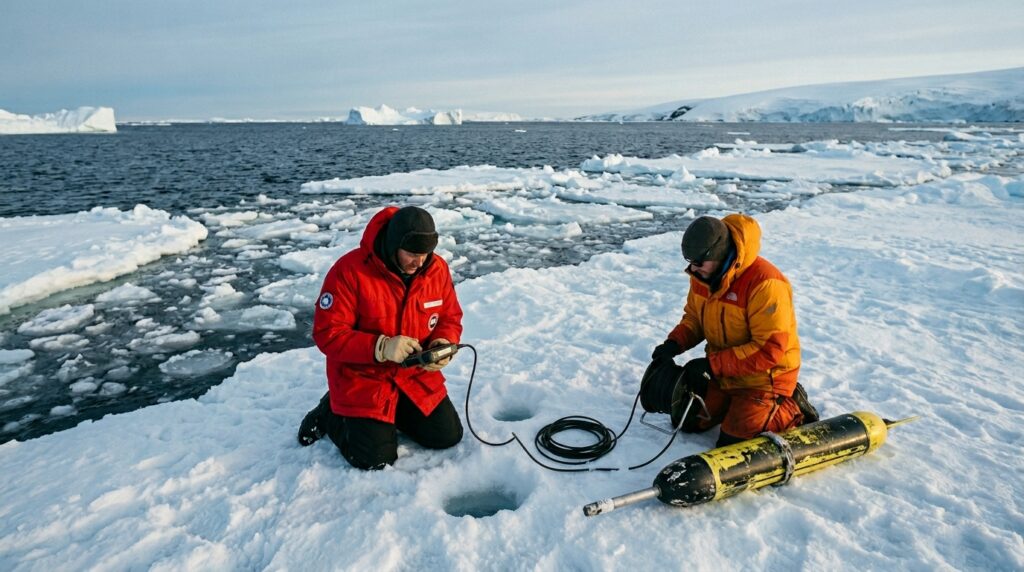
One of the study’s broader messages is the need for sustained observations in one of the world’s harshest environments. The Southern Ocean is remote, stormy and seasonally covered by ice, making direct measurements difficult. Scientists increasingly rely on robotic floats, ships, satellites, ocean gliders and even sensors carried by marine mammals to collect data beneath the surface. Those observations are essential because the most consequential changes may begin below the ice, out of sight.
The findings also reinforce the global stakes of emissions cuts. Antarctic sea ice is shaped by natural variability, but the background climate is warming because of greenhouse gas emissions. A warmer world increases the likelihood that ocean heat will erode stabilizing barriers and make extreme ice loss more frequent. Reducing emissions will not restore Antarctic sea ice immediately, but it can limit the forces pushing the system toward more dangerous feedbacks.
The warning from the Southern Ocean is therefore both scientific and political. It shows that climate risks can emerge in systems once thought to be more stable than expected. It also shows that the consequences of polar change are not confined to the poles. What happens around Antarctica can affect the amount of heat the planet absorbs, the way oceans circulate, the behavior of storms and the future of ecosystems that evolved around ice.
The study does not declare that runaway warming is inevitable. It does something more precise and, in some ways, more sobering. It identifies a mechanism by which Antarctic sea ice loss can become self-reinforcing: a thinner cold-water barrier, stronger mixing, upward heat transport and reduced ice growth. In a climate system already under stress, such feedbacks can matter.
For the rest of the world, the message is clear. Antarctic sea ice is not a distant fringe of the climate system. It is a moving boundary between ocean, atmosphere and sunlight. As that boundary weakens, the planet may lose one more buffer against faster warming.”””