Smartwatches, rings, sleep trackers, glucose sensors and AI health devices are turning the body into a dashboard, but the next test is whether consumers can trust what they see.
The first generation of wearables counted steps. The next generation wants to count almost everything else: sleep quality, heart rhythm, blood oxygen, stress, recovery, menstrual cycles, glucose trends, skin temperature, vascular age, biological age and the body’s readiness for another demanding day.
What began as a fitness accessory has become one of the most important battlegrounds in consumer health technology. Watches, rings, patches, smart scales and home sensors are no longer marketed only to runners and gym users. They are aimed at office workers, parents, older adults, people managing chronic conditions and a growing class of consumers who want to understand their bodies before something goes wrong.
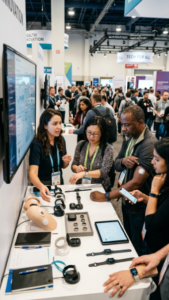
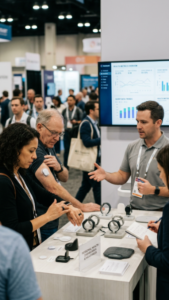
That ambition was visible at CES 2026, where artificial intelligence, robotics, longevity technology and wearable health devices stood out across the show floor. VML’s review of the event described a technology market increasingly focused on AI, humanoids, health spans and wearable tools that bring computing closer to the body. The message was clear: the future of consumer electronics is not only in screens. It is on the wrist, finger, skin and bedside table.
The shift reflects a broader cultural change. Health is no longer treated only as a matter of doctor visits and annual checkups. It has become a daily data stream. A watch can warn about an irregular heart rhythm. A ring can show that poor sleep is reducing recovery. A continuous glucose monitor can reveal how a meal affects blood sugar. A smart scale can estimate body composition and vascular metrics. A wearable app can translate scattered signals into a simple score that tells a user whether to train, rest, hydrate or sleep earlier.
For consumers, the attraction is control. Modern life produces uncertainty: stress, poor sleep, long work hours, processed food, sedentary routines and rising anxiety about aging. Wearables offer a sense that the body can be read, managed and improved. A person who once guessed whether they slept well can now wake up to a sleep score. Someone who blamed afternoon fatigue on willpower can see a glucose spike, a restless night or a low recovery score.
The industry’s language has changed accordingly. Fitness remains important, but longevity is becoming the bigger story. Companies increasingly talk about health span, not just lifespan: the years people can remain active, mobile and independent. This framing moves wearables beyond performance tracking and into prevention, habit formation and early warning. It also makes the market much larger. Not everyone wants to run a marathon. Almost everyone wants to age better.
Smart rings have benefited from that shift. They are smaller and less intrusive than watches, with batteries that can last several days and sensors positioned for continuous tracking. For users who do not want another screen on the body, a ring can feel more natural. It can monitor sleep, temperature changes, heart rate variability and recovery while fading into ordinary clothing. At CES 2026, smart rings were presented as a serious product category rather than a novelty.
Smartwatches remain the most visible health wearable because they combine sensors, communication, emergency features and apps in a single device. Their strength is versatility. They can track workouts, detect falls, display medical alerts, support sleep features, show heart data and connect to health services. Their weakness is also obvious: the screen can turn health tracking into another form of notification overload. A device designed to reduce risk can also increase anxiety if every metric becomes a daily judgment.
Glucose monitoring shows both the promise and the danger of the wearable health boom. Continuous glucose monitors were originally medical devices for people with diabetes, using a sensor under the skin to provide real-time glucose readings. Over-the-counter versions have now expanded access to people with type 2 diabetes who do not use insulin and to wellness consumers interested in metabolic patterns. Used carefully, they can help people understand how food, exercise, stress and sleep affect glucose levels.
But glucose has also become a marketing frontier. The U.S. Food and Drug Administration has warned consumers not to use smartwatches or smart rings that claim to measure blood glucose without piercing the skin, saying such devices are not authorized and could produce inaccurate readings. That warning illustrates a central issue for the industry: not every health-looking number is medically reliable.
This distinction matters. Wearables can support health decisions, but they are not all medical devices. Some are wellness products. Some are regulated tools. Some display data from approved sensors. Some estimate patterns using algorithms. Consumers often see all of them through the same interface: a clean app, a colored chart, a confident score. The design can make uncertainty look more precise than it is.
Sleep tracking raises a similar question. Wearables can identify patterns of movement, heart rate, breathing and temperature. They can show trends over time and encourage better sleep habits. But they cannot always determine sleep stages with clinical certainty, and a poor sleep score can sometimes make users more anxious about sleep itself. The most useful sleep technology may be the kind that improves routines quietly rather than turning rest into a competition.
Stress and recovery metrics are even more complex. Many devices use heart rate variability, resting heart rate, skin temperature and activity patterns to infer strain. These signals can be helpful, especially when tracked over weeks and months. But stress is not only a biometric state. It is also emotional, social and economic. A wearable can show that the body is under strain. It cannot fully explain whether the cause is work pressure, caregiving, grief, debt or loneliness.
The next phase of wearable health technology will depend heavily on AI. The value of sensors is not only the data they collect, but the interpretation they provide. A person does not need 40 charts every morning. They need to know what changed, why it may matter and what action is reasonable. AI assistants could connect sleep, exercise, glucose, nutrition, heart rate and calendar stress into more useful guidance. The risk is that advice becomes too confident, too generic or too commercial.
Privacy will become a defining issue. Wearables collect some of the most intimate data a person can generate: heart rhythms, sleep patterns, fertility signals, stress levels, movement, location, disease risk and behavioral habits. That data may be valuable to users, but it is also valuable to insurers, advertisers, employers, app developers and data brokers. The more health technology moves into everyday life, the more consumers will ask who owns the information and how it can be used.
Doctors are watching with mixed feelings. Wearables can help patients notice problems earlier, manage chronic conditions and bring more context to medical appointments. They can also flood clinics with data that is difficult to interpret. A cardiologist may welcome a clear arrhythmia alert. A primary care doctor may struggle with a patient’s months of sleep, stress and recovery charts. The health system is not yet designed to absorb every consumer metric.
The winners in this market will not necessarily be the companies with the most sensors. They will be the companies that earn trust. That means clear labeling, realistic claims, strong privacy protections, clinical validation where needed and honest explanations of what a device can and cannot do. In health technology, confidence without evidence is not innovation. It is risk.
For consumers, the smartest approach is neither blind enthusiasm nor rejection. Wearables can be useful when they reveal patterns and support better habits. They become harmful when every number is treated as a diagnosis or every score becomes a measure of personal worth. The body is not a stock chart. A lower recovery score is information, not failure.
The wearable health boom is powerful because it speaks to a real need. People want earlier warnings, more personal insight and tools that help them live longer with more energy and independence. The technology is improving quickly, and some of it will become part of routine health care. But the future of health cannot be reduced to a dashboard.
A watch, ring or sensor can tell part of the story. The rest still belongs to sleep, food, movement, relationships, medical care, environment and the complicated human experience of living inside a body. Wearables are learning to listen. The harder question is whether the industry will learn to speak carefully.