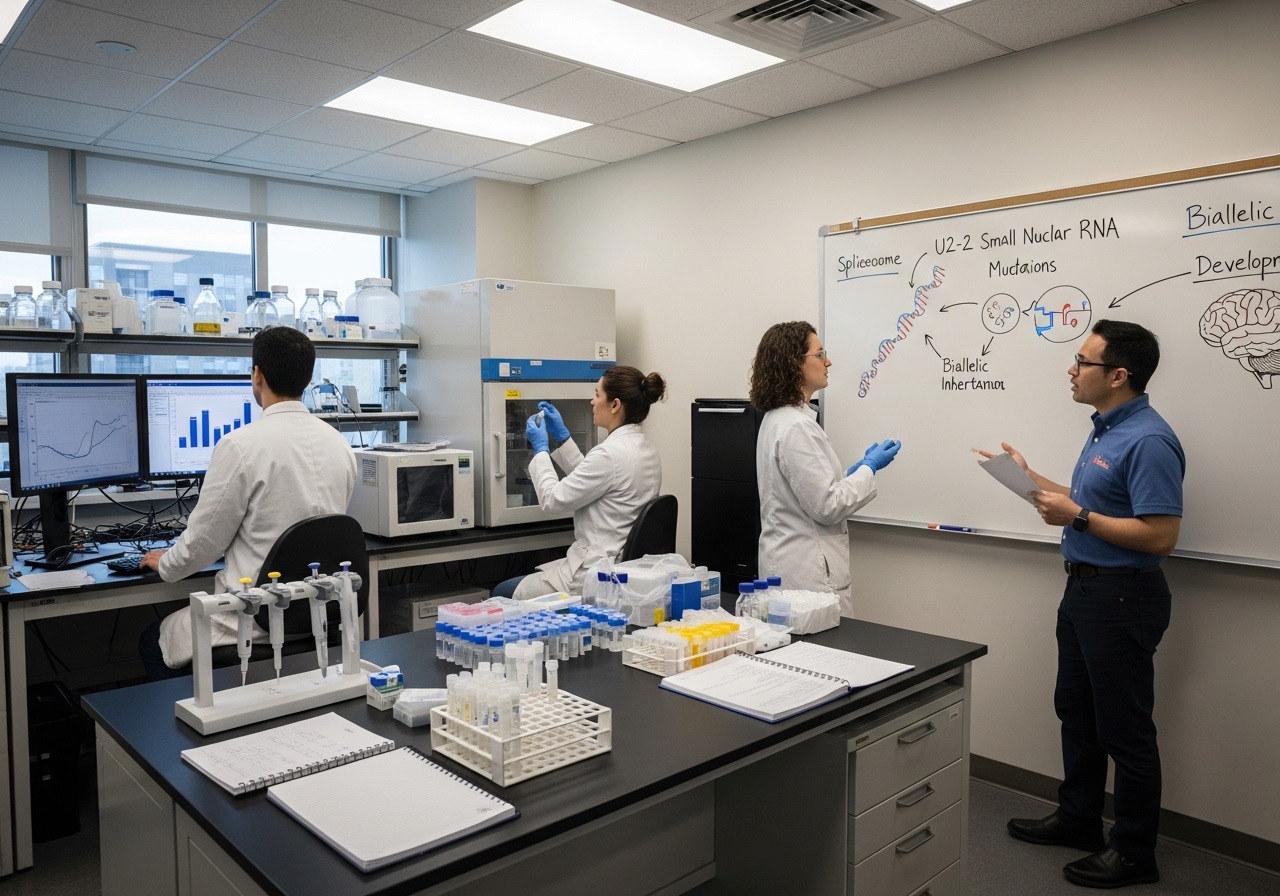
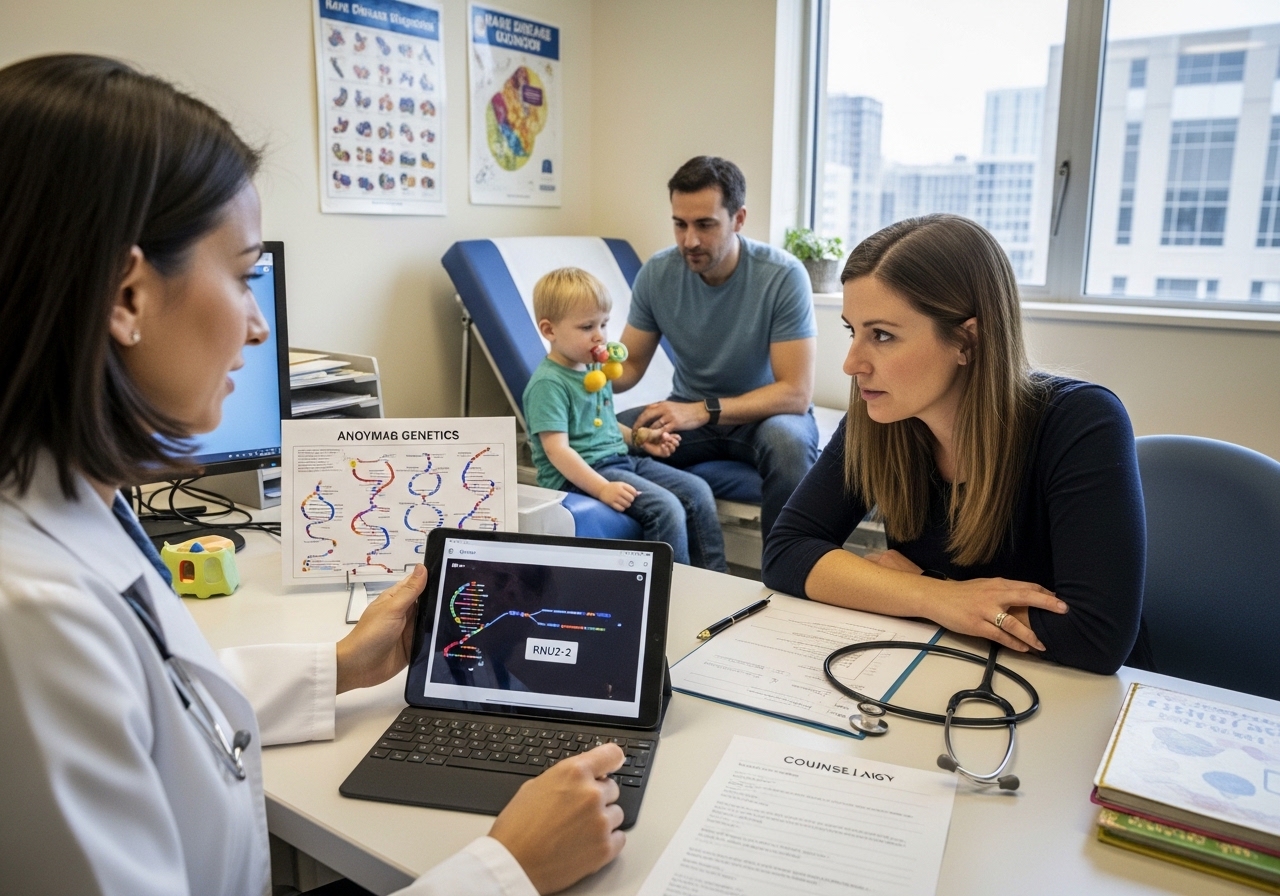
The discovery of recessive ReNU2 syndrome highlights how overlooked noncoding genes are beginning to explain long-unsolved childhood developmental disorders.
NEW YORK, May 6 — Researchers have identified a previously unrecognized recessive neurodevelopmental disorder caused by mutations in RNU2-2, a small noncoding gene that had long been difficult to interpret in routine genetic testing, in a finding that could reshape diagnosis for thousands of children and families living with unexplained developmental conditions.
The study, published in Nature Genetics and highlighted by SciTechDaily, suggests the disorder may be the most prevalent known recessive neurodevelopmental disorder discovered so far. Scientists at the Icahn School of Medicine at Mount Sinai, working with collaborators in the United States, Britain, Italy, the Netherlands and other centers, estimate that the condition may affect thousands of people in the United States and account for about 10% of recessive neurodevelopmental disorder cases with a known genetic cause.
The condition is now commonly referred to as recessive ReNU2 syndrome. It is caused by biallelic variants in RNU2-2, meaning affected children typically carry disease-related changes in both copies of the gene. In many cases, each parent carries one altered copy and is unaffected, while the child inherits both variants. That inheritance pattern distinguishes the disorder from previously described dominant RNU2-2 and RNU4-2 syndromes, which often arise from new mutations rather than being inherited from both parents.
The discovery matters because neurodevelopmental disorders remain among the most challenging conditions in pediatric genetics. Children may present with developmental delay, intellectual disability, speech impairment, low muscle tone, seizures or other neurological features, yet standard testing often fails to identify a cause. For families, the absence of a diagnosis can mean years of uncertainty, repeated evaluations and limited access to condition-specific counseling or support.
RNU2-2 is not a conventional protein-coding gene. It produces U2-2 small nuclear RNA, a molecule involved in the spliceosome, the cellular machinery that edits RNA messages before they are used to make proteins. The spliceosome is essential to normal gene expression, and disruption of its components can have wide effects, particularly during brain development. Because RNU2-2 is small, noncoding and highly specialized, it was not always prioritized in earlier diagnostic pipelines focused mainly on protein-coding genes.
The new research shows why that approach can miss important disease causes. The team found that the recessive disorder is linked to a near-complete absence, or severe reduction, of U2-2 RNA. Without enough of this molecule, the researchers believe normal RNA splicing can be disturbed in ways that impair neurodevelopment. That mechanism is different from some dominant RNU2-2 mutations, which may disrupt specific molecular interactions rather than simply reducing U2-2 RNA levels.
The study drew on large-scale genome datasets, including the UK’s 100,000 Genomes Project and Genomic Medicine Service, as well as rare disease and undiagnosed disease cohorts in the United States, Italy and the Netherlands. Researchers compared thousands of neurodevelopmental disorder cases with tens of thousands of controls, searching not only for variants in familiar protein-coding genes but also in noncoding genes that produce regulatory RNA molecules.
That broad strategy allowed them to identify multiple affected individuals with two rare RNU2-2 variants inherited in a recessive pattern. Some were homozygous, carrying the same variant on both copies of the gene. Others were compound heterozygous, carrying two different variants, one on each copy. The researchers also found evidence from RNA sequencing that certain variants destabilize U2-2 RNA, helping explain why the disorder can occur only when both copies of the gene are affected.
Clinically, the syndrome appears heterogeneous. Reported features include developmental delay, low muscle tone, limited speech and, in some patients, seizures or epileptic encephalopathy. The range of severity may reflect differences in how strongly specific variants reduce U2-2 RNA levels. Researchers noted that larger patient collections will be needed to define the full spectrum of symptoms and to improve predictions about severity based on a child’s exact genetic findings.
The term “most common” requires careful interpretation. The disorder is not common in the general population in the way asthma, diabetes or autism are common. It remains a rare genetic condition. What is striking is its frequency among known recessive neurodevelopmental disorders. In the datasets studied, recessive RNU2-2 syndrome accounted for a surprisingly large share of cases with biallelic genetic diagnoses, making it unusually prevalent for a newly discovered recessive NDD.
The finding also has immediate implications for genetic counseling. In recessive disorders, parents who each carry one pathogenic variant have a 25% chance in each pregnancy of having an affected child, assuming both variants are disease-causing and inherited in the expected pattern. A firm diagnosis can therefore inform recurrence-risk counseling, testing of siblings and relatives, and reproductive options such as preconception counseling or prenatal diagnosis.
For families already affected, diagnosis can bring more than a name. It can end a diagnostic odyssey, connect families with others facing the same disorder and allow clinicians to anticipate potential complications. It may also help researchers build natural history studies, which are essential for understanding how symptoms evolve and for designing future therapies. Patient groups and clinician resources around ReNU2 syndrome are already emerging as the field moves quickly from discovery to implementation.
The study also reinforces a broader shift in medical genetics: the noncoding genome is becoming clinically visible. For years, genetic diagnosis focused largely on exons, the protein-coding portions of genes. But many regulatory elements and RNA genes lie outside those regions. Whole-genome sequencing, improved statistical tools and larger international datasets are now making it possible to identify disease-causing changes in parts of the genome that were previously overlooked.
That shift may explain a portion of the many neurodevelopmental disorders that remain unsolved after exome sequencing. Whole-genome approaches can capture small RNA genes, structural changes, regulatory variants and other alterations that may not be detected by narrower tests. The RNU2-2 finding shows that even a gene only 191 base pairs long can have major clinical significance if it affects a central biological process.
Still, researchers caution that diagnosis will require careful interpretation. Not every RNU2-2 variant is harmful, and the same gene is associated with different inheritance patterns and disease mechanisms. Laboratories will need validated criteria for classifying variants, including whether they occur in trans, whether they reduce U2-2 RNA expression and whether the child’s clinical features match the emerging syndrome. Misclassification could create confusion for families and clinicians.
The discovery also raises the possibility of future targeted therapies, although such treatments remain speculative. Because the recessive form appears tied to loss or severe reduction of U2-2 RNA, researchers may eventually explore approaches that restore RNA function, stabilize the molecule or compensate for splicing defects. But translating a genetic discovery into treatment is a long process, especially for conditions affecting early brain development.
For now, the most immediate benefit is diagnostic. Children with unexplained developmental delay, especially those who have had inconclusive prior testing, may be candidates for reanalysis of whole-genome data or testing that includes noncoding RNA genes. As laboratories update their pipelines, more cases are likely to be recognized, refining estimates of prevalence and broadening the clinical picture.
The RNU2-2 discovery is also a reminder of how much remains hidden in the genome. A disorder can be relatively frequent among rare disease patients and still go unnoticed for years if the causal gene falls outside the regions scientists and diagnostic systems are trained to examine. In that sense, recessive ReNU2 syndrome is both a new diagnosis and a warning about blind spots in genomic medicine.
For families, the finding offers a clearer explanation for conditions that may have seemed inexplicable. For clinicians, it adds a gene that should be considered in unresolved neurodevelopmental cases. For researchers, it opens a new path into how RNA splicing and small nuclear RNAs shape human brain development.
The discovery does not solve every unanswered childhood neurodevelopmental disorder. But it shows that some answers have been present in the genome all along, hidden not by absence of data but by the difficulty of knowing where to look.