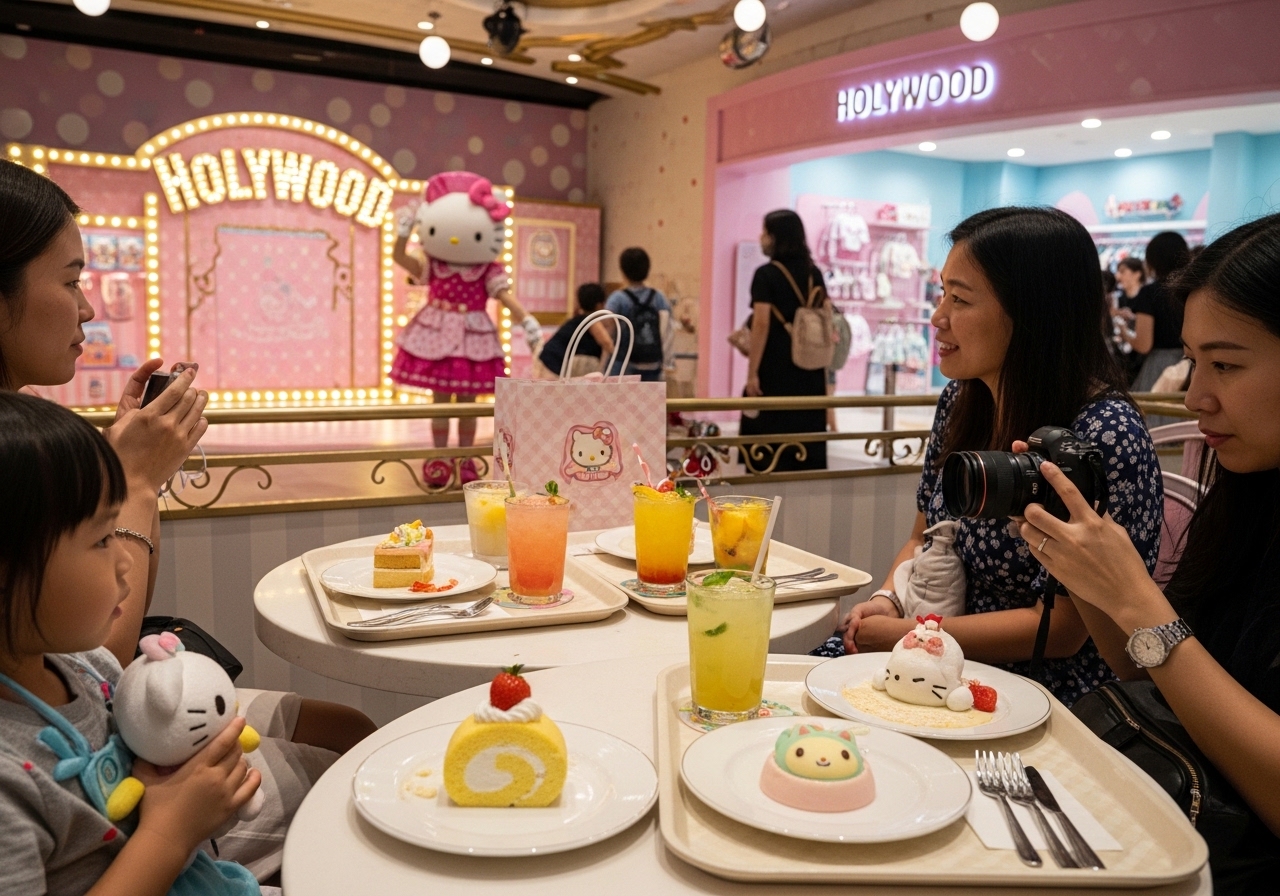
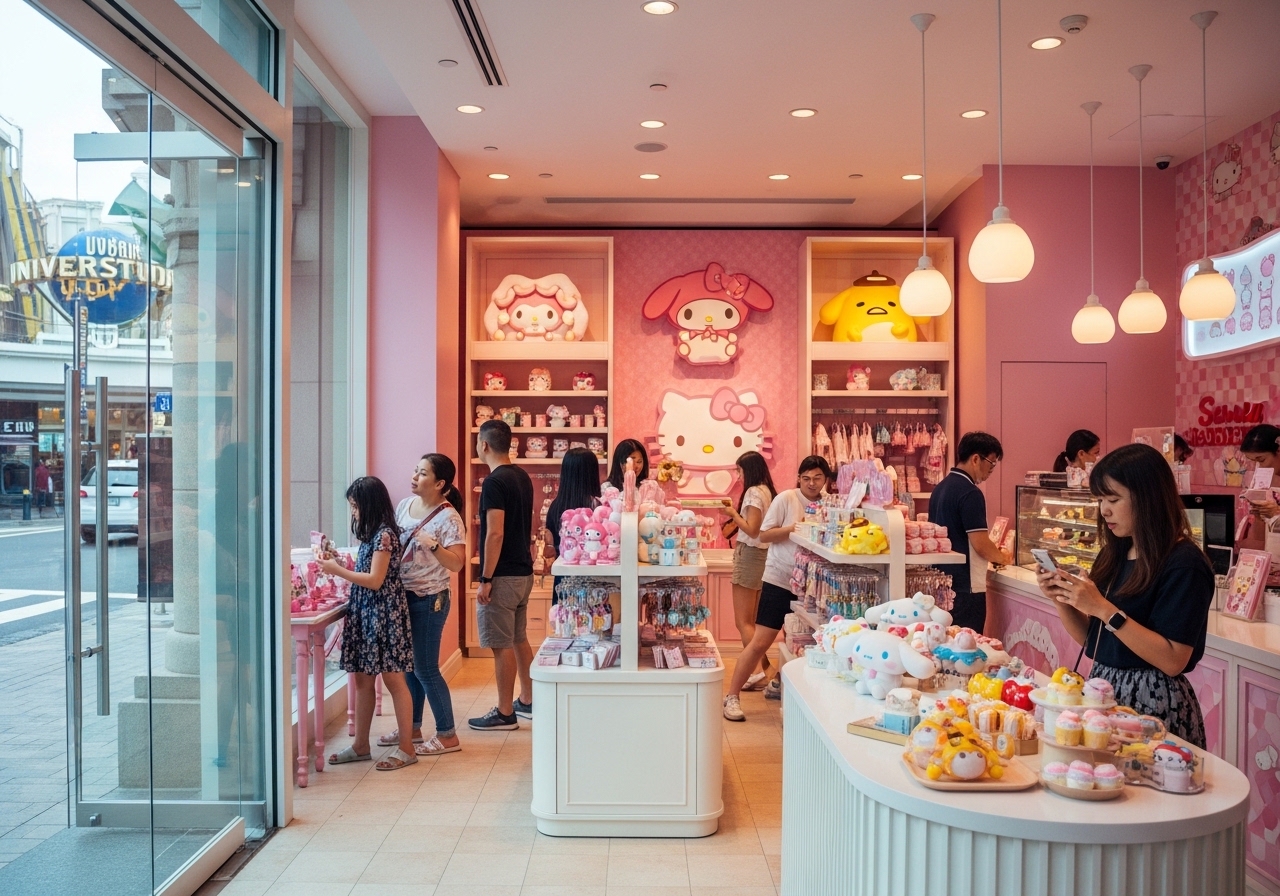
The new Superstar Boutique and Superstar Café bring Hello Kitty, My Melody, Cinnamoroll, Kuromi and other Sanrio characters into the park’s Hollywood zone as themed retail and dining become an increasingly important part of the theme-park experience.
SINGAPORE, May 6 — Universal Studios Singapore has opened a new Sanrio-themed boutique and café inside its Hollywood zone, adding a pastel-colored retail and dining attraction built around Hello Kitty and other globally recognized characters as Resorts World Sentosa leans further into character-led experiences aimed at families, tourists and social media-driven visitors.
The new concept, called Superstar Boutique and Superstar Café, brings together merchandise, themed desserts, drinks, photo opportunities and character appearances in one of the park’s most visible entry areas. Located in the Hollywood zone, the two outlets are designed to extend the Sanrio universe beyond traditional gift-shop shelves and into a more immersive environment where visitors can shop, eat and photograph themselves with characters that have built a multigenerational fan base across Asia and beyond.
The opening gives Universal Studios Singapore a new draw at a time when theme parks across the region are increasingly competing not only through rides, but through intellectual property, food, retail and limited-edition experiences. In Singapore’s compact tourism market, where repeat visitation is essential, smaller additions such as character cafés and themed boutiques can be commercially significant. They encourage guests to spend more time in the park, create new reasons for fans to return and generate the kind of online imagery that functions as informal marketing.
Sanrio’s roster is particularly suited to that strategy. Hello Kitty, My Melody, Cinnamoroll, Kuromi, Pompompurin and Gudetama are not tied to a single narrative universe in the way many film franchises are. Their appeal is visual, emotional and highly adaptable. They can appear on stationery, apparel, desserts, plush toys, drinks and seasonal collectibles without requiring visitors to know a storyline. That flexibility has helped Sanrio remain powerful across generations, from children discovering the characters for the first time to adults who grew up with them and now buy nostalgia as lifestyle merchandise.
At Superstar Boutique, visitors can browse a wide range of Sanrio items including plush toys, accessories, stationery and keychains. Resorts World Sentosa is also promoting a Universal Studios Singapore starring Sanrio characters collection, positioning the merchandise not merely as standard Sanrio goods but as park-specific souvenirs. That distinction matters in the theme-park economy. Exclusive or location-linked items encourage urgency, especially among collectors and tourists who may not be able to buy the same products elsewhere.
The café extends the concept into food and beverage. Reports from Singapore lifestyle outlets describe Sanrio-inspired desserts and drinks, including character-themed sweets and colorful beverages designed for visual appeal. In an era when themed cafés are often judged as much by their photographability as by their menu, the bright interiors and character motifs appear calibrated for social media sharing. A dessert shaped or decorated around Hello Kitty or Kuromi can become a souvenir even before it is eaten, captured first through a phone camera and circulated online.
The new Sanrio space also appears to be built around a “superstar” or Hollywood glamour theme, aligning with its location inside the park’s Hollywood zone. That framing allows the characters to fit the setting rather than simply being placed inside it. Instead of a generic pink café, the concept presents Sanrio figures as performers or screen icons within Universal Studios Singapore’s broader cinematic environment. The result is a hybrid of Japanese kawaii culture and theme-park show business.
Character appearances are likely to be one of the strongest draws. Resorts World Sentosa’s official materials promote opportunities to meet favorite Sanrio characters, and entertainment coverage has highlighted the appeal of seeing Hello Kitty and friends in person. For families with young children, meet-and-greets add emotional value to a visit. For adult fans, they offer a nostalgic and collectible moment. For the park, they create queueable experiences that require less physical infrastructure than major rides but can still produce strong guest engagement.
The opening reflects a wider shift in theme-park operations. Major parks have long depended on marquee attractions, but the economics of today’s entertainment landscape increasingly favor layered experiences. A guest might visit for a roller coaster, stay for a themed meal, buy a limited-edition plush toy and post images that reach thousands of potential visitors. Retail and food are no longer secondary to rides; they are part of the storytelling architecture.
Singapore is a natural market for this kind of offering. The city-state attracts regional tourists from Malaysia, Indonesia, Thailand, Vietnam, the Philippines, China, India and beyond, many of whom combine shopping, dining and entertainment during short visits. Sentosa, already positioned as a resort island with attractions, hotels, beaches and casino-linked entertainment, benefits when Universal Studios Singapore adds experiences that appeal across age groups and languages. Sanrio’s characters require little translation.
The timing also fits a broader resurgence of themed cafés in Asia. Character cafés have become durable pop-culture venues in cities such as Tokyo, Seoul, Bangkok, Taipei and Singapore, often operating through limited runs or rotating themes. What differentiates the Universal Studios Singapore concept is its location inside a major theme park, where the café and boutique can draw from daily foot traffic while also functioning as a destination for Sanrio fans who might not otherwise prioritize every ride.
For Resorts World Sentosa, the commercial logic is clear. Sanrio merchandise has strong gifting potential, small-format products suit tourists with luggage constraints, and food-and-beverage items can be refreshed seasonally or tied to promotions. Official materials mention limited redemptions, including character pens and a Gudetama plush subject to spending conditions and availability. Such mechanics are common in fan retail: they encourage bundled purchases, increase average transaction values and reward visitors who treat the experience as collectible.
Still, success will depend on execution. Theme cafés can generate intense early interest, but maintaining momentum requires consistent product quality, crowd management, fresh merchandise and enough novelty to justify repeat visits. Fans are often highly attentive to details, from packaging and character accuracy to the design of limited-edition items. A strong opening can create buzz, but a sustainable attraction must balance cuteness with operational reliability.
The concept also arrives at a moment when Sanrio’s global appeal is especially broad. Hello Kitty remains the flagship, but Kuromi and Cinnamoroll have become powerful fan favorites among younger consumers, partly because their personalities and visual identities translate well across fashion, accessories and digital culture. Sanrio’s strength lies in its ability to support many emotional registers: Hello Kitty’s softness, Kuromi’s mischievous edge, Cinnamoroll’s innocence, Gudetama’s comic lethargy and Pompompurin’s warmth all attract different audiences.
That breadth makes the new boutique and café more than a single-character attraction. It allows Universal Studios Singapore to appeal to multiple fan communities at once. A family may come for Hello Kitty, a teenager for Kuromi, a collector for Gudetama, and a café-hopper for the photogenic desserts. The shared environment gives each group a reason to linger.
The opening also demonstrates how Japanese character culture continues to shape leisure spaces across Asia. Sanrio began with small gift items, but its characters have expanded into theme parks, cafés, collaborations, fashion and digital experiences. Their power lies in emotional familiarity. Visitors do not need a new plot or film release to understand why a Hello Kitty café matters. The character itself is the event.
Universal Studios Singapore’s Sanrio addition is not a blockbuster ride launch, and it does not need to be. Its importance lies in how it fills the spaces between rides, turning shopping and snacking into part of the entertainment. In modern theme parks, those in-between moments increasingly define the guest experience. They are where families rest, fans collect, tourists take photos and brands turn affection into memory.
For visitors entering the Hollywood zone, Superstar Boutique and Superstar Café offer a new kind of welcome: bright, character-driven, commercially polished and designed for both children and adults. For Universal Studios Singapore, the opening is a reminder that the future of theme parks may be built as much around beloved faces, limited-edition merchandise and camera-ready cafés as around the next major attraction.
The result is a small but strategic expansion of the park’s identity. Sanrio’s characters have stepped into Universal’s cinematic setting, and in doing so, they have given Singapore’s theme-park visitors another reason to pause, pose, shop and stay a little longer.