The story of retired collectors Tan Yan Khim and Molly Yap has renewed attention on vintage interiors, showing how old signboards, jukeboxes, vinyl records and restored furniture can transform a home into a deeply personal record of memory, craft and place.
SINGAPORE — At a time when many homes are designed around clean lines, muted palettes and hidden storage, one retired couple in Singapore is attracting attention for doing the opposite: filling their home with objects that refuse to disappear quietly.
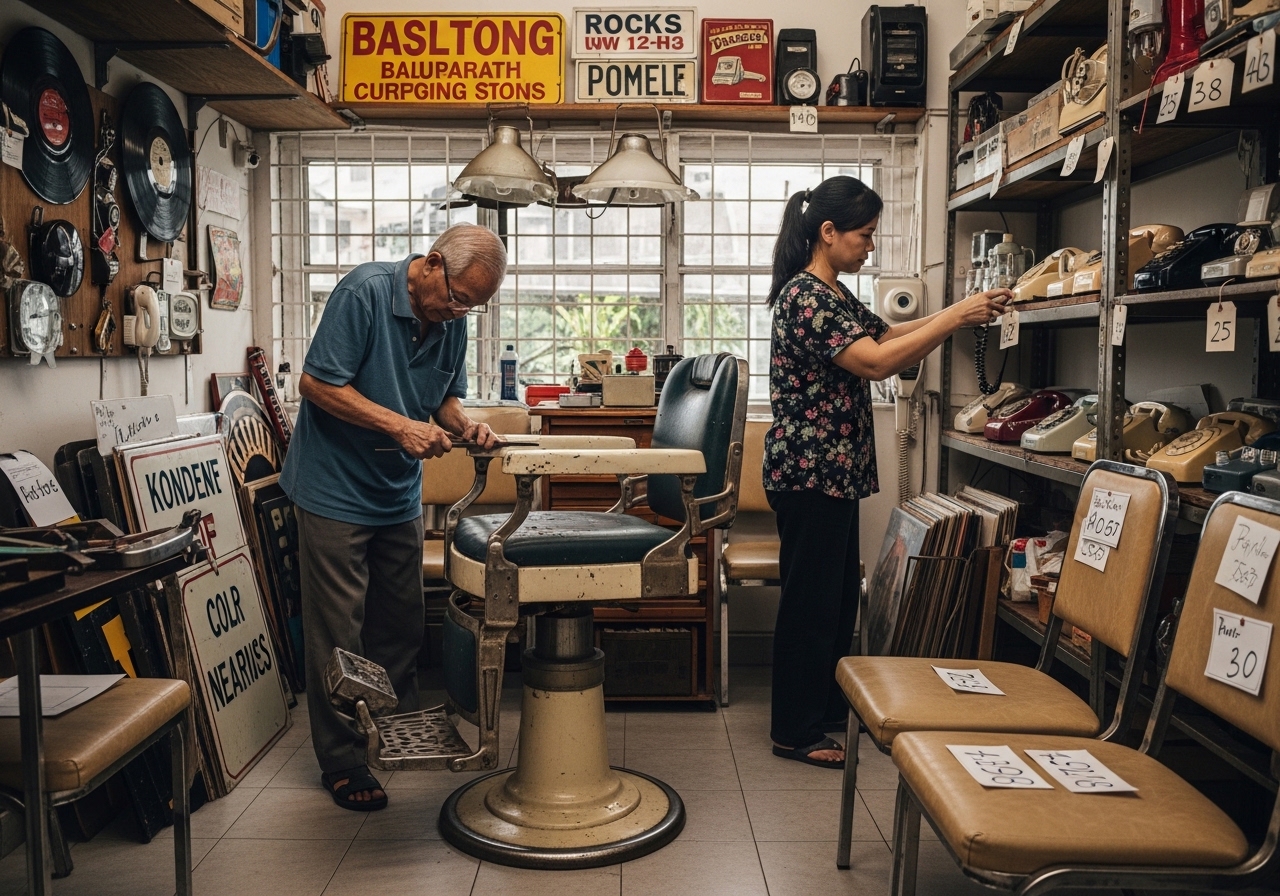
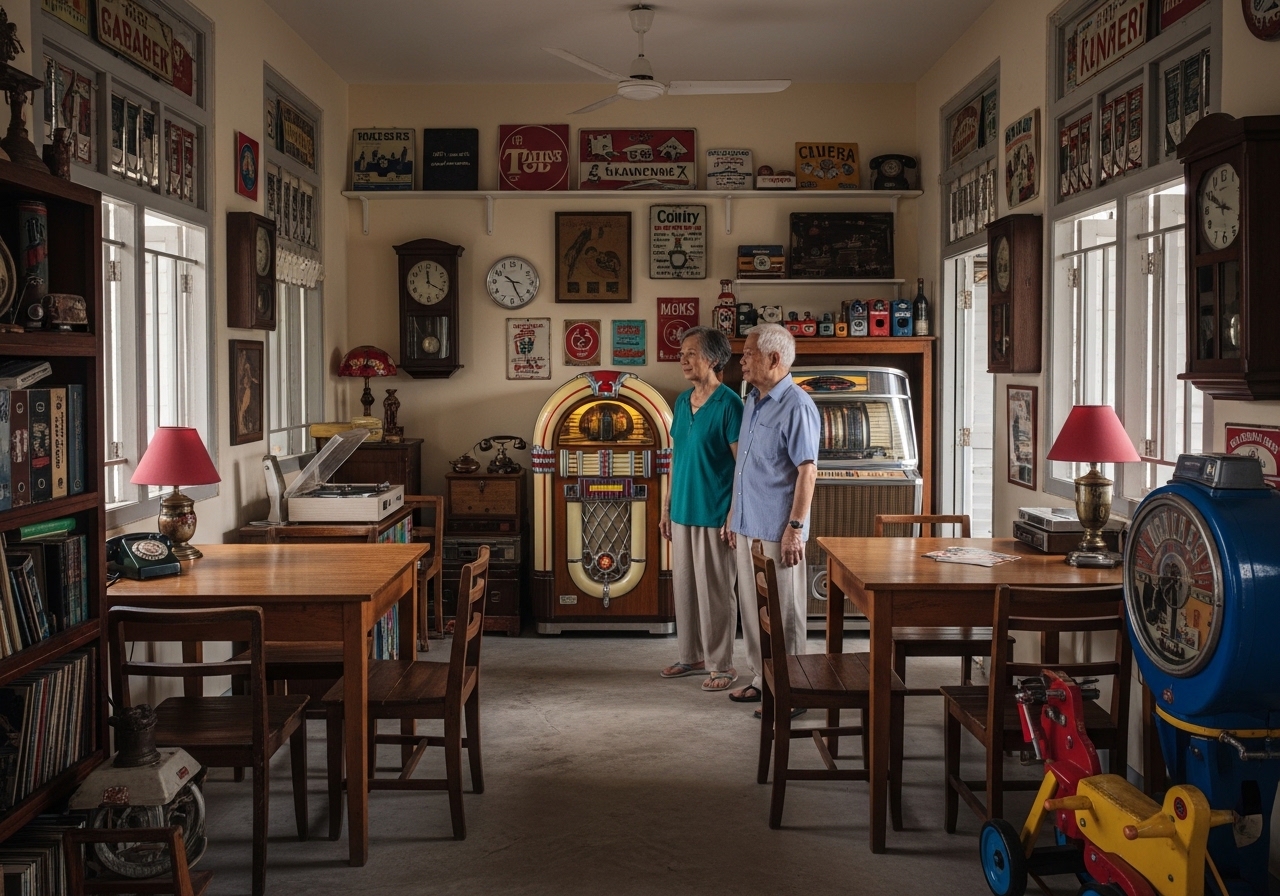
Tan Yan Khim and Molly Yap have spent more than 40 years collecting, restoring and selling retro items, turning their terrace home in MacPherson into what CNA Lifestyle described as a dense, nostalgic time capsule. Nearly every wall is covered with signboards, clocks, vintage advertisements and old light fittings. Their living space includes kopitiam furniture, vinyl records, record players, telephones, jukeboxes, a coin-operated kiddie ride and even a restored old-school barber chair.
The story has resonated because it arrives during a broader revival of retro and nostalgia-driven interiors. Across social media, design publications and home tours, viewers are showing renewed interest in homes that feel accumulated rather than staged, personal rather than showroom-perfect. In Singapore, where space is limited and renovation trends often move quickly, such homes stand out because they preserve not only objects but also atmosphere.
Tan and Yap’s home is not simply a decorative exercise. It is the result of decades of collecting, repairing, negotiating and letting go. Tan, who has a background in electronics, restores items he believes can be repaired, including vinyl players, lamps and jukeboxes. He has also learned skills such as acrylic signboard restoration and upholstery, taking on pieces that might otherwise have been discarded. Yap handles sales and customer enquiries, building a network through word of mouth, repeat buyers and recommendations.
That combination of craft and commerce gives their home a different kind of energy. It is not a sealed museum. Objects move through it. Some are repaired, some are sold, some are rented to event organisers and production houses, and some remain because they carry personal meaning. Tan has said profit is not the main driver; the satisfaction comes from restoring an item and seeing it given a second life.
The appeal of the couple’s story lies partly in the contrast between abundance and disposability. Modern interiors often emphasize decluttering, minimalism and visual calm. Retro homes work on another emotional register. They invite density, memory and imperfection. A worn cabinet, a kopitiam chair or a faded signboard does not need to look new to be valuable. Its value comes from use, survival and recognition.
That is why viewers respond strongly to such spaces. A vintage home is rarely only about design. It is about the feeling of remembering something before fully understanding why. A coin-operated kiddie ride may recall childhood trips to neighborhood shops. A barber chair may evoke an older rhythm of community life. A stack of records may carry the sound of family gatherings, old radio programs or evenings before streaming replaced physical media.
In Singapore, nostalgia also has a particular urban force. The city has changed rapidly across generations, with old markets, shops, cinemas and neighborhoods transformed by redevelopment. Objects that once seemed ordinary can become emotional anchors when the places associated with them are altered or gone. A signboard is no longer just commercial signage; it becomes evidence of a streetscape. A coffee pot is no longer just a utensil; it becomes part of a social memory of kopitiam culture.
The trend does not mean every homeowner wants a house filled from floor to ceiling with collectibles. Many prefer smaller gestures: a Peranakan cabinet, a rattan chair, vintage tiles, old photographs, enamelware, retro lamps or mid-century furniture mixed into a contemporary apartment. But the popularity of stories like Tan and Yap’s suggests that audiences are drawn to interiors with biography. They want rooms that show how people lived, what they saved and what they considered worth repairing.
That desire has grown alongside the visual culture of home tours. Online audiences now consume interiors almost like character studies. A house is not judged only by renovation cost or square footage; it is judged by whether it tells a story. Retro and nostalgia homes perform especially well in that format because every object offers a narrative hook. The camera can linger on a telephone, a lightbox, a record sleeve or a barber pole, and each item opens a small door into another time.
There is also a sustainability argument behind the style. Restoring old items can reduce waste and extend the life of materials that might otherwise end up discarded. In a consumer culture built around quick replacement, repair becomes a quiet form of resistance. Tan’s approach — buying carefully, choosing items he can restore and avoiding pieces he cannot fix — places skill and patience at the center of collecting.
Still, nostalgia is not simple. It can romanticize the past, smoothing over hardship or inequality. A retro object may look charming in a modern home while originating from a time when daily life was more difficult for many people. The best nostalgia-driven interiors do not pretend the past was perfect. Instead, they preserve fragments of it honestly, allowing memory to be affectionate without becoming false.
Tan and Yap’s story avoids some of the usual traps because it is grounded in work. The home is not a themed set assembled overnight. It is the product of four decades of searching, repairing and trading. The couple’s relationship with the objects is practical as much as sentimental. Yap is candid about selling, negotiating and understanding demand. Tan is equally clear that almost everything can move on to another owner. Even their two sons, CNA reported, are not interested in taking over the business, and the couple do not intend to force the collection on the next generation.
That practicality may be part of why the story feels so compelling. Nostalgia here is not hoarding for its own sake. It is circulation. Objects are rescued, restored, displayed, sold and remembered. The home becomes a workshop, showroom, archive and living room at once.
For younger viewers, such homes may offer an alternative to algorithm-driven sameness. Many apartments online now share the same visual language: pale wood, curved sofas, limewash walls, concealed cabinets and neutral accessories. Retro homes disrupt that sameness. They are harder to copy because their character depends on time, accident and personal obsession. A newly bought reproduction can imitate the look, but it cannot replicate the history of an object found, fixed and used.
For older viewers, the appeal may be more direct. These objects are not aesthetic references but lived memory. They recall shops, sounds, textures and routines that once formed the background of everyday life. Seeing them gathered in a home can feel like a return to a familiar street that no longer exists.
The continued attention around retro and nostalgia homes suggests that interior design is becoming less about a single dominant style and more about emotional specificity. People want spaces that reflect who they are, where they came from and what they refuse to forget. In Singapore, where the built environment is constantly renewing itself, the act of keeping old things can feel especially meaningful.
Tan Yan Khim and Molly Yap have not merely decorated a house. They have built a living archive of objects that passed through Singapore’s shops, homes, barbers, coffee stalls and entertainment spaces. Their home draws viewers because it is crowded with things, but also because those things carry evidence of care.
In the end, the retro home trend is not just about looking backward. It is about asking what deserves to be carried forward. For Tan and Yap, the answer is found in the glow of a restored signboard, the spin of an old record, the curve of a barber chair and the belief that an object with history can still have another life.