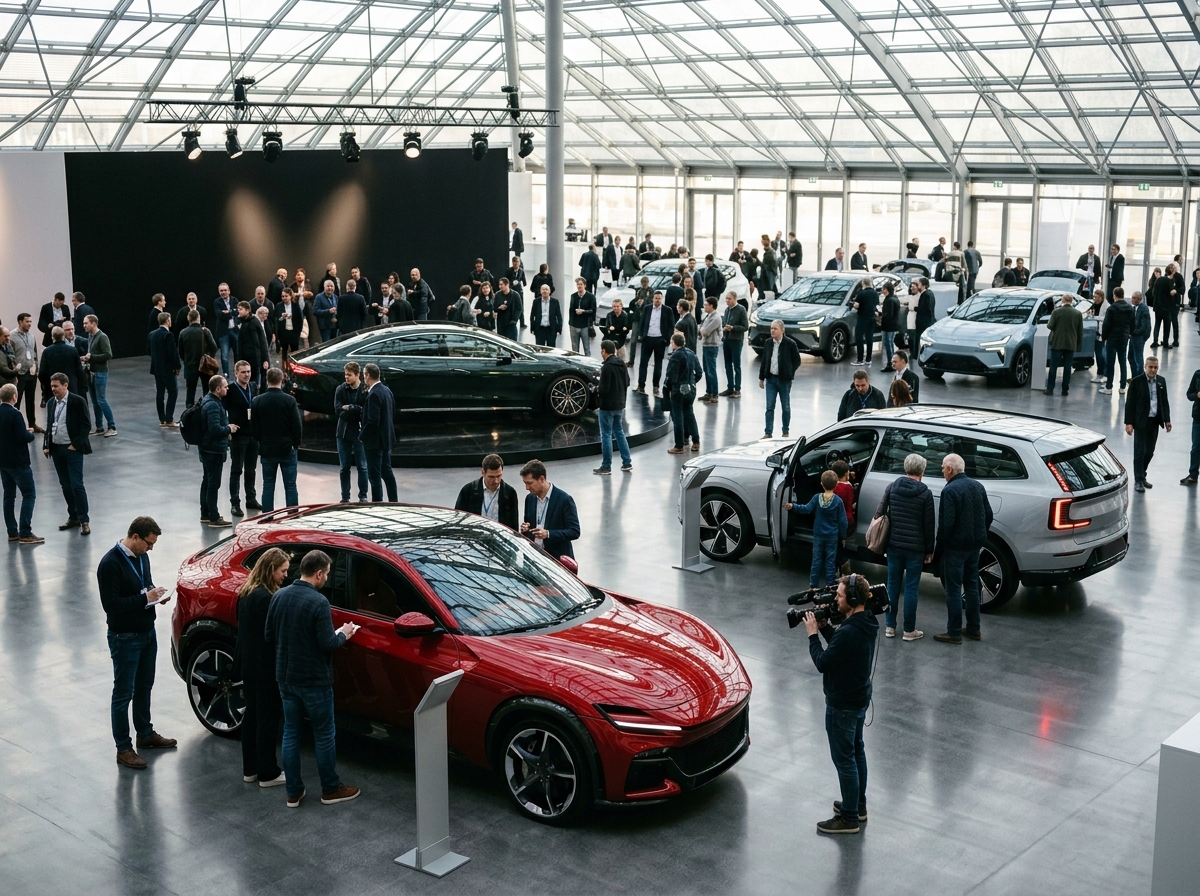
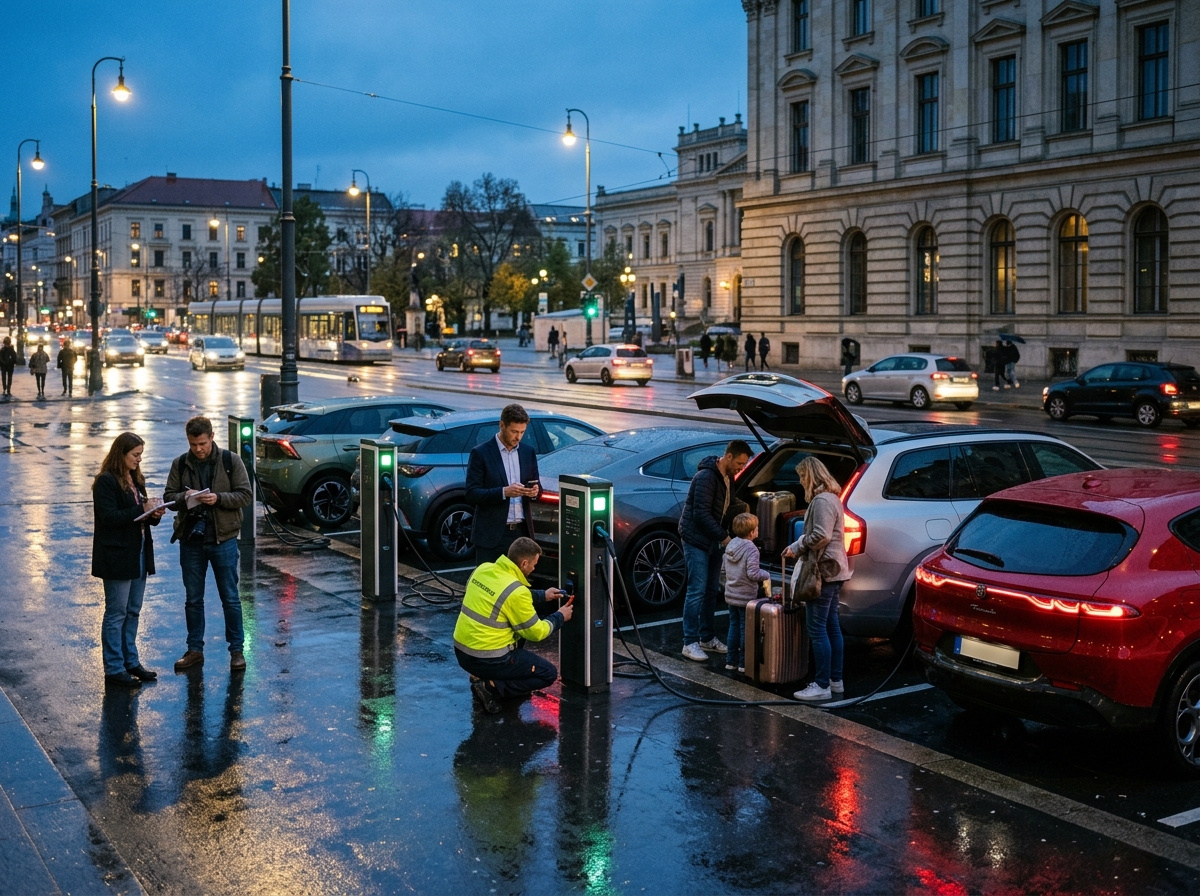
Industry forecasters expect a surge of new EV launches in 2026 as Alfa Romeo, Volvo, Jaguar and Chinese manufacturers compete for buyers in a more mature and demanding market.
The electric vehicle industry is entering 2026 with a paradox. Growth is still visible, investment remains enormous and new models are arriving across nearly every major segment. Yet the mood inside the business is more cautious than it was during the first wave of EV optimism. Consumers are no longer impressed by battery power alone. They want realistic range, faster charging, lower prices, reliable software, stronger resale values and a charging experience that does not feel like an experiment.
That is why 2026 is shaping up as one of the most crowded product years in the modern EV era. Industry sources and market analysts expect automakers to flood showrooms with electric SUVs, sedans, wagons, crossovers and luxury GTs, hoping to catch buyers who are ready to move beyond early-adopter models. The year will bring important launches from established European brands including Alfa Romeo, Volvo and Jaguar, while Chinese manufacturers are preparing an aggressive push into overseas markets, especially Europe and the United Kingdom.
The stakes are high. Gartner has forecast that 116 million electric vehicles, including cars, vans, buses and heavy trucks, will be on the road globally in 2026. S&P Global Mobility has projected that electrified vehicles, a category including battery-electric vehicles, plug-in hybrids and range-extended EVs, could account for about 30 percent of global vehicle sales. Those figures suggest electrification is no longer a niche movement. But they also point to a market that is becoming more complicated, with battery-electric vehicles competing not only against petrol cars but also against hybrids and plug-in hybrids that many consumers see as easier transitional choices.
Alfa Romeo is one of the brands facing that tension most clearly. The Italian marque has spent decades building its reputation around emotion, design and performance. Electrification gives it access to instant torque and advanced vehicle architecture, but also forces it to answer a central question: can an electric Alfa still feel like an Alfa?
Parent company Stellantis has said its STLA Large platform is designed for premium and high-performance vehicles and will support battery-electric models with long-range capability. The platform is scheduled to underpin vehicles from several Stellantis brands, including Alfa Romeo. Earlier expectations placed Alfa’s next-generation Stelvio and Giulia among the key electric arrivals of the mid-decade product cycle. More recent reports, however, suggest Alfa Romeo is adjusting its timetable and product strategy as global EV demand develops unevenly.
That adjustment is important. Rather than rushing into a pure-EV future, Alfa appears to be preserving flexibility. Current Giulia and Stelvio models have been extended in some markets, while next-generation replacements are expected to use a platform capable of supporting electrified powertrains. For Alfa, 2026 may therefore become less a clean break with combustion and more a bridge year, preparing the brand for a new era while avoiding the risk of alienating buyers who still value the sound, feel and heritage of its existing performance cars.
Volvo’s position is different. The Swedish brand has spent years aligning its identity with safety, sustainability and electric mobility. Its new EX60, unveiled in early 2026, is one of the most strategically important vehicles in its lineup because it targets the premium midsize SUV segment, one of the most profitable and competitive parts of the global market. Volvo has described the EX60 as a fully electric SUV designed around Scandinavian simplicity, long-distance usability and advanced safety technology.
The EX60 matters because it is not a niche product. It is the kind of vehicle that families, professionals and premium buyers actually purchase in large numbers. If Volvo can make the EX60 feel familiar, practical and trustworthy, it could help move EV adoption beyond the early-adopter stage. The expected Cross Country version also gives Volvo a way to carry one of its most recognizable sub-brands into the electric age, linking rugged lifestyle appeal with battery-powered driving.
Jaguar is taking a far more dramatic route. The British brand is attempting one of the boldest reinventions in the luxury car industry, moving away from its older lineup toward a new generation of high-end electric vehicles. Its first major model in this strategy is a four-door electric GT, currently undergoing testing in extreme conditions and digital development environments. Jaguar has said the car is being engineered to deliver a distinctive driving character and will use in-house propulsion technologies.
For Jaguar, the 2026 EV cycle is not just about launching a car. It is about proving that the brand still has a clear place in the luxury market. The company is not trying to compete with low-cost EVs from China or mass-market crossovers from mainstream brands. It is aiming for a more exclusive position, where design, performance and status matter as much as range or price. That strategy could succeed if wealthy buyers accept Jaguar’s new identity. It could also expose the brand to criticism if the product feels too distant from the Jaguar image that previous generations knew.
The most disruptive pressure, however, is coming from China. Chinese automakers have moved from domestic expansion to global ambition with remarkable speed. BYD, Geely, Zeekr, Xpeng, Nio, Leapmotor, Chery and other brands are increasingly visible in markets once dominated by European, Japanese and American manufacturers. Their vehicles often combine competitive pricing with high equipment levels, fast software cycles and strong battery supply chains.
In Europe, Chinese brands are filling gaps left by slower-moving legacy automakers. At the Brussels Motor Show in 2026, models such as the Zeekr 7GT electric wagon and Leapmotor B03X affordable SUV illustrated how quickly Chinese manufacturers are targeting specific European tastes. Wagons, compact SUVs and value-oriented urban vehicles are all areas where Chinese companies see opportunity. In the United Kingdom, Chery-related brands such as Jaecoo and Omoda have already shown how quickly a new name can gain attention with aggressive pricing and SUV-focused products.
This wave is forcing established automakers to rethink their assumptions. For years, European brands relied on heritage, engineering reputation and dealer networks. Those advantages still matter, particularly among premium buyers. But EV customers also compare charging speed, cabin technology, warranty coverage, app quality and monthly finance costs. In that environment, a younger Chinese brand can compete seriously if the product feels advanced and the price is right.
The 2026 launch rush also reflects a broader shift in what buyers expect from electric cars. Early EVs often asked customers to compromise on price, practicality or charging convenience. The next generation cannot do that. A family SUV must function as a family SUV. A luxury GT must feel luxurious. A compact car must be affordable. A performance sedan must offer emotion, not merely acceleration numbers. The EV label is no longer enough.
Automakers are also dealing with policy uncertainty. Europe continues to push toward lower-emission transport, but tariffs, subsidy changes and industrial policy debates are reshaping the market. The United States has made it difficult for Chinese-built EVs to enter directly, while Europe has taken a more mixed approach. China remains the world’s most intense EV battleground, with heavy price competition and rapid model turnover. These differences mean that a car developed for one region may not succeed automatically in another.
That is why 2026 will be a test not only of technology but of strategy. Alfa Romeo must balance passion and electrification. Volvo must turn electric family mobility into a mainstream premium proposition. Jaguar must convince buyers that reinvention can create desire rather than confusion. Chinese manufacturers must show that fast growth can translate into long-term trust outside their home market.
The winners of the 2026 EV race may not be the companies with the most dramatic concept cars or the longest specification sheets. They will be the brands that understand a more skeptical, more informed buyer. The market is moving beyond novelty. Electric vehicles now have to win on the same terms as every other car: value, reliability, design, comfort, performance and confidence.
That makes the coming year unusually important. The crowded 2026 EV calendar is not just another round of product launches. It is a sign that the industry’s electric transition has entered a harder and more consequential phase. The question is no longer whether EVs will arrive. They are arriving in force. The question is which brands can make them matter.