
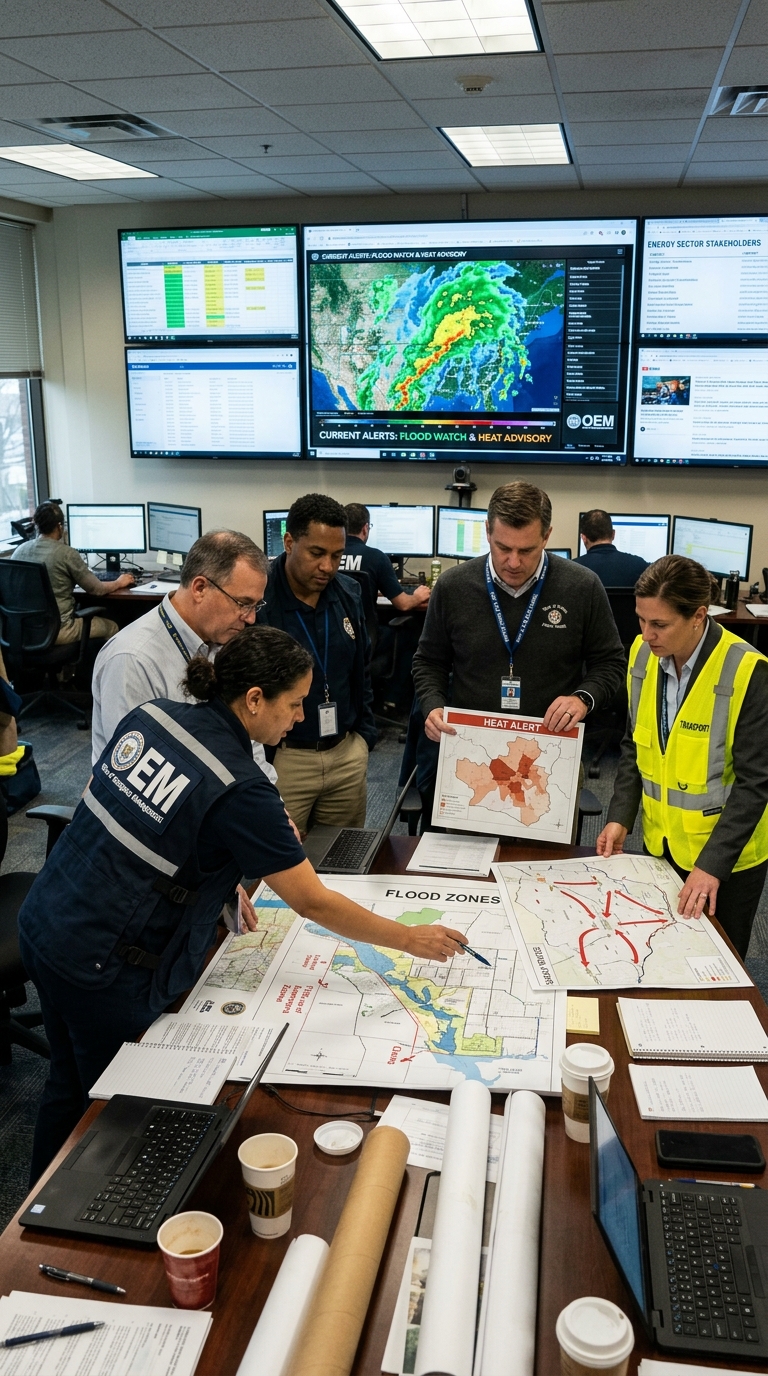
Governments are learning that emergency preparedness is no longer seasonal, local or optional.
Disaster planning used to be treated as a specialized function: a hurricane office, a flood map, a warehouse of supplies, a yearly drill. That approach is no longer enough.
Climate volatility, geopolitical conflict, fragile supply chains and energy uncertainty are forcing governments to think about preparedness as a permanent feature of national policy. The risks are no longer isolated. A heat wave can strain power grids. A drought can raise food prices. A conflict can disrupt fuel supplies. A flood can damage hospitals and ports. Several shocks can arrive at once.
Meteorological agencies are warning of a possible El Niño pattern in 2026, while ocean temperatures remain high. Economists are also watching conflict and trade tensions as risks to growth and inflation. Together, these pressures show how environmental and political instability can reinforce each other.
The lesson for governments is clear: emergency response begins before the emergency. Countries need early warning systems, resilient hospitals, protected water supplies, reliable power, food reserves, evacuation plans and public communication that people trust.
Local authorities are often the first responders, but many lack money and staff. A national plan means little if a district cannot clear drains, maintain shelters or reach elderly residents during heat waves. Preparedness must be funded at the level where disasters actually happen.
The private sector is also involved. Supermarkets, telecom companies, transport operators and utilities control systems that communities depend on during crisis. Governments increasingly need agreements with businesses before disasters, not improvised requests afterward.
Public trust may be the most important infrastructure. During emergencies, people must believe alerts, follow evacuation instructions and accept temporary restrictions. Misinformation can turn a manageable event into a larger crisis.
Preparedness also raises equity questions. Wealthier households can buy generators, insurance, air conditioning and emergency supplies. Poorer families may live in flood-prone areas, informal housing or heat-trapping neighborhoods. A fair disaster plan must protect those with the least ability to escape risk.
International cooperation remains essential. Weather data, humanitarian corridors, disease surveillance, shipping security and food trade all cross borders. A world of connected risks cannot be managed by isolated governments.
The cost of preparedness is politically difficult because success often looks invisible. A hospital that does not fail, a village that evacuates early or a food shortage that does not happen may not produce dramatic headlines. But those quiet successes are what resilience means.
The modern news cycle moves from crisis to crisis. Public policy must do the opposite: connect them. Climate, conflict and economic instability are not separate files. They are converging pressures on the same societies.
The countries that prepare early will not avoid every disaster. But they may prevent emergencies from becoming catastrophes.
“””
