
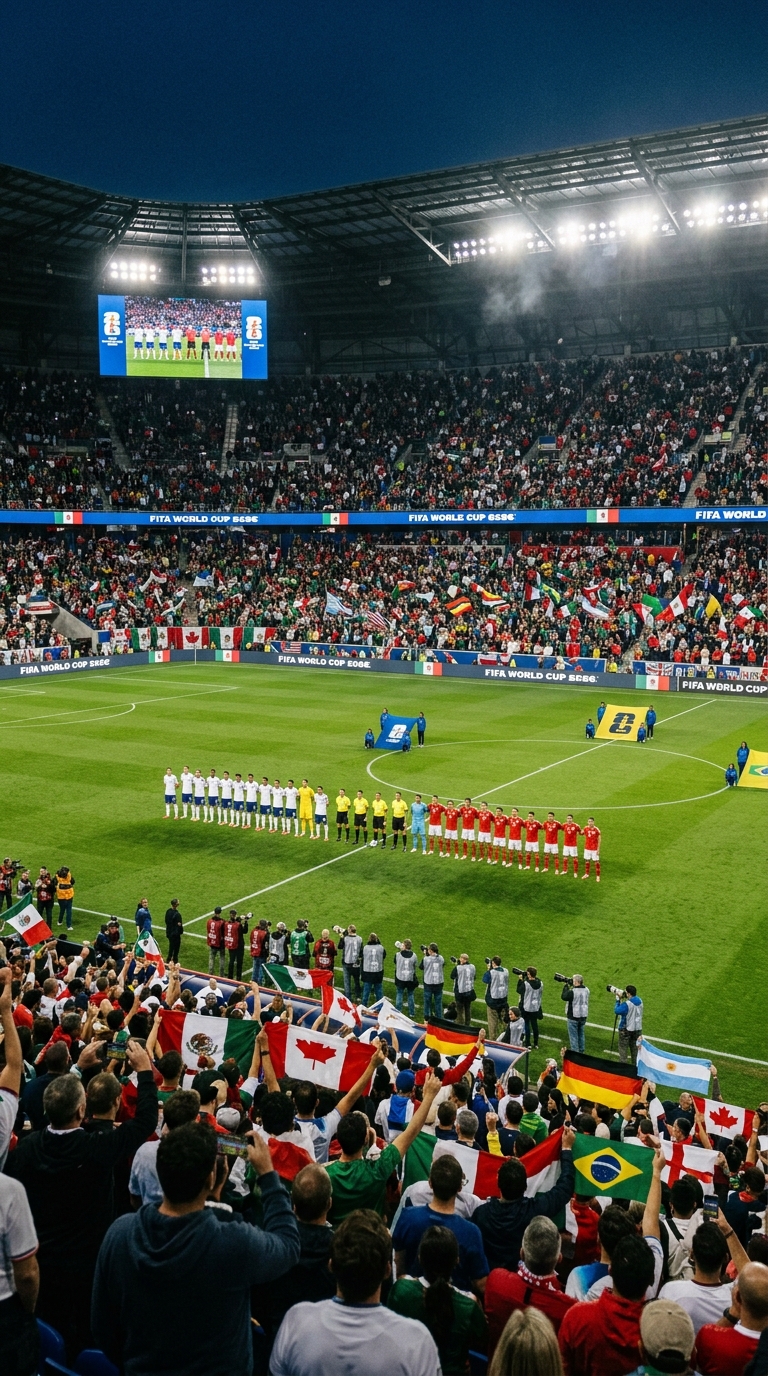
The 2026 tournament will be bigger, longer and more global, testing whether expansion can bring opportunity without diluting football’s greatest stage.
The World Cup has always been more than a tournament. It is a mirror of football’s political reach, commercial power and emotional hold on billions of people. In 2026, that mirror will widen dramatically.
For the first time, the men’s World Cup will feature 48 teams, with matches staged across Canada, Mexico and the United States. The expansion is designed to give more countries access to football’s biggest platform, especially nations from regions that have historically had fewer places at the finals.
Supporters of the new format say it will make the tournament more representative. A World Cup with more African, Asian and Concacaf teams could create new national moments, new heroes and new markets. For players from smaller football nations, qualification is not only a sporting achievement but a national event.
The risks are also clear. A larger tournament means a longer schedule, more travel and more logistical pressure on players, fans and organizers. Coaches will have to manage fatigue across a competition spread over three large countries and multiple time zones. Supporters will face complex travel choices and rising costs.
For FIFA, the expanded World Cup is a commercial opportunity and a political project. More teams mean more matches, more broadcasting inventory and deeper engagement from more countries. But success will depend on whether the competition still feels elite, dramatic and coherent.
The host nations offer scale. The United States brings stadium infrastructure and commercial muscle. Mexico brings football tradition and history. Canada brings a growing football culture and a chance to deepen the sport’s national footprint.
The tournament will also test cities. Security, transport, accommodation, fan zones and heat management will all matter. A World Cup is judged not only by what happens on the pitch but by whether supporters can move safely and affordably through host cities.
Expansion gives football a larger stage. The question is whether the sport can make that stage feel inclusive rather than oversized. In 2026, the World Cup will not simply crown a champion. It will reveal what global football wants to become.
“””
