
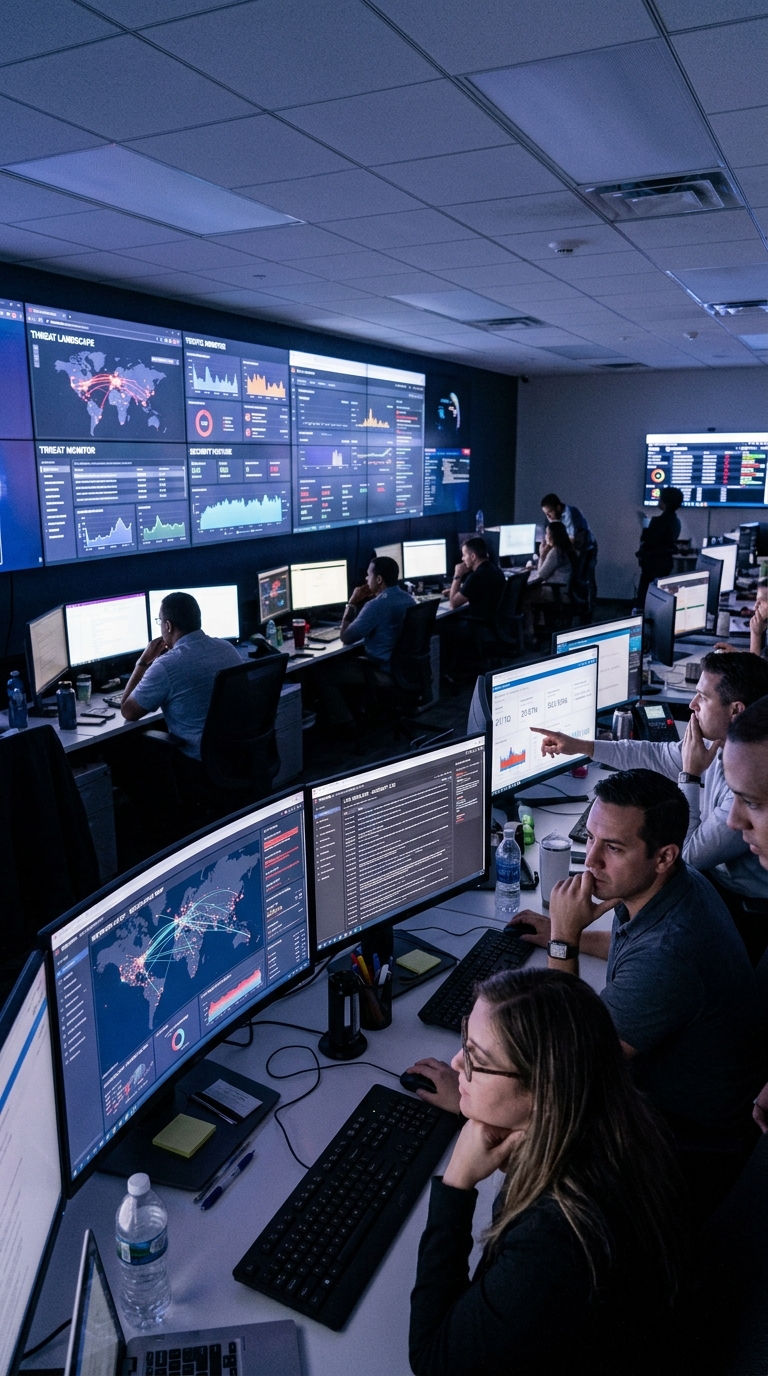
Artificial intelligence, geopolitical tension and fragile supply chains are forcing companies and governments to rethink defenses built for a slower digital world.
Cybersecurity has always been a race between attackers and defenders. In 2026, that race is accelerating beyond the speed of many organizations.
The World Economic Forum’s Global Cybersecurity Outlook 2026 describes a risk landscape shaped by artificial intelligence, geopolitical fragmentation, supply-chain complexity and widening inequality between organizations that can defend themselves and those that cannot. The message is clear: cyber risk is no longer a technical problem contained inside IT departments. It is a boardroom, national security and social resilience problem.
AI is changing both sides of the contest. Defenders use it to detect anomalies, summarize alerts, automate response and analyze large volumes of security data. Attackers use it to write convincing phishing messages, generate malicious code, clone voices, produce deepfake video and search for vulnerabilities faster. The same tools that make employees more productive can make criminals more efficient.
The traditional security model assumed that organizations had time. A vulnerability would be disclosed, vendors would issue patches, defenders would test updates and systems would gradually be secured. That timeline is shrinking. Attackers can study patches, reverse-engineer flaws and build exploits quickly. Organizations with slow patch cycles become exposed almost immediately.
Ransomware remains one of the most damaging threats because it targets the continuity of daily life. Hospitals, schools, local governments, logistics companies and manufacturers have all faced attacks that disrupt services. Criminal groups increasingly combine encryption with data theft, threatening to publish sensitive information if victims refuse to pay.
Deepfakes have introduced a new category of risk. A fraudulent voice message from a supposed executive, a video call with a synthetic colleague or a fake public statement can trigger financial loss, reputational damage or political confusion. Verification practices that relied on seeing or hearing someone are becoming weaker.
Supply chains are another major vulnerability. A company may secure its own systems but depend on software vendors, cloud services, contractors and open-source components. Attackers often look for the weakest link. A compromise at one provider can spread to many customers. This interdependence makes cybersecurity a collective problem.
Small and medium-sized organizations are especially exposed. Large companies can hire security teams, subscribe to threat intelligence and build response plans. Smaller firms may rely on overworked IT staff or outsourced providers. Yet they hold valuable data and often connect to larger partners. Cyber inequity creates systemic risk.
Geopolitics has made the threat environment more volatile. State-linked cyber operations can target infrastructure, elections, defense contractors, media organizations and dissidents. Conflicts can spill into digital space, where attacks are deniable and attribution is difficult. Private companies may find themselves on the front line of geopolitical disputes.
Critical infrastructure raises the stakes. Power grids, water systems, ports, hospitals and transport networks increasingly depend on connected operational technology. These systems were often built for reliability rather than internet exposure. Securing them requires different expertise from ordinary corporate IT.
Boards are starting to understand that cybersecurity cannot be reduced to buying tools. Many organizations already have too many security products that do not work together. The harder task is governance: knowing what assets exist, who has access, what data matters most, how backups are protected, and how the organization will operate during an incident.
Incident response planning is now essential. A company under attack must make decisions under pressure: whether to shut systems down, notify customers, contact law enforcement, pay or refuse ransom, restore from backups, and communicate publicly. Organizations that have not practiced these decisions often lose valuable time.
Cyber insurance has become part of the strategy, but it is not a substitute for defense. Insurers increasingly demand stronger security controls before issuing policies. Critics worry that ransom coverage can create perverse incentives, though many policies now include conditions and exclusions. Insurance can transfer some financial risk, but it cannot restore public trust after sensitive data is exposed.
Regulators are becoming more active. Data protection laws, critical infrastructure rules and securities disclosure requirements are pushing companies to report incidents and improve controls. Mandatory reporting can help governments understand threats, but companies worry about liability and reputational damage. The balance between transparency and punishment remains difficult.
The human factor remains central. Employees click links, reuse passwords, approve payments and handle sensitive information. Training is necessary, but blaming individuals misses the point. Systems should be designed so that one mistake does not become a catastrophe. Multi-factor authentication, least-privilege access, network segmentation and tested backups remain basic but powerful measures.
The rise of remote and hybrid work has expanded the attack surface. Home networks, personal devices and cloud collaboration tools create more entry points. Identity has become the new perimeter. If attackers steal credentials, they may not need to break through a firewall at all.
AI may eventually help defenders regain ground. Security systems can triage alerts, detect unusual behavior and generate response playbooks. But AI can also produce false positives or miss novel attacks. Human expertise remains necessary, especially when business context matters.
Cybersecurity also has a public trust dimension. Citizens depend on digital systems for banking, health records, government services and communication. Repeated breaches can create fatigue and cynicism. People may feel they have lost control of their personal data because, in many cases, they have.
The future will require shared responsibility. Governments must support threat intelligence, law enforcement and international norms. Companies must invest in resilience rather than treating cybersecurity as a compliance checkbox. Technology providers must build secure defaults. Individuals must be given tools that are usable, not only warnings that are easy to ignore.
The era of machine-speed attacks does not mean defense is hopeless. It means slow defense is dangerous. Organizations that know their systems, patch quickly, verify identity, protect backups and practice crisis response will be better positioned than those that wait for a breach to reveal their weaknesses.
Cybersecurity used to be described as protecting networks. It is now about protecting the functioning of society itself.
“””
