
From missed turn signals to sudden braking and poor mirror use, the earliest months of driving often reveal habits that can turn ordinary traffic into avoidable risk.
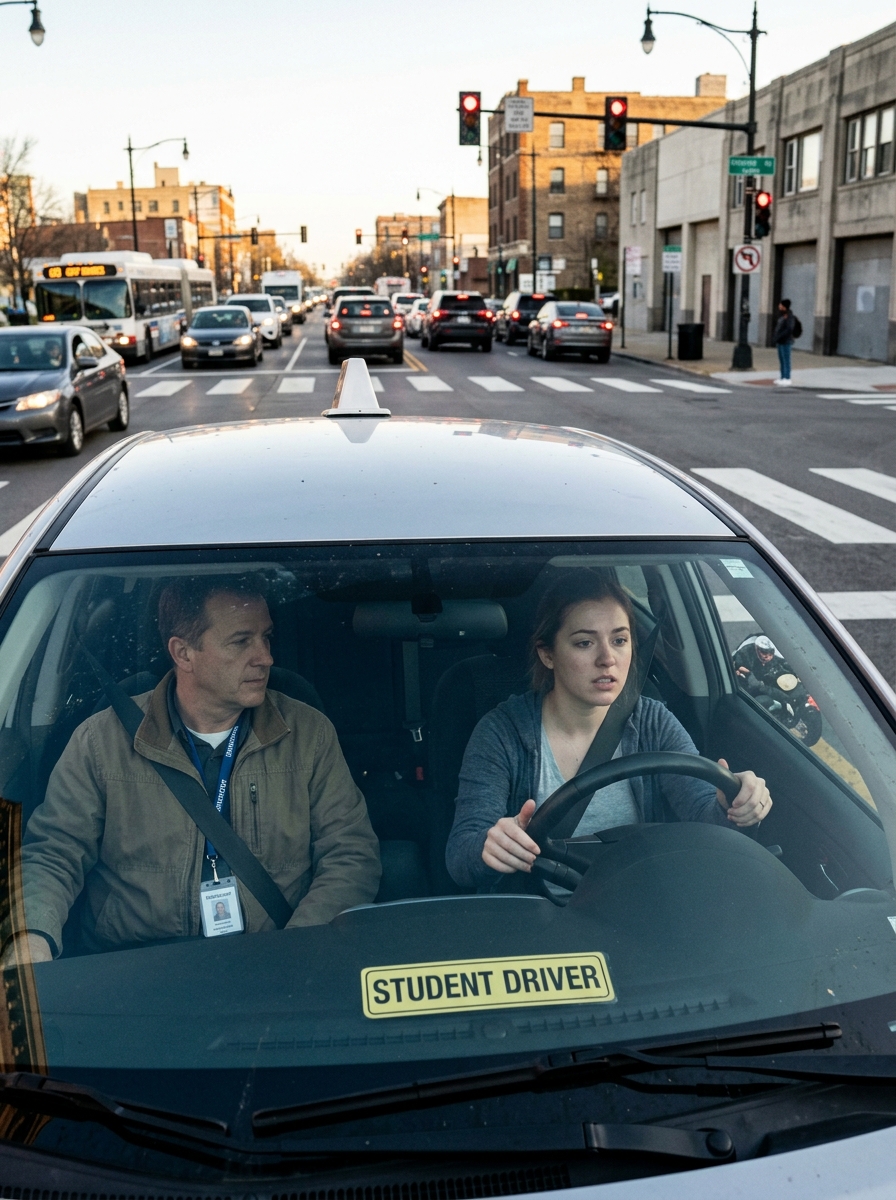
For many new drivers, getting a license feels like the end of training. In reality, it is the beginning of a more demanding education, one that takes place in traffic, in bad weather, at crowded intersections and in the tight spaces of parking lots. The first months behind the wheel are often when small mistakes become habits. Some are merely inconvenient. Others can create serious risks for the driver, passengers, pedestrians and everyone sharing the road.
The most common problem is not a lack of courage but a lack of rhythm. Experienced drivers usually scan the road, check mirrors, anticipate hazards, adjust speed and signal intentions almost automatically. New drivers often perform these tasks one at a time, with pauses in between. They may focus too much on steering and speed while forgetting what is happening behind them. They may notice a turn too late and brake suddenly. They may know the rules but fail to apply them smoothly under pressure. This gap between knowledge and practical coordination is where many beginner errors begin.
Forgetting to use turn signals is one of the clearest signs of an inexperienced driver. A turn signal is not a courtesy after the decision has already been made; it is a warning before the vehicle changes direction or lane position. When a driver signals late, signals only while turning, or does not signal at all, other road users must guess. That uncertainty can lead to abrupt braking, unsafe overtaking or collisions at intersections. New drivers sometimes skip signals because the road looks empty, but the habit matters even when traffic seems light. Motorcyclists, cyclists and pedestrians can appear quickly, and a predictable driver is always safer than a silent one.
Sudden braking is another frequent mistake. Beginners often react to what is directly in front of them instead of reading traffic farther ahead. They may wait until brake lights appear close by before slowing down, or they may approach a red light too quickly and stop hard at the last moment. This style of driving is uncomfortable for passengers, increases wear on brakes and tires, and raises the risk of being hit from behind. Smooth braking begins with vision. A careful driver looks several vehicles ahead, notices changing traffic lights, watches pedestrian crossings and eases off the accelerator early. Good braking is usually planned before the foot reaches the pedal.
Failing to keep a safe following distance is closely linked to harsh braking. Many new drivers underestimate how much space a car needs to stop, especially at higher speeds or on wet roads. They may follow closely because they are afraid another vehicle will cut in, or because they copy the behavior of aggressive traffic around them. But tailgating leaves little room for error. If the vehicle ahead stops suddenly, the beginner has almost no time to recognize the danger, move the foot to the brake and stop safely. A safe gap is not wasted space. It is reaction time, braking distance and protection against the unexpected.
Poor mirror use is among the most dangerous beginner habits because it reduces awareness of the traffic environment. New drivers may check the rearview mirror only when reversing, or look at side mirrors only when changing lanes. In real driving, mirrors should be part of a repeated scanning pattern. They show whether another vehicle is approaching quickly, whether a motorcycle is filtering through traffic, whether it is safe to slow down, and whether a lane change is possible. Still, mirrors are not enough by themselves. Blind spots remain, especially near the rear sides of the vehicle. A quick shoulder check before changing lanes or merging can prevent a mistake that mirrors alone might not catch.
Lane discipline can also be difficult for new drivers. Some drift within the lane because they look too close to the front of the car instead of aiming their vision farther down the road. Others cut corners too tightly, swing wide while turning, or move between lanes without checking properly. On multi-lane roads, beginners may become nervous when surrounded by faster vehicles and may make sudden corrections. The solution is not stiff control but calm positioning. A driver should keep the vehicle centered, choose lanes early, avoid unnecessary lane changes and make every movement gradual and visible.
Parking mistakes are another everyday challenge. New drivers often misjudge the size of the vehicle, turn the steering wheel too early or too late, stop too far from the curb, or park at an angle that blocks other vehicles. Parallel parking, reversing into a space and parking on a slope require patience and low-speed control. The danger is not only scratching the car. Poor parking can obstruct traffic, endanger pedestrians, block emergency access or create conflicts with other drivers. A safe parking maneuver begins before reversing: check mirrors, look over the shoulder, move slowly, and be ready to stop immediately if a person, motorcycle or object enters the path.
Speed control is another area where confidence can become a problem. Some beginners drive too slowly in normal traffic because they feel overwhelmed. Others become overconfident after a few weeks and drive faster than their skill level allows. Both can be risky. Driving much slower than surrounding traffic may cause confusion and unsafe overtaking, while speeding reduces the time available to react. A safe driver does not simply follow the posted speed limit; the driver adjusts to road conditions, visibility, weather, traffic density and the presence of pedestrians or cyclists. Legal speed is not always safe speed.
At intersections, new drivers often struggle with timing and priority. They may hesitate too long, enter too late, stop when they should continue, or proceed when they should yield. Roundabouts, unprotected turns and busy urban junctions can be especially stressful. The key is to approach with lower speed, read signs and lane markings early, and avoid last-second decisions. If a turn is missed, the safer choice is to continue and find another route. A sudden turn across traffic is rarely worth the risk.
Distraction is a modern problem that affects all drivers, but it is especially dangerous for beginners. A new driver already uses much of their attention to manage steering, pedals, road position and traffic signs. Adding a mobile phone, loud music, complicated navigation settings or emotional conversations can overload that limited attention. Even a short glance away from the road can matter at urban speeds, and it matters even more on highways. Good drivers prepare before moving: set the route, adjust mirrors, choose music, secure loose items and put the phone out of reach unless it is being used hands-free for navigation.
Another common mistake is poor communication with other road users. Driving is not only mechanical control; it is a shared language. Signals, brake lights, lane position, eye contact with pedestrians and predictable speed all tell others what a driver intends to do. Beginners sometimes make technically legal movements in ways that surprise others. A safe driver asks a simple question before every action: will the people around me understand what I am about to do?
Weather exposes weak habits quickly. Rain, fog, darkness and glare reduce visibility and grip. New drivers may continue at the same speed they use on a dry road, brake too late, follow too closely or forget to turn on lights. Wet roads increase stopping distance, and standing water can reduce tire contact with the surface. Night driving adds another challenge because distance and speed are harder to judge. In poor conditions, caution should appear before trouble does: slow down, increase following distance, use lights correctly and avoid sudden steering or braking.
Mechanical neglect is also common among new drivers who focus on driving technique but forget the vehicle itself. Tire pressure, tread depth, lights, wipers, brake condition and fluid levels are basic safety issues. A driver who does not check the car may discover a problem only when it becomes urgent. Learning to drive should include learning to inspect the vehicle before longer trips and to recognize unusual sounds, warning lights or changes in braking and steering feel.
The best way for a new driver to improve is not to chase confidence but to build consistency. That means signaling every time, checking mirrors regularly, keeping a safe gap, braking early, parking slowly, and accepting that missed turns and delayed arrivals are better than rushed mistakes. Experience matters, but only if it produces better habits rather than repeated shortcuts. A new driver becomes safer not when driving feels easy, but when safe actions become automatic even under pressure.
Every experienced driver was once a beginner. The difference is that good drivers remember the lesson: the road rewards patience, awareness and predictability. Most beginner mistakes are preventable because they come from haste, distraction or poor observation rather than unavoidable danger. For new drivers, the goal is not perfection on the first day. It is to make each journey a little smoother, a little calmer and a little safer than the last.”””
