
A fixed sleep schedule, less screen time, a quiet bedroom and lighter evening meals can make rest more consistent in a world that rarely slows down.
For millions of people, the hardest part of the day begins when the lights go out. The body is tired, but the mind remains busy. A phone glows beside the pillow. Messages keep arriving. Dinner sits heavily in the stomach. Street noise leaks through the window. Sleep, which should feel natural, becomes another task to manage.
Sleep specialists say better rest often begins not with complicated solutions, but with simple routines repeated consistently. Mayo Clinic recommends maintaining a sleep schedule and creating a relaxing bedtime routine to help the body prepare for rest. Public health guidance from the U.S. Centers for Disease Control and Prevention also emphasizes regular sleep and wake times, a quiet and comfortable bedroom, less evening screen use and avoiding large meals or alcohol close to bedtime. These are not glamorous interventions, but they are practical ones.
The first and most important habit is consistency. Going to bed and waking up at roughly the same time each day helps reinforce the body’s internal clock, known as the circadian rhythm. This rhythm is influenced by light, activity, meals and daily routines. When bedtime shifts widely from one night to the next, the body receives mixed signals. A person who sleeps at 10:30 p.m. on weekdays but stays awake until 2 a.m. on weekends may feel as if Monday morning arrives with the force of jet lag.
A fixed schedule does not mean every night must be perfect. Work, family obligations, travel and social events will occasionally disrupt sleep. The goal is not rigid control, but a reliable pattern. Even choosing a consistent wake-up time may help. Once the morning is stable, the body often begins to feel sleepy at a more predictable hour in the evening. For people who struggle to fall asleep, this regularity can be more useful than forcing sleep while the body is not ready.
A bedtime routine works because it gives the brain a familiar sequence of cues. Brushing teeth, dimming lights, taking a warm shower, reading a calm book, stretching gently or listening to quiet music can all signal that the day is ending. The routine does not need to be long. Even 20 to 30 minutes of predictable wind-down time may help separate the pressure of the day from the rest of the night. The key is repetition. The brain learns patterns, and a repeated routine can become a bridge from alertness to rest.
Screens are one of the biggest obstacles to that transition. Phones, tablets, televisions and laptops keep the mind engaged long after the body should be slowing down. Some of the problem is light exposure, especially bright light close to the face. But the larger issue is often stimulation. News, social media, work messages, videos, games and online arguments all ask the brain to react. A person may intend to check one message and then spend another hour scrolling through short videos.
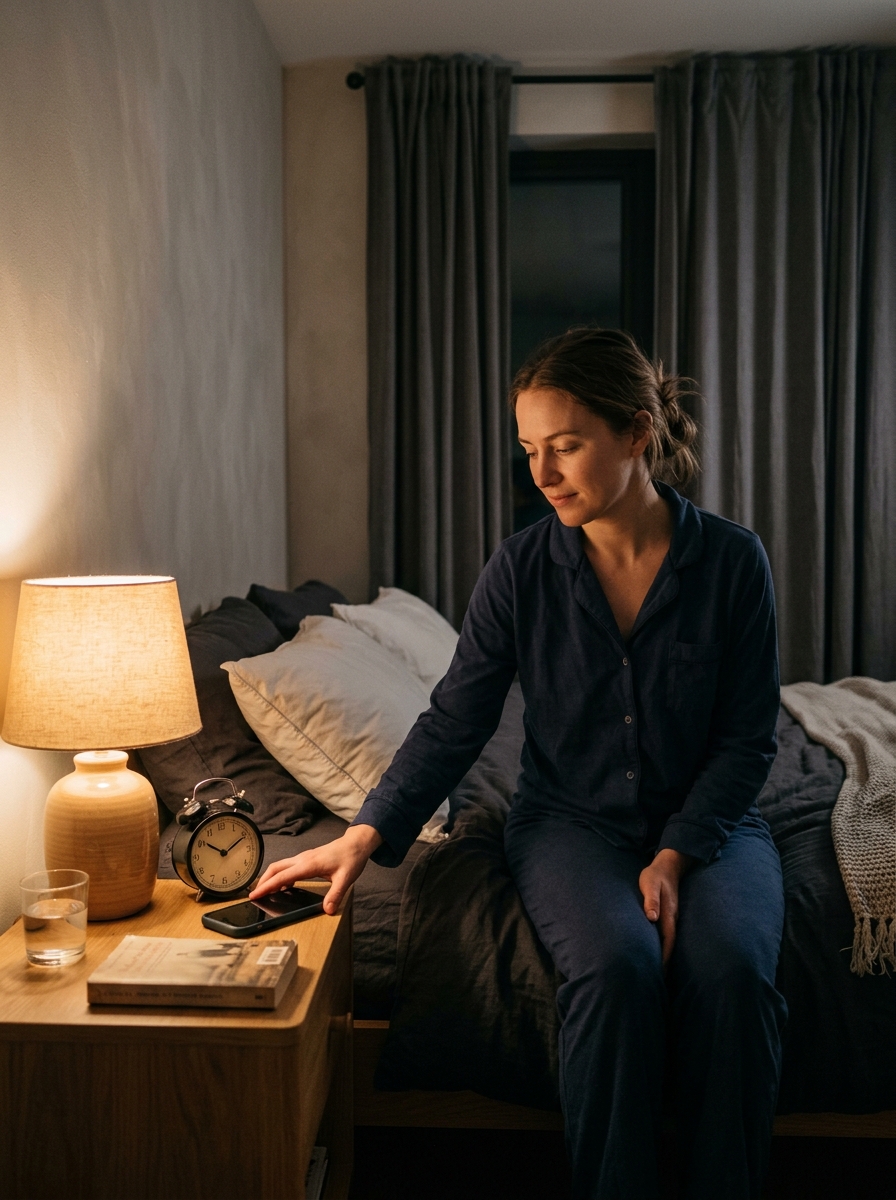
Reducing screen time before bed is therefore less about strict discipline and more about protecting the last part of the evening. A practical approach is to set a digital curfew 30 to 60 minutes before sleep. The phone can be placed across the room, charged outside the bedroom or switched to a mode that limits notifications. People who use phones as alarms can buy a simple alarm clock. Those who must remain reachable for emergencies can allow calls from selected contacts while muting less urgent alerts.
The bedroom environment also matters. Sleep is easier when the room is quiet, dark and comfortable. A quiet space reduces the number of small awakenings that people may not remember but still feel the next morning. Heavy curtains, earplugs, white noise or a fan may help in noisy neighborhoods. Darkness supports the body’s sleep signals, especially in cities where streetlights, vehicle headlights and electronic devices can keep the room brighter than expected.
Temperature is another overlooked factor. Many people sleep better in a cooler room, though comfort varies by person and climate. In hot and humid regions, airflow, breathable bedding and light sleepwear may be more realistic than a cold bedroom. The goal is to avoid overheating, sweating or waking repeatedly to adjust blankets and fans. A good sleep environment is not necessarily luxurious. It is simply a room that tells the body there is nothing urgent to monitor.
Food and drink before bedtime can also shape the quality of sleep. A large meal late at night may keep the digestive system active and make it harder to lie comfortably. Spicy, greasy or very heavy foods can worsen reflux for some people. Drinking too much fluid shortly before bed may lead to repeated trips to the bathroom. Alcohol may make a person feel sleepy at first, but it can fragment sleep later in the night. Caffeine, found in coffee, tea, energy drinks and some soft drinks, can remain active for hours and may affect sleep even when consumed in the afternoon.
This does not mean people must go to bed hungry. A light snack may be reasonable if hunger itself is keeping someone awake. The more useful rule is to avoid a very full stomach near bedtime and to notice personal triggers. Some people are sensitive to caffeine after lunch. Others can drink tea in the afternoon without difficulty. Sleep advice works best when it is combined with observation. A sleep diary for one or two weeks can reveal patterns that memory misses.
Stress is another common reason people remain awake. The body may be in bed, but the mind is still at work, reviewing mistakes, planning tomorrow or replaying conversations. A short evening ritual can help move those thoughts out of bed. Writing a to-do list, preparing clothes for the next day or noting unresolved worries earlier in the evening can reduce the sense that bedtime is the only available thinking time. Relaxation does not have to be elaborate. Slow breathing, prayer, meditation, gentle reading or quiet reflection may be enough.
Exercise can support better sleep, especially when done regularly during the day. Physical activity helps regulate energy, mood and stress. However, intense exercise too close to bedtime may leave some people too alert. The best timing depends on the individual. A brisk walk in the morning or afternoon may help one person sleep deeply, while another may prefer light stretching at night. The central idea is to build a daily rhythm that includes movement, daylight and a clear evening slowdown.
One common mistake is trying to solve poor sleep only at bedtime. Sleep is shaped by the entire day. Morning light helps set the internal clock. Regular meals provide timing cues. Physical activity reduces restlessness. Caffeine choices affect evening alertness. Work boundaries influence mental stress. By the time a person lies down, many of the night’s conditions have already been created.
There are also moments when simple sleep hygiene is not enough. People who snore loudly, wake up gasping, have severe daytime sleepiness, suffer persistent insomnia, experience restless legs or feel unable to function despite enough time in bed should seek medical advice. Poor sleep can be linked to sleep apnea, anxiety, depression, chronic pain, medication effects or other health conditions. Good habits are important, but they should not delay care when symptoms are serious or long-lasting.
For most people, the path to better sleep begins with a few modest choices: keep bedtime and wake time steady, turn off screens earlier, make the bedroom quiet and dark, avoid heavy late meals and build a calming routine. These steps may sound ordinary, but their power lies in consistency. Sleep improves when the body trusts the night. In a noisy, connected and overstimulated world, protecting that trust may be one of the simplest forms of self-care.
“””
