
For workers, parents and students with little time, healthy eating depends less on perfect recipes than on practical structure, varied foods and small decisions repeated every day.
For many busy people, food is the first part of life to lose order. Breakfast becomes coffee. Lunch is whatever can be bought near the office. Dinner arrives late, often through a delivery app, when hunger has already become impatience. The problem is rarely a lack of information. Most people know that vegetables, fruit, whole grains and fresh foods are better than sugary drinks, salty snacks and deep-fried meals. The harder question is how to eat well when the day is crowded, the budget is limited and time feels like the scarcest ingredient.
Health authorities, including the World Health Organization, describe a healthy diet not as a single menu but as a pattern built on balance, diversity, moderation and suitability to individual needs. That definition matters because it removes the pressure to copy someone else’s plate. A healthy meal for a nurse on night shifts may look different from one for an office worker, a delivery driver, a student or a parent feeding children after work. The goal is not perfection. The goal is a reliable framework that helps the body receive enough nutrients without too much sugar, salt or unhealthy fat.
The simplest framework is to start with the plate. A practical meal should include vegetables or fruit, a source of protein, a source of carbohydrates, and a modest amount of healthy fat. Vegetables can fill a large part of the plate because they add fiber, water, vitamins and volume without requiring heavy sauces. Protein helps with fullness and supports daily function. Carbohydrates provide energy, especially for people who walk, work long hours or exercise. Fat is not the enemy, but the type and amount matter. A meal built this way is easier to repeat than a complicated diet plan.
For busy people, variety should be planned, not left to chance. Eating diverse foods does not mean cooking a new dish every day. It can mean rotating simple ingredients across the week: eggs, fish, chicken, tofu, beans, lentils, yogurt, brown rice, oats, sweet potatoes, leafy greens, carrots, tomatoes, bananas, apples, nuts and seeds. A person who keeps only instant noodles, sweet biscuits and processed meat at home will usually eat those foods when tired. A person who keeps washed vegetables, boiled eggs, canned beans, plain yogurt and frozen fruit has better choices available before hunger becomes urgent.
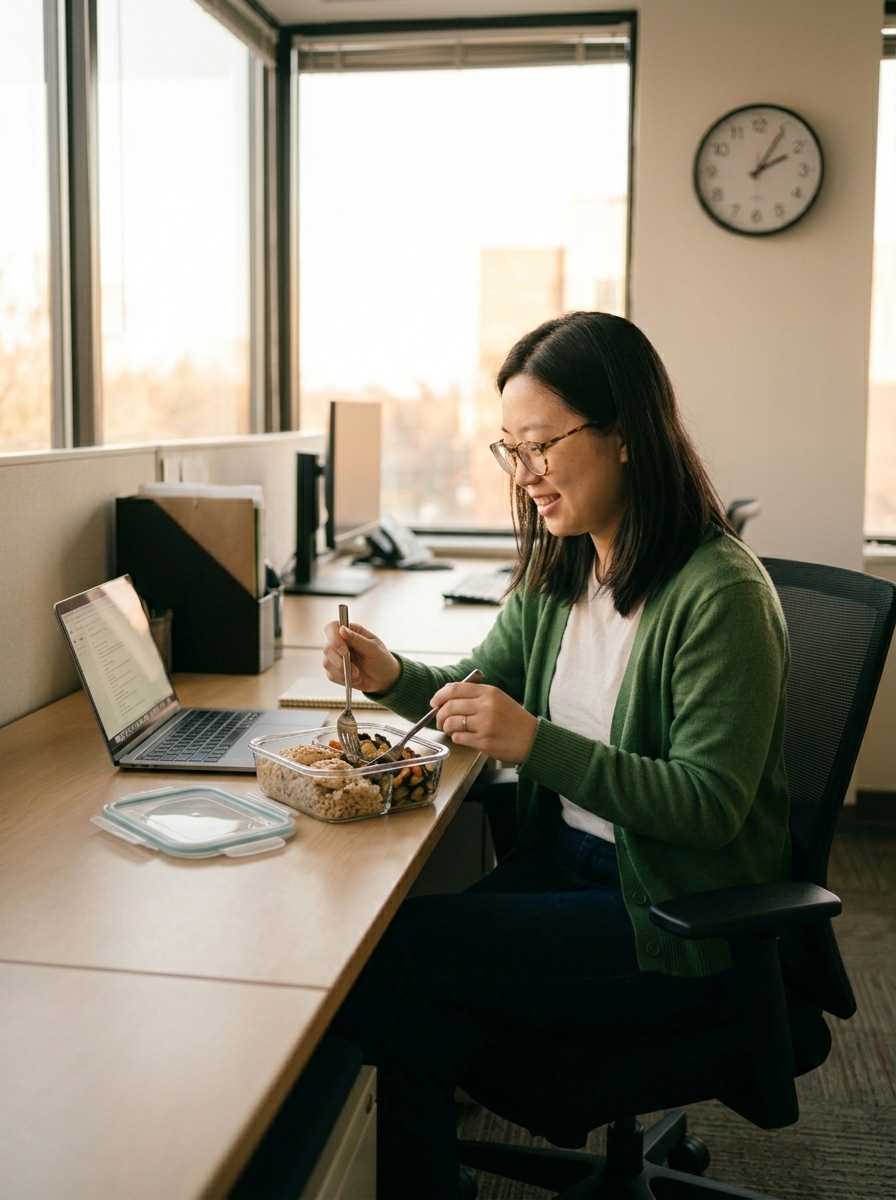
Vegetables are often the first casualty of a busy schedule, yet they are also one of the easiest foods to add with planning. A healthy routine can begin with one rule: include at least one vegetable or fruit every time food is eaten. Add tomatoes or spinach to eggs in the morning. Choose a lunch with greens or soup. Keep cucumbers, carrots or fruit visible at work. Add frozen vegetables to rice, noodles or stir-fries. Frozen and canned vegetables can be useful when fresh produce is expensive or inconvenient, as long as added salt and sugar are limited.
Protein also needs attention because many quick meals are heavy in refined carbohydrates and light in lasting fullness. A sweet drink and pastry may provide energy for an hour but leave a person hungry again quickly. Better options include eggs, tofu, fish, chicken, lean meat, beans, lentils, milk, unsweetened yogurt, nuts or soy products, depending on culture, preference and budget. Protein does not need to be expensive. Beans, eggs, tofu and canned fish can be affordable foundations for fast meals.
Carbohydrates should not be treated as a threat. For busy people, they are often necessary fuel. The question is quality and portion. Whole grains, oats, brown rice, corn, potatoes, sweet potatoes and whole-grain bread usually provide more fiber and steadier fullness than highly refined snacks and sugary foods. A worker who needs sustained energy through a long afternoon may do better with rice, vegetables and protein than with a sweet coffee and packaged snack. Restricting too aggressively can lead to evening overeating.
Sugar is one of the easiest ingredients to consume without noticing. It hides in sweetened coffee, milk tea, soft drinks, energy drinks, bottled juices, flavored yogurt, breakfast cereals, sauces and desserts eaten because lunch was too small. Busy people often use sugar as a quick solution for fatigue, but the effect is short. A practical approach is not to ban all sweet foods, but to make them intentional rather than automatic. Choose water or unsweetened drinks most of the time. Treat dessert as a choice, not a daily emergency. If drinking coffee or tea, reduce sugar gradually so the change is sustainable.
Salt is another quiet problem, especially for people who depend on restaurant meals, instant noodles, processed meat, sauces and packaged snacks. Food can taste normal while still containing a high amount of sodium. The busy person’s strategy should be simple: cook some meals at home, use herbs, spices, garlic, lemon, vinegar or chili for flavor, and reduce reliance on salty condiments. When eating out, choose dishes with more fresh ingredients and fewer sauces when possible. The goal is not bland food. It is flavorful food that does not depend entirely on salt.
Fat requires the same practical balance. The body needs dietary fat, but frequent deep-fried foods, fatty processed meats, pastries and products high in saturated or trans fats can crowd out healthier choices. For daily meals, better fats often come from fish, nuts, seeds, avocado and many plant oils, used in reasonable amounts. A busy person does not need to calculate every gram. A useful habit is to reduce fried meals as the default option and choose grilled, steamed, boiled, stir-fried or baked foods more often.
Meal preparation can help, but it should be realistic. Many people fail because they imagine preparing fifteen identical containers on Sunday. A more flexible method is ingredient preparation. Cook a pot of rice or grains. Boil eggs. Wash greens. Roast vegetables. Prepare a simple protein. Keep fruit ready. With these pieces available, meals can be assembled quickly in different combinations. The same ingredients can become a rice bowl, soup, wrap, salad or simple dinner plate.
Breakfast deserves special attention because it sets the rhythm of the day. A healthy breakfast for a busy person should be fast and repeatable: oats with fruit and nuts, eggs with vegetables, plain yogurt with fruit, whole-grain toast with peanut butter, tofu with rice, or leftovers from dinner. Skipping breakfast is not harmful for everyone, but skipping it accidentally and then overeating later is a common pattern. The key is whether the routine supports stable energy and better choices.
Lunch should be designed to prevent the late-afternoon crash. A balanced lunch includes protein, vegetables and a filling carbohydrate. If buying lunch outside, the healthiest choice is often not the most expensive but the most complete: rice with vegetables and fish, soup with beans, noodles with extra greens and protein, or a sandwich with lean protein and salad. Asking for less sauce, choosing water and adding fruit can change the nutritional quality of a meal without requiring a separate diet.
Dinner should be lighter in stress, not necessarily tiny in size. Many busy people arrive home hungry and make the fastest choice available. That is why the home environment matters. Keep emergency healthy meals: eggs, frozen vegetables, canned beans, tofu, whole-grain noodles, pre-cooked rice, soup stock, fruit and yogurt. A ten-minute meal made from simple ingredients is often better than a late, oversized delivery meal high in salt, sugar and fat.
Snacking can be helpful or harmful depending on planning. Fruit, nuts, yogurt, boiled eggs, roasted chickpeas or whole-grain crackers can prevent extreme hunger. Sweet drinks, chips and candy can become a habit that adds calories without nourishment. The best snack is one chosen before hunger becomes urgent.
A healthy diet must also fit real life. Cultural foods, family meals, budget, religion, allergies, medical conditions and personal preferences all matter. People with diabetes, kidney disease, pregnancy-related needs, eating disorders or other medical conditions should seek qualified medical or nutrition advice rather than follow generic rules. For most adults, however, the foundation is clear: eat a variety of mostly minimally processed foods, increase vegetables and fruit, choose enough protein and fiber, and limit excess sugar, salt and unhealthy fats.
For busy people, the measure of success is not whether every meal looks perfect. It is whether the usual pattern becomes better. One more vegetable serving, one less sweet drink, one home-prepared lunch, one lower-salt choice and one balanced breakfast can matter when repeated. Healthy eating is not built only in kitchens with time and money. It is built in small decisions made before the day becomes too busy to think.”””
