
Deep breathing, gentle movement, calming music, journaling, short meditation and less screen time can help people build daily relief before stress becomes overwhelming.
Stress often enters the home quietly. It follows people from work in unread messages, unpaid bills, family responsibilities, unfinished tasks and the feeling that the day has not really ended. For many adults, the home is supposed to be a place of recovery, but it can become another space filled with noise, screens and pressure. The good news is that stress reduction does not always require expensive equipment, long vacations or major life changes. Small habits practiced consistently at home can help the body and mind regain a sense of control.
Stress is not always harmful. It is part of the body’s normal response to challenge. It can sharpen attention before a deadline, help someone react quickly or push a person through a difficult moment. The problem begins when the body remains in that alert state for too long. Rest becomes shallow, thoughts become repetitive, patience decreases and the ordinary demands of life begin to feel heavier. At that point, the first goal is not to eliminate every source of pressure. It is to create recovery inside the day.
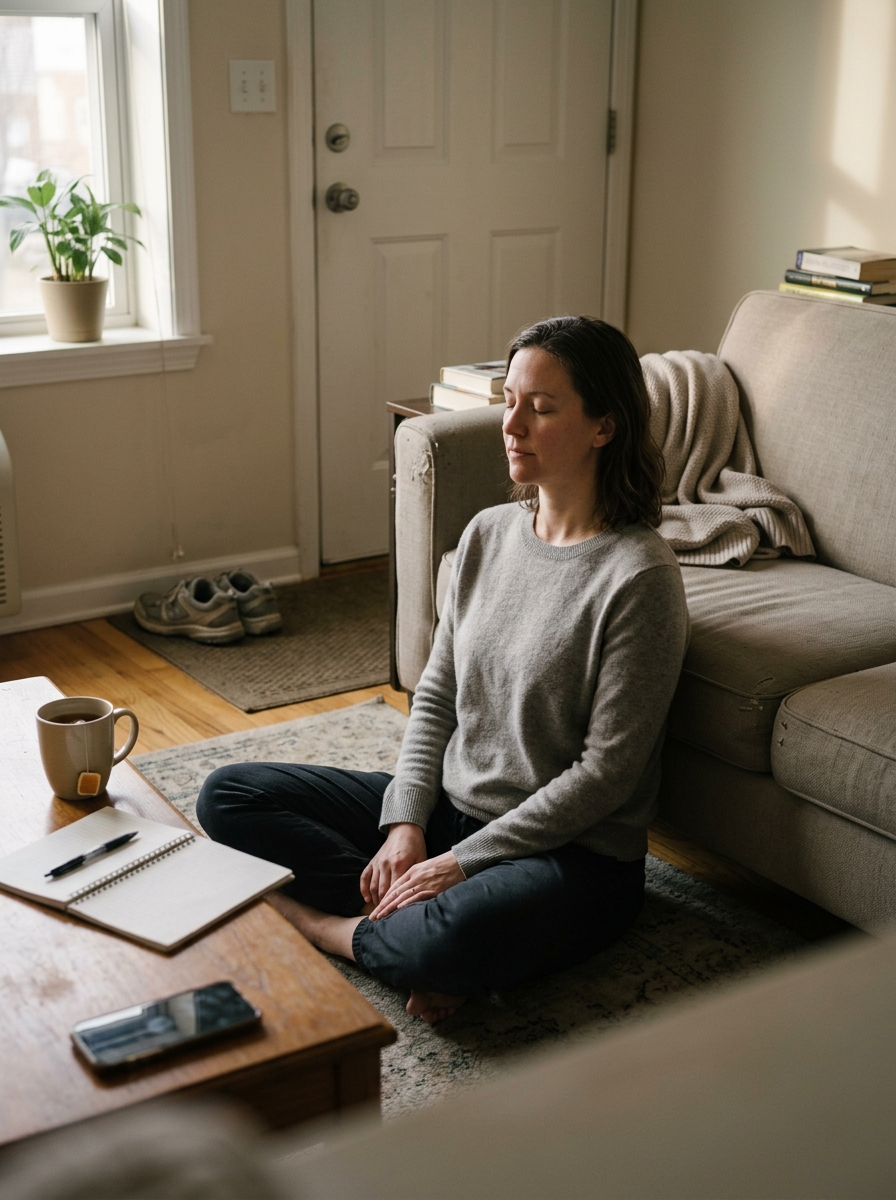
One of the simplest tools is deep breathing. When people are stressed, their breathing often becomes fast and shallow. A few minutes of slower breathing can help signal to the body that it is safe to reduce tension. A practical method is to sit comfortably, relax the shoulders, breathe in gently through the nose, pause briefly and breathe out slowly. The exact count matters less than the rhythm. The out-breath should feel unhurried. This can be done before sleep, after a difficult phone call, during a work break or whenever the mind feels crowded.
Breathing exercises are effective partly because they are portable. They do not require privacy, special clothing or a large amount of time. A person can practice while sitting at a desk, standing in the kitchen, lying in bed or waiting for a child to finish homework. The key is repetition. Used only in crisis, breathing may feel unfamiliar. Practiced daily, it becomes easier to use when pressure rises.
Music is another accessible way to change the atmosphere at home. Soft instrumental music, slow acoustic songs, nature sounds or familiar calming tracks can help mark a transition from work mode to rest mode. Music cannot solve financial problems or remove deadlines, but it can change the emotional temperature of a room. For some people, relaxing music during dinner preparation, cleaning or evening stretching makes routine tasks feel less like an extension of the workday.
Walking is one of the most practical stress-reduction habits because it combines movement, rhythm and a change of environment. A walk does not need to be intense to be useful. Ten to twenty minutes around the neighborhood, in a courtyard, on a quiet street or even inside an apartment building can help release physical tension. Walking also gives the mind something simple to follow: step, breath, light, sound. This can interrupt the loop of worrying that often grows stronger when a person sits still with a phone.
Gentle movement at home can serve the same purpose. Stretching the neck, shoulders, back and hips can help people notice where stress has been stored in the body. Simple yoga poses, light mobility exercises or slow bodyweight movements can reduce stiffness after long hours at a computer. The goal is not athletic performance. It is to remind the body that it is allowed to move out of tension. For people who feel too tired to exercise, beginning with five minutes is better than waiting for the perfect workout.
Journaling can help when stress is caused by too many thoughts competing for attention. Writing down worries, tasks or feelings can move them from the mind onto paper, where they become easier to examine. A journal does not need to be poetic or long. A useful entry may answer three questions: What is bothering me? What can I do about it today? What can wait? This simple structure can separate real responsibilities from imagined emergencies.
For people who struggle to sleep, journaling before bed may be especially useful. Many people lie awake because the brain uses quiet time to review unfinished business. Writing a short list for the next day can reassure the mind that important tasks have been recorded. Gratitude notes can also help, not because they deny problems, but because they prevent stress from becoming the only story of the day. Even one sentence about something steady, kind or ordinary can create balance.
Short meditation is another home practice that can be more realistic than many people think. Meditation does not require emptying the mind completely. A beginner can sit for three to five minutes, focus on breathing and gently return attention whenever thoughts wander. The wandering is not failure; noticing it is part of the practice. Over time, this teaches a person to observe stress without immediately obeying every anxious thought.
Mindfulness can also be built into ordinary tasks. Washing dishes, folding clothes, making tea or watering plants can become moments of attention rather than automatic chores. The practice is simple: notice the temperature of the water, the sound of movement, the feeling of the cup, the color of the food, the rhythm of the hands. This may seem small, but stress often grows when the mind is always somewhere else. Returning to the present moment gives the nervous system a brief rest.
Reducing screen time is increasingly important. Phones, computers and televisions bring news, entertainment and connection, but they also keep the brain stimulated. Many people try to relax by scrolling, only to feel more tired afterward. Messages, short videos, arguments, advertisements and constant notifications can prevent real recovery. A practical rule is to create screen-free periods at home, especially during meals and the hour before sleep. Charging the phone outside the bedroom can also reduce late-night checking.
Not all screen use is harmful. A video call with family, a guided meditation, gentle music or a useful health program can support well-being. The issue is uncontrolled use that steals rest. A person should ask after using a device: do I feel calmer, or more restless? That question is often more useful than counting minutes.
Healthy eating, regular exercise and enough sleep form the foundation beneath these smaller techniques. Stress is harder to manage when the body is underfed, over-caffeinated, dehydrated or sleep-deprived. A balanced meal with vegetables, protein, whole grains and water will not erase emotional strain, but it can stabilize energy. Too much sugar, alcohol, caffeine or late-night heavy food may make stress feel worse, especially when sleep is already fragile.
Sleep deserves special protection. A home routine that supports sleep might include dimmer lights, less screen exposure, a regular bedtime, a cooler room, quiet music or breathing practice. People often treat sleep as the reward after all tasks are finished. In reality, sleep is one of the conditions that makes tomorrow manageable. Protecting it is not selfish; it is practical.
Stress reduction at home also benefits from boundaries. This may mean ending work communication at a set time when possible, keeping one small area of the home free from work materials, saying no to unnecessary commitments or asking family members to share household tasks. Relaxation techniques help, but they should not become a way to tolerate an impossible load forever. Sometimes stress is a signal that responsibilities need to be redistributed.
People should also know when simple home strategies are not enough. If stress lasts for weeks, disrupts sleep, causes frequent headaches or stomach problems, leads to panic, affects work or relationships, or brings feelings of hopelessness, professional support is important. A doctor, counselor, psychologist or other qualified health worker can help assess whether stress is connected to anxiety, depression, burnout or another medical issue. Urgent help is needed if someone has thoughts of self-harm or feels unsafe.
The most useful home stress plan is not dramatic. It is ordinary and repeatable. Breathe slowly. Walk a little. Stretch the body. Play calming music. Write down what is heavy. Sit quietly for a few minutes. Turn off the screen earlier. Eat a real meal. Sleep before exhaustion becomes collapse. These steps may look small, but stress is often reduced through small signals of safety repeated every day.
A calmer life is rarely built in one perfect evening. It is built when the home begins to offer recovery again, one simple habit at a time.”””
