
Balanced meals, shared movement, regular sleep, less sugar, lower screen time and preventive checkups can help families build long-term well-being without turning home life into a strict health program.
A healthy family lifestyle is often imagined as a difficult project that requires expensive food, intense exercise and perfect discipline. In reality, the strongest foundation is usually simpler. Families become healthier when good habits are repeated often enough to feel normal: eating together when possible, moving daily, sleeping at regular hours, limiting sugary foods and drinks, reducing unnecessary screen time and keeping up with preventive health care.
The family setting matters because health habits are learned through routine. Children observe what adults do, not only what they say. If vegetables appear regularly at meals, water is the usual drink, phones are put away during dinner and walking is treated as part of daily life, those choices become familiar. The goal is not to create a home where every rule is perfect. It is to create an environment where the healthier choice is easier to make.
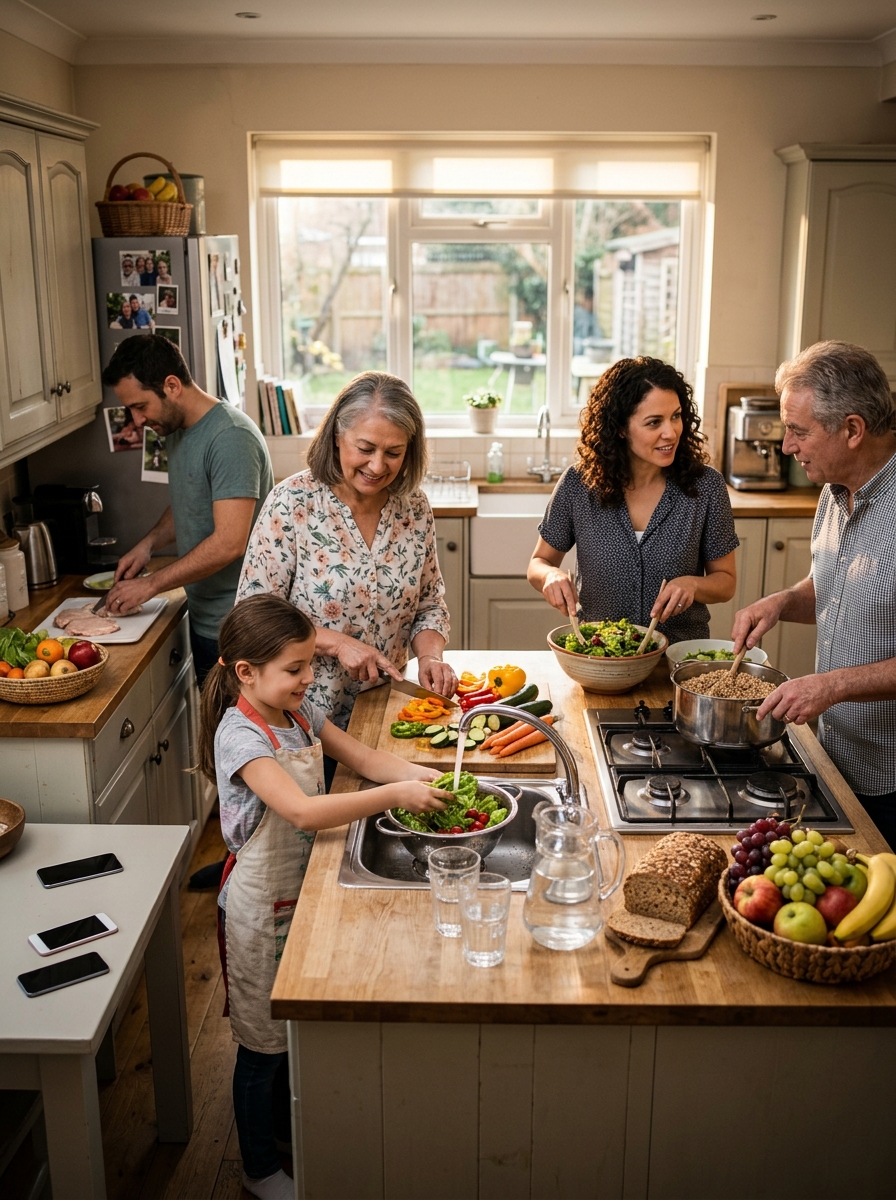
Balanced eating is one of the first steps. A family meal does not need to be complicated to be nutritious. It can include a source of protein, vegetables or fruit, whole grains or starchy foods, and healthy fats in reasonable portions. The important point is variety and moderation. When families plan meals together, children can learn where food comes from, how it is prepared and why different foods support energy, growth and concentration.
Eating together also has emotional value. A shared meal gives family members time to talk, slow down and notice one another. In busy households, it may not happen every day, but even a few regular meals each week can create structure. Turning off the television and putting phones aside during meals can help people pay attention to hunger, fullness and conversation. Food becomes not only fuel, but a moment of connection.
Limiting sweets is another practical habit. Sugar does not need to be treated as forbidden, because strict bans can make sweet foods more tempting. A more sustainable approach is to make sweets occasional rather than constant. Sugary drinks, candies, pastries and desserts can be kept for special moments, while water, milk, fruit and simple snacks become the everyday pattern. Children are more likely to accept limits when adults follow them too.
The same principle applies to portion size and snacking. Families can keep healthier options visible, such as fruit, yogurt, nuts where appropriate, boiled eggs or cut vegetables. Highly processed snacks do not have to disappear entirely, but they should not dominate the kitchen. A home food environment sends quiet signals. What is easy to reach often becomes what is eaten most.
Physical activity should also be treated as family life, not punishment. Many people hear the word exercise and imagine a gym, a race or a demanding workout. But family movement can be walking after dinner, cycling in a park, dancing at home, playing ball, gardening, swimming or taking stairs. The best activity is the one family members can repeat with less resistance.
Moving together has advantages beyond fitness. It gives parents and children a shared experience away from screens and chores. It helps older family members stay mobile and helps younger members release energy. It can improve mood after a stressful day and create small memories that are not centered on shopping or devices. For children, active play also builds coordination, confidence and social skills.
A realistic family plan may begin with short sessions. Ten minutes of walking before school, stretching after work, or weekend outdoor play can grow into longer routines. The habit matters more than the performance. When physical activity is presented as normal and enjoyable, it becomes easier to sustain than when it is used only to correct weight or appearance.
Sleep is another pillar of household health. Families often underestimate how much regular sleep affects mood, learning, appetite and patience. A tired child may appear difficult, distracted or emotional. A tired adult may become irritable, less active and more likely to rely on quick, unhealthy food. Sleep is not wasted time. It is the period when the body and brain recover.
A consistent bedtime routine can help. Lights can be lowered, screens put away, school bags prepared earlier and noisy activities reduced before sleep. Children and teenagers generally need more sleep than adults, so one household schedule may not fit everyone. Still, the family can protect a shared principle: sleep should be respected, not treated as the first thing to sacrifice when life gets busy.
Reducing screen time is closely connected to sleep, movement and family communication. Screens are now part of school, work and social life, so the goal is not to pretend they can be removed completely. The more realistic goal is to set boundaries. Families can create screen-free meals, device-free bedrooms at night, outdoor time before entertainment time, and agreed limits on short videos or gaming.
Screen rules work better when adults follow them visibly. A parent who asks a child to stop using a phone while continuing to scroll through one sends a confusing message. Families can also discuss content, not only time. What children watch, who they interact with and how online experiences affect their emotions are all part of digital health. Reducing screen time should open space for something better: sleep, reading, play, conversation, creativity or rest.
Preventive health care completes the picture. Regular checkups, dental visits, vaccinations and age-appropriate screenings help identify problems early, sometimes before symptoms appear. Families with a history of chronic disease may benefit from discussing that history with health professionals, because lifestyle and screening decisions can depend on risk. Preventive care is not only for people who are already ill. It is part of staying well.
Parents and caregivers can make health appointments less frightening by treating them as routine maintenance, similar to checking a car or updating important documents. Children who grow up with regular dental and medical care may be more likely to continue those habits as adults. A family calendar that includes checkups, vaccinations, eye exams or dental cleanings can prevent health from being forgotten until a crisis appears.
Mental and emotional health should also be included in any healthy lifestyle. A family can eat well and exercise, but still struggle if stress, conflict or loneliness are ignored. Shared routines help because they create predictability. Meals, walks, bedtimes and checkups are not just health tasks. They are signals that the family is paying attention to one another.
No family will do everything perfectly. Work schedules change, children get sick, grandparents need care, money may be tight and some neighborhoods lack safe parks or affordable fresh food. A healthy lifestyle must be flexible enough to survive real life. Frozen vegetables, simple home meals, indoor movement, short walks, earlier bedtimes and small reductions in sugary drinks can all count.
The most successful approach is gradual. A family might begin by drinking more water for two weeks, then adding a short evening walk, then setting a screen-free dinner rule, then improving bedtime. Small changes reduce conflict and allow everyone to adjust. Over time, the household culture shifts. What once felt like effort becomes routine.
Healthy family living is not about perfection, appearance or strict control. It is about building daily conditions that help people feel better, move better, sleep better and care for one another. Balanced food, shared movement, steady sleep, fewer sweets, less passive screen time and regular checkups are not dramatic solutions. They are ordinary habits with lasting power.
In the end, the family is one of the most important places where health is practiced. A home that supports good choices gives every member, from children to older adults, a better chance to live with energy, confidence and resilience. The change begins not with a major promise, but with the next meal, the next walk, the next bedtime and the next decision to choose well together.”””
