
Elite clubs, global stars, dramatic comebacks and a powerful commercial machine have made Europe’s top club competition one of sport’s most reliable spectacles.
The UEFA Champions League remains one of the rare sporting competitions that can make a weekday night feel like a global event. From Madrid to Manchester, Munich to Milan, Paris to Istanbul, the tournament has built its appeal on a simple promise: the best clubs in Europe, under the brightest lights, with reputations, fortunes and legacies at stake.
Part of the attraction comes from scarcity. Domestic leagues unfold over months, allowing teams to recover from mistakes and rebuild momentum. The Champions League is less forgiving. A poor 20 minutes away from home can change a season. A red card, missed penalty or defensive error can echo across continents. By the time the knockout rounds arrive, the competition becomes a sequence of high-pressure episodes in which the margin between glory and collapse is often one goal, one save or one moment of nerve.
That pressure is intensified by the quality of the teams. The Champions League brings together clubs accustomed to dominating their own domestic environments and forces them into unfamiliar discomfort. A champion in one country may suddenly find itself chasing shadows against a faster midfield, a more aggressive press or a striker who needs only half a chance. The tactical contrast is part of the drama. English intensity meets Spanish control. Italian structure meets German speed. French athleticism meets Portuguese technical craft. The tournament turns European football into a laboratory of style.
The new format has added another layer. Since the competition expanded into a 36-team league phase, clubs have faced a broader range of opponents before the knockout stage. The old predictability of small groups has given way to a larger table, more combinations and a longer sense of jeopardy. Even elite clubs cannot assume a smooth passage. Seeding and home-leg advantages later in the tournament make early results matter, while smaller or emerging clubs gain more chances to test themselves against major names.
Yet format alone cannot explain the Champions League’s hold on the public imagination. The tournament is built on stars. For generations, Europe’s biggest club stage has shaped how footballers are remembered. Great players can win domestic titles and still be judged by what they do on Champions League nights. The competition has turned individual performances into global reference points: a hat trick under pressure, a goalkeeper’s impossible save, a teenage winger tormenting a veteran fullback, a captain lifting his team through exhaustion.
The stars matter because they bring audiences beyond club loyalty. A viewer in Asia, Africa or the Americas may not support Real Madrid, Bayern Munich, Manchester City, Paris Saint-Germain, Barcelona, Liverpool or Inter Milan as a local fan would, but may tune in to watch a particular player. The Champions League has become a global shop window for football excellence, where established icons protect their status and emerging talents announce themselves to the world.
The great matches endure because they combine elite skill with emotional instability. The 2005 final in Istanbul, when Liverpool came back from 3-0 down against AC Milan and won on penalties, remains one of the defining stories of modern club football. Manchester United’s injury-time turnaround against Bayern Munich in 1999 became a lesson in the cruelty and beauty of stoppage time. Barcelona’s 6-1 victory over Paris Saint-Germain in 2017, overturning a four-goal first-leg deficit, gave the football world a word that now carries its own mythology: remontada.
Comebacks are central to the Champions League because the two-leg knockout format creates hope even when logic says a tie is finished. A team trailing by two or three goals does not merely need to win; it needs to bend the emotional direction of the contest. The first goal changes the crowd. The second changes the opponent’s body language. The third changes history. Supporters understand this rhythm instinctively, which is why stadiums can feel electric long before the scoreline is level.
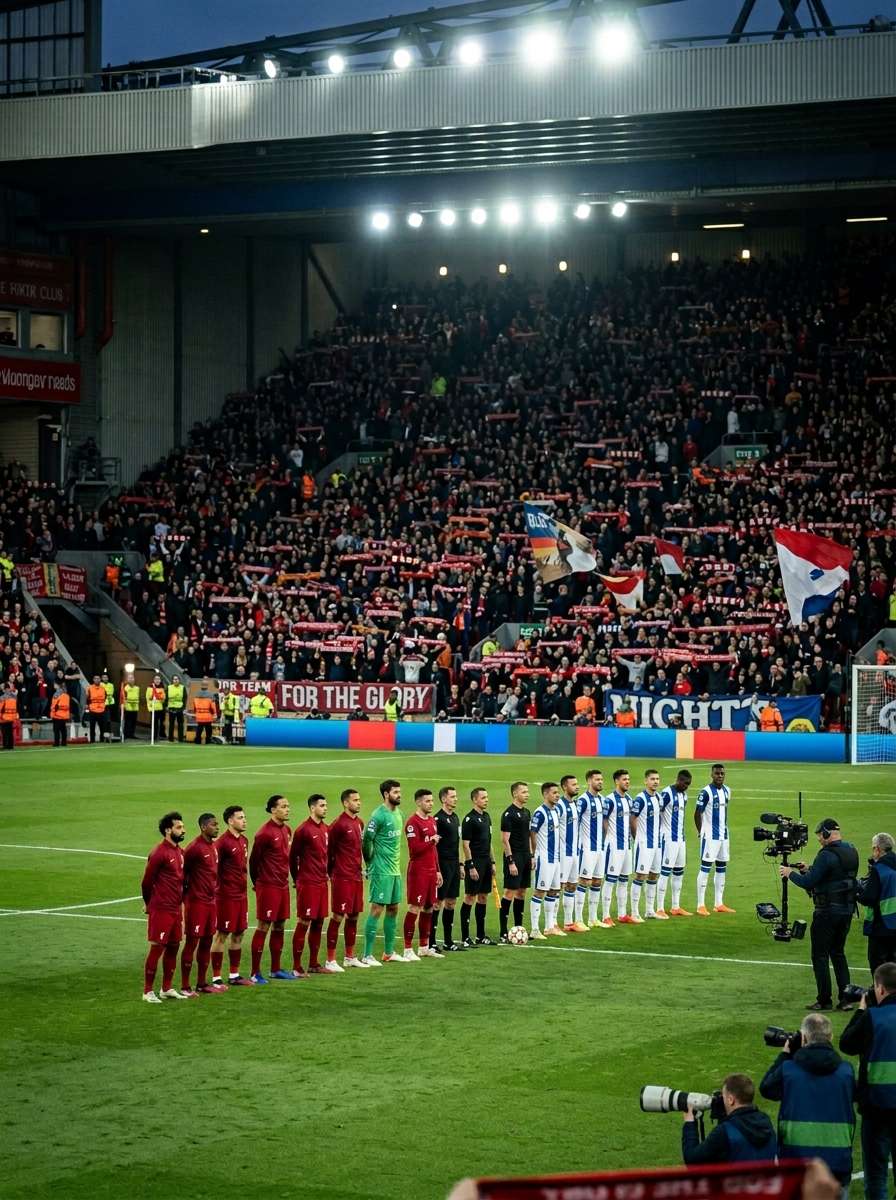
The away leg, the home crowd, the anthem, the floodlights and the aggregate score combine to create theater. The Champions League understands anticipation. Its famous anthem is more than branding; it is a ritual cue. Players line up, cameras move across faces, supporters hold scarves, and for a few seconds the game feels bigger than the normal calendar. That ritual matters. Sport becomes more powerful when it convinces people they are watching something that will be remembered.
The competition’s appeal is also commercial. The Champions League sits at the intersection of broadcast rights, sponsorship, hospitality, tourism, betting markets, merchandise, digital content and global advertising. For clubs, qualification is not only a sporting achievement but a financial event. Prize money, performance bonuses, matchday revenue and global visibility can shape transfer budgets and long-term planning. For sponsors and broadcasters, the tournament offers premium content with predictable global attention.
This commercial strength can be controversial. The competition has widened the gap between clubs that qualify regularly and those that do not. Champions League money can reinforce existing power, helping major clubs buy better players, build deeper squads and return again the following season. Critics argue that the tournament, while thrilling, contributes to inequality within European football. Smaller domestic leagues often find it difficult to compete financially with clubs from the richest markets.
But the Champions League also benefits from the possibility of disruption. A club from outside the usual circle can still create a memorable run. A young team can eliminate a giant. A goalkeeper from a less fashionable side can become a hero overnight. Even when the economics favor the elite, the pitch retains enough uncertainty to keep the competition emotionally alive. Football’s commercial machine may build the stage, but it cannot fully control the story.
Television and social media have amplified that story. A Champions League goal now travels instantly through highlight clips, reaction videos, tactical threads, fan edits and live commentary across platforms. A spectacular strike can be seen by millions within minutes. A manager’s celebration, a player’s tears or a supporter’s stunned expression can become a viral image. The tournament is no longer consumed only through full matches. It lives through fragments that circulate globally.
This digital life strengthens the competition’s appeal to younger audiences. They may first encounter the Champions League through a 30-second clip rather than a full broadcast. But the clip can lead them toward the match, the club, the player and the wider mythology. The competition’s history is constantly being repackaged: Istanbul, Rome, Lisbon, Paris, Madrid, Wembley. Each new generation inherits old miracles while waiting for its own.
The Champions League also offers a rare combination of local identity and global reach. Clubs carry cities, languages, songs and histories onto an international stage. Supporters do not experience the competition as neutral entertainment. They experience it as representation. When a club advances, a city feels bigger. When it collapses, the defeat can feel communal. At the same time, the competition invites neutral viewers to participate in drama without lifelong allegiance.
This is why the tournament continues to attract both the devoted and the casual. The devoted come for loyalty. The casual come for spectacle. Broadcasters know that a Champions League semifinal can draw viewers who do not watch regular domestic football. Sponsors know that the tournament offers emotional intensity and international scale. Players know that their reputations can be remade in one night.
The Champions League is not perfect. Its financial concentration, fixture pressure and commercial expansion raise serious questions about the future of club football. But its core appeal remains powerful because it delivers what sport promises at its best: excellence under pressure, uncertainty despite imbalance, and moments that feel impossible until they happen.
That is why the competition remains so compelling. It is not only about which club is strongest. It is about who survives the night, who handles fear, who finds courage when the scoreline turns hostile, and who writes a memory that supporters will repeat for decades. In a crowded sports world, the Champions League still knows how to make football feel like destiny.
“””
