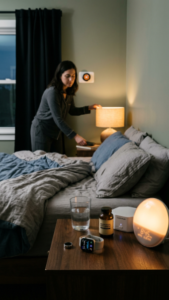
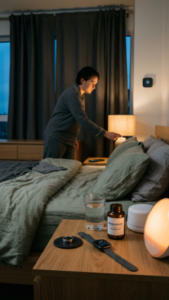
As sleep trackers, evening light routines, magnesium, white noise and sunrise alarms enter ordinary bedrooms, experts say the strongest gains still come from consistent habits, safer choices and respect for the body’s internal clock.
Sleep has become one of the most personal fronts in the modern wellness economy. Once treated as the quiet end of the day, it is now tracked, scored, optimized and discussed with the intensity once reserved for fitness and nutrition. People compare deep sleep percentages, lower bedroom temperatures, dim lights at night, take magnesium, try white noise, buy sunrise alarms and, in some cases, experiment with mouth taping after seeing it promoted online. The appeal is obvious: better sleep promises better mood, sharper thinking, stronger health and more control over a life that often feels overstimulated.
The shift is not only commercial. It reflects a real public problem. Many adults struggle to get enough sleep, and many more feel that the sleep they do get is fragile. Work messages arrive late. Phones stay within reach. Cities glow through windows. Streaming platforms remove natural stopping points. Anxiety follows people into bed. In that environment, sleep optimization has become a practical response to a daily question: how can the body be persuaded to shut down when the world does not?
The strongest scientific answer begins with consistency. Sleep is regulated by circadian rhythms, the internal timing system that helps determine when the body feels alert and when it prepares for rest. A regular wake time, predictable bedtime and morning light exposure can do more than many expensive gadgets because they give the brain a stable signal. The body learns patterns. When those patterns shift dramatically between weekdays and weekends, sleep can become harder, even for people who spend enough hours in bed.
This is why sleep specialists often focus less on a perfect bedtime product and more on rhythm. Going to bed at roughly the same time, waking at roughly the same time, getting daylight early and reducing stimulation late are simple ideas, but they are powerful because they work with biology rather than against it. They are also difficult because modern life rewards the opposite: late screens, irregular schedules, caffeine dependence and the belief that rest can be postponed without cost.
Evening light has become one of the clearest targets for change. Bright indoor lighting and phone screens can tell the brain that the day is not yet over. Blue-rich light is not the only issue; overall brightness and timing matter. The practical recommendation is not that people must live by candlelight after sunset. It is that the final hour or two before bed should feel different from the workday: dimmer lamps, fewer alerts, warmer lighting, less scrolling and a gradual reduction in cognitive intensity. A dark bedroom is not aesthetic minimalism. It is a biological cue.
Temperature is another accessible lever. The body naturally cools as it prepares for sleep, and a bedroom that is too warm can make it harder to stay asleep. Many people find that a cooler room, breathable bedding and lighter sleepwear improve comfort. The exact temperature varies by climate, age, health and personal preference, but the principle is consistent: the sleep environment should help the body lose heat, not trap it. In hot cities or during heat waves, fans, ventilation, blackout curtains and cooling bedding can become public health tools as much as lifestyle upgrades.
Sleep trackers have turned these invisible processes into numbers. Watches, rings, mattress sensors and phone apps now offer sleep scores, heart-rate trends, respiratory estimates and guesses about deep sleep or REM sleep. Used carefully, they can help people notice patterns: alcohol disrupts sleep, late meals cause restlessness, morning exercise improves timing, or weekend oversleeping makes Sunday night harder. The best use of a tracker is as a diary with sensors, not as a medical verdict.
The danger is that sleep tracking can become another source of anxiety. A person may wake up feeling rested, see a poor score and decide the night was a failure. Others may chase deep sleep percentages that consumer devices cannot measure with the same certainty as a sleep laboratory. Experts increasingly warn about this trap. Data can support self-awareness, but it should not replace how the person functions during the day. The goal is not to win sleep. The goal is to recover.
Magnesium occupies a complicated place in the sleep conversation. It is an essential mineral involved in many body processes, and some people report feeling more relaxed when they take it at night. But it should not be treated as a guaranteed sleep cure. Diet, deficiency, medication use and digestive tolerance all matter. High doses can cause side effects, and magnesium can interact with some medications. For many healthy adults, improving magnesium intake through foods such as nuts, seeds, legumes and leafy greens may be a safer first step than treating a supplement as a nightly sedative.
Mouth taping shows the sharper edge of the trend. The idea is to encourage nasal breathing during sleep by placing tape over the mouth. Online, it is often promoted as a simple route to deeper rest, less snoring or better oxygen use. Medical experts are more cautious. Snoring can be a sign of obstructive sleep apnea, a condition that requires proper evaluation. Taping the mouth may create risks for people with nasal blockage, respiratory illness, anxiety, alcohol use, sedative use or undiagnosed sleep-disordered breathing. A viral hack should not delay medical care.
White noise and similar sound tools are more modest but often useful. A steady sound can mask traffic, neighbors, sudden household noise or an unpredictable environment. For people in dense apartments or noisy streets, that masking effect may reduce awakenings. Others prefer pink noise, brown noise, fans, rain sounds or silence. The key is comfort and safety: volume should be low enough to avoid strain, and the sound should support sleep rather than become another stimulus.
Sunrise alarms offer a gentler approach to waking. Instead of shocking the body with a loud sound in a dark room, they gradually brighten before the alarm time. For people who wake before dawn, live in dark winters or struggle with abrupt alarms, simulated dawn can make mornings feel less violent. It is not a cure for chronic sleep deprivation, but it aligns with a basic principle of sleep health: light is a timing signal. Dim light belongs at night; brighter light belongs in the morning.
The most effective sleep optimization routines are usually boring. They start long before bedtime: morning daylight, movement during the day, caffeine cut off early enough, alcohol used cautiously or avoided, meals not pushed too late, and a wind-down period that repeats. The bedroom becomes a place associated with sleep rather than work, conflict or endless entertainment. These habits are less marketable than gadgets, but they are more durable.
There is still a place for technology. Trackers can reveal patterns. Smart bulbs can dim automatically. White-noise machines can protect sleep in loud environments. Sunrise alarms can smooth mornings. Cooling systems can help hot sleepers. But the technology works best when it supports behavior, not when it replaces it. A person who buys the most advanced tracker but sleeps at different times every night, drinks caffeine late and scrolls under bright light may collect beautiful data about a solvable problem.
The public conversation about sleep is likely to keep growing because the need is universal. Unlike elite fitness routines or expensive diets, sleep is something every person must do every day. That makes the format powerful for short videos, newsletters and practical explainers. A viewer can dim a room tonight, move caffeine earlier tomorrow, lower a thermostat, try a steadier wake time or stop treating a sleep score as a moral judgment. Small changes can feel immediate.
The most responsible message is not that everyone needs a perfect sleep stack. It is that better sleep usually comes from reducing friction between modern life and human biology. Darkness at night, light in the morning, regular timing, a cool and quiet room, cautious use of supplements, skepticism toward risky hacks and medical help when symptoms persist are not glamorous. But they are realistic. In an exhausted culture, realism may be the most powerful sleep optimization tool of all.