From pickleball courts to creator-led football and electric boat racing, faster formats are turning sport into shareable entertainment for a generation raised on clips, communities and style.
For decades, the sports business was built around the same grand architecture: national leagues, long seasons, broadcast rights, historic clubs, full-length matches and fans who inherited loyalties from families or cities. That structure still dominates global sport. But around its edges, a new class of competitions is growing with a different logic. They are faster, louder, easier to enter, easier to film and often designed as much for social platforms as for the stadium.
Pickleball, the Kings League, Baller League, the E1 Series and a rising number of creator-led and amateur tournaments are part of a broader shift in how young audiences consume sport. The appeal is not only the final score. It is the personality of the players, the presence of celebrities, the look of the uniforms, the reaction clips, the backstage content, the music, the memes and the feeling that fans can understand the product in minutes rather than surrender an entire afternoon.
The trend has become visible enough to attract the attention of fashion media. Vogue recently described niche sports leagues as an emerging frontier where fashion, entertainment and youth culture meet. The magazine pointed to competitions such as Spain’s Kings League, the UK and German Baller League, the E1 electric powerboat series and community tournaments that bring together brands, creators and athletes. Its central point was clear: sport is no longer only a contest. It is becoming a lifestyle platform.
That conclusion reflects a changing market. Younger fans are not necessarily abandoning traditional sport, but many are consuming it differently. They follow athletes before teams, creators before leagues and clips before full broadcasts. A goal, a dunk, a boat crash, a walk-on outfit or a controversial rule can travel faster than the match itself. For new leagues, that behavior is not a threat. It is the business model.
Kings League, founded by former Barcelona defender Gerard Piqué, helped define the template. Its seven-a-side football format uses shorter matches, gamified rules, streamer-led teams and a heavy presence on Twitch, YouTube and TikTok. It treats football not as a sacred 90-minute ritual but as a flexible entertainment product. Penalties, bonus cards, unusual kickoffs and influencer presidents are not side details; they are central to the spectacle.
The format struck a nerve because it solved a problem that traditional football has often struggled to address: attention. A full match can be slow, tactical and emotionally rewarding for loyal fans, but difficult for casual viewers to enter. Kings League compressed the drama, added personalities with built-in audiences and made the entire experience feel closer to a live internet show. It was sport, but also reaction content.
Baller League has followed a similar path. Originating in Germany and expanding to the United Kingdom and the United States, it reimagines indoor football as a six-a-side event with former professionals, futsal players, celebrities and creators. In the UK, Sky Sports described the format as 12 teams, 30-minute matches, rolling substitutions and rule twists such as no corners, three-a-side segments and double-value long-range goals. The league is built for highlights, but it still depends on credible competition.
That balance is essential. Niche leagues can attract attention through novelty, but they cannot rely on novelty forever. Fans may arrive for KSI, IShowSpeed, Ronaldinho, Tom Brady, Will Smith or an actor managing a team. They stay only if the format produces stakes, rivalry and a reason to care beyond the first viral clip. The most successful new sports properties understand that spectacle brings the crowd, but competition keeps it.
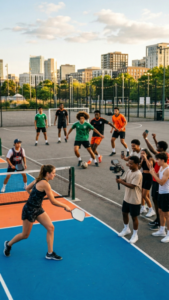
Pickleball offers a different but related lesson. Unlike Kings League or Baller League, it did not begin as a media product. Its rise came from participation. The rules are simple, the court is smaller than tennis, the barrier to entry is low and the social atmosphere is strong. In the United States, the Sports & Fitness Industry Association has reported rapid growth, with participation rising from about 4.2 million players in 2020 to more than 24 million in 2025. USA Pickleball also reported more than 100,000 members in 2025, along with sanctioned tournaments and expanding equipment approvals.
Pickleball’s cultural power comes from its accessibility. It can be played by older adults, young professionals, families, competitive athletes and beginners who might never enter a tennis club. That broad base has created a fashion and retail ecosystem around paddles, shoes, athleisure and club culture. It is not only a sport people watch. It is a sport people perform socially, photograph and incorporate into lifestyle.
The E1 Series pushes the trend into a more futuristic direction. The all-electric powerboat championship combines racing, sustainability messaging, luxury destinations and celebrity team ownership. Its appeal is partly athletic, partly technological and partly aspirational. On the water, the boats provide a visually distinctive product. Off the water, the involvement of figures such as Tom Brady and Will Smith turns the league into a story about celebrity capital and the search for the next premium sports asset.
The common thread across these formats is compression. Matches are shorter. Rules are clearer or deliberately more dramatic. Content is distributed across platforms before, during and after the event. The league is not a weekly appointment; it is an always-on feed. Highlights, behind-the-scenes clips, fashion partnerships, player interviews and creator reactions all extend the life of the event far beyond the venue.
For brands, the attraction is obvious. Traditional sports sponsorship is expensive, crowded and often controlled by long-established rights holders. Niche leagues offer earlier entry, younger audiences and more room to shape the culture. A fashion label, sneaker company, beauty brand or beverage sponsor can appear not only on signage but in the language, styling and social identity of the competition. The result is less like buying an ad and more like joining a scene.
Community tournaments are especially important in this shift. Amateur and creator-led events can feel more authentic than polished professional leagues because they sit closer to everyday culture. A five-a-side tournament organized by a fashion collective, a neighborhood basketball run sponsored by a sneaker brand or a creator football match streamed online can blur the line between participation and spectatorship. Fans may know the players from social media, local culture or friendship networks rather than from traditional scouting systems.
But the model carries risks. Internet attention is volatile. A format that feels fresh one year can feel overproduced the next. El País recently reported that Kings League in Spain has faced signs of fatigue, even as the project continues to expand internationally. That tension may define the next phase of niche sport: global growth on one side, local audience exhaustion on the other.
There are also questions about sporting legitimacy. Traditionalists often argue that rule gimmicks and influencer ownership cheapen competition. Supporters counter that all sports were invented formats once, and that survival depends on whether fans care. The deeper issue is not whether a penalty rule is strange or a match is short. It is whether the league can create emotional investment, fair competition and a durable calendar.
Athlete welfare matters too. Faster entertainment formats can demand constant availability, social media performance and personality labor from players who may not receive the same protections or pay as athletes in established leagues. Amateur and creator competitions can provide opportunity, but they can also blur contractual obligations, insurance, safety standards and commercial rights. As money enters these spaces, governance will become harder to ignore.
Still, the rise of niche leagues reflects a real shift in culture rather than a passing joke. Young fans are building sports identities differently. They may watch the Champions League, play pickleball on weekends, follow a creator football team on YouTube, buy a jersey because it looks good and share an E1 clip because it feels cinematic. Their fandom is fragmented, but it is not weak. It is mobile, visual and personal.
The future of sport is unlikely to belong only to either legacy leagues or niche formats. The more likely outcome is coexistence and cross-pollination. Traditional leagues will borrow shorter content, creator access and fashion storytelling. New leagues will borrow governance, competitive integrity and season structures from older institutions. The boundary between sport, media and lifestyle will continue to erode.
For now, niche sports leagues are winning attention because they understand the current audience environment. They are quick without being small, playful without always being unserious, and social by design. Their greatest challenge is to prove that they can become more than moments.
In the past, a sport became culture after generations of loyalty. Today, it can become culture in a weekend if the format is right, the clip travels and the community feels seen. Whether that culture lasts will depend on something older than any algorithm: the ability to make people care who wins.