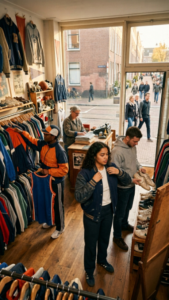
Jerseys, sneakers, tennis skirts, golf polos, running-club layers, WNBA merchandise and vintage sportswear are becoming everyday style codes, changing how people dress far beyond the field of play.
The modern sports outfit no longer needs a scoreboard to make sense. A basketball jersey can appear under a tailored coat. A tennis skirt can move from the court to a coffee meeting. A golf polo can look sharper in a city office than at a country club. Running shorts, technical caps and slim sneakers now show up at weekend markets, airports and casual dinners. What was once called athletic gear has become one of the clearest languages of contemporary lifestyle.
This shift did not happen overnight. Sportswear has been crossing into fashion for decades, from tracksuits and varsity jackets to Air Jordans and football scarves. But the current moment feels broader, faster and more culturally mixed. It is not only about wearing gym clothes for comfort, the old promise of athleisure. It is about using sport as identity, memory, aspiration and community. People are not merely dressing as if they might exercise. They are dressing as if they belong to a world shaped by movement.
The jersey is the most visible symbol of that change. Once reserved for stadiums, sports bars or game day, jerseys have become streetwear basics. Football shirts, basketball tops, baseball jerseys and hockey sweaters now work as oversized statement pieces. The appeal is partly graphic: numbers, color blocks, stripes and crests create instant visual impact. But the appeal is also emotional. A jersey says something about loyalty, nostalgia, geography or admiration. In a fashion culture often criticized for sameness, team merchandise gives clothing a story.
The rise of women’s sports has added new energy. WNBA merchandise is no longer a niche signal for dedicated fans; it is increasingly part of mainstream sports fashion. The league reported record merchandise sales during its 2024 regular season, alongside major gains in viewership and attendance. That matters beyond basketball. A WNBA hoodie or jersey now carries the cultural charge of a growing league, a new generation of stars and a fan base that sees sports as both competition and representation. Wearing the merchandise can mean supporting a team, but it can also mean participating in a broader shift in visibility.
Sneakers remain the foundation of the look. They are the rare fashion item that can be technical, collectible, democratic and luxurious at the same time. Court shoes, retro runners, football-inspired trainers and minimalist performance sneakers have all entered everyday wardrobes. Their power comes from versatility. The right sneaker can soften tailoring, sharpen denim, modernize a dress or make vintage sportswear feel intentional rather than accidental. In many cities, sneakers have become the default punctuation mark of daily dressing.
Tenniscore has given sports fashion its cleanest and most polished vocabulary. Pleated skirts, white sneakers, ribbed socks, polos, cardigans and crisp dresses suggest discipline without severity. The style borrows from tennis tradition but is no longer limited by it. Its popularity has been helped by celebrity dressing, Grand Slam visibility and a wider appetite for clothes that look active, elegant and easy. The danger is costume. The best tennis-inspired outfits avoid looking as if the wearer has just wandered away from a private club. A pleated skirt with a relaxed sweater, a polo with wide-leg trousers or tennis sneakers with a simple dress can make the reference feel modern.
Golfcore operates differently. It draws from polos, knit vests, caps, pleated trousers, windbreakers and soft tailoring. Once associated with exclusivity and conservative dress codes, golf style has been loosened by younger brands and players who treat the course as another style arena. Off the course, golfcore works when it leans into texture and proportion rather than novelty. A boxy polo, straight trousers and loafers can look quietly sophisticated. A technical golf jacket over denim can feel practical and refined. The goal is not to impersonate a golfer. It is to borrow the sport’s clean lines and relaxed precision.
Running-club fashion may be the most honest expression of the new sports lifestyle. Running clubs have become social spaces as much as training groups, particularly for young adults seeking community outside bars, offices and dating apps. Their clothing reflects that dual purpose. Lightweight jackets, split shorts, half tights, technical tees, caps, sports sunglasses and recovery slides are worn not only because they perform, but because they signal participation. The outfit says: I show up. I move. I belong to a group. Even when worn outside a run, the look carries the confidence of function.
Vintage sportswear gives the movement depth. Old team jackets, faded sweatshirts, retro windbreakers, college hoodies and archive jerseys offer a sense of time that new performance gear cannot always provide. They also fit a broader consumer turn toward resale, individuality and nostalgia. A vintage piece can soften the slickness of modern sports fashion. It makes an outfit feel lived-in, not purchased all at once. The best vintage sportswear looks slightly imperfect: a washed cotton sweatshirt, a cracked print, a jacket with a cut that belongs to another decade.
The central styling question is how to wear sports clothes outside sport without looking careless. The answer is editing. A strong everyday sports outfit usually needs one hero piece, not five. A jersey can be the focus if the rest of the look is restrained. A running jacket works better with clean trousers than with a full race-day kit. A tennis skirt feels more grown-up with a structured sweater or tailored coat. Golf trousers can look stylish with a plain T-shirt and leather belt. Sneakers can carry an outfit when they are clean, proportionate and suited to the silhouette.
Proportion matters as much as the item itself. Oversized jerseys often need slimmer or straighter bottoms to avoid swallowing the body. Short tennis skirts may need a looser top or long coat for balance. Technical running shorts can work in summer if paired with a crisp shirt or sweatshirt rather than a full gym look. Wide-leg track pants can look refined with a fitted knit or cropped jacket. Sports fashion becomes everyday fashion when the wearer controls contrast.
Material is another dividing line between style and sloppiness. Mesh, nylon, fleece, cotton, leather, technical knit and wool all communicate differently. A mesh jersey with tailored trousers creates tension. A nylon windbreaker over a soft knit creates utility. A cotton rugby shirt with jeans feels familiar and relaxed. A technical running vest over office clothes may look forced unless the context supports it. The key is to mix performance fabrics with everyday textures so the outfit does not appear trapped between the gym and the street.
Color can either elevate or overwhelm. Team merchandise often arrives with strong palettes, so neutral layers can help. A bright orange WNBA hoodie may need simple denim, black trousers or a clean sneaker. A striped football shirt can be grounded by navy, gray or cream. Tennis whites look sharper when broken with texture. Golf greens, browns and muted blues work well because they already sit close to classic menswear and womenswear palettes. Sports fashion is visual, but the best versions rarely shout from every direction at once.
There is also an etiquette to the trend. Some fans care deeply about authenticity: whether a jersey represents a real player, a real team or a meaningful memory. Others treat sports clothing as design, detached from fandom. Both approaches exist, but the most convincing outfits usually show some respect for the source. Wearing a jersey because it looks good is common; knowing what it represents gives it more weight. In an era when merchandise is culture, clothes can invite questions.
The boom in sports fashion also reveals a wider change in how people want to live. After years of remote work, wellness culture, social media aesthetics and blurred boundaries between public and private life, wardrobes are being asked to do more. Clothes must commute, socialize, travel, photograph well, feel comfortable and imply a life in motion. Sportswear answers that demand better than many traditional categories. It offers ease without complete surrender, identity without formality and function without abandoning style.
The risk is that the trend becomes another cycle of overconsumption. Limited drops, collectible sneakers and constant new team merchandise can encourage buying more than wearing well. The more sustainable version of sports fashion is selective: one jersey with meaning, one good sneaker, one vintage jacket, one technical layer that actually works. Sport itself values repetition, discipline and performance. The clothing inspired by it benefits from the same restraint.
Sports fashion has become lifestyle because contemporary life increasingly wants the feeling of motion, even in stillness. The strongest outfits do not pretend the sidewalk is a stadium. They translate the codes of sport into ordinary life: confidence, ease, team identity, memory and readiness. To dress well outside the arena is not to wear athletic gear from head to toe. It is to choose the piece that carries energy, then give it enough space to move.