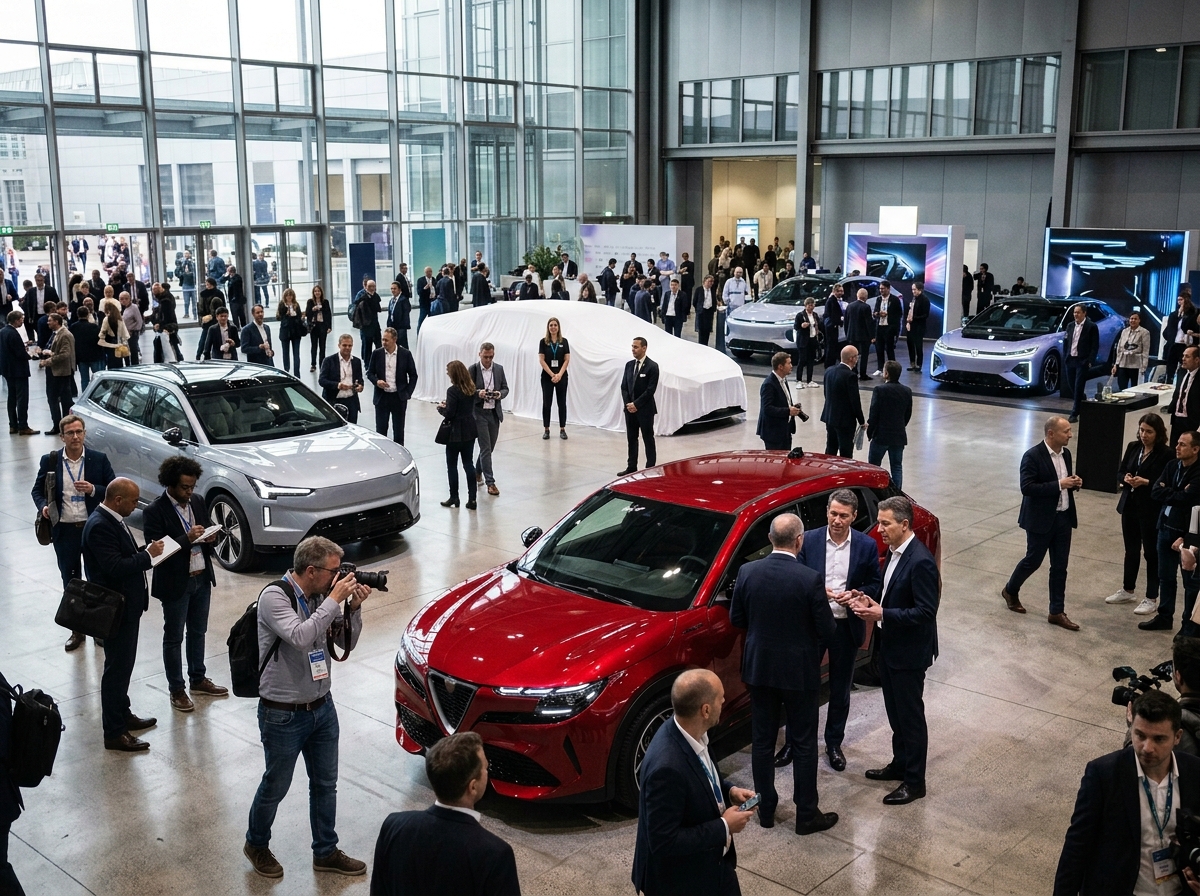
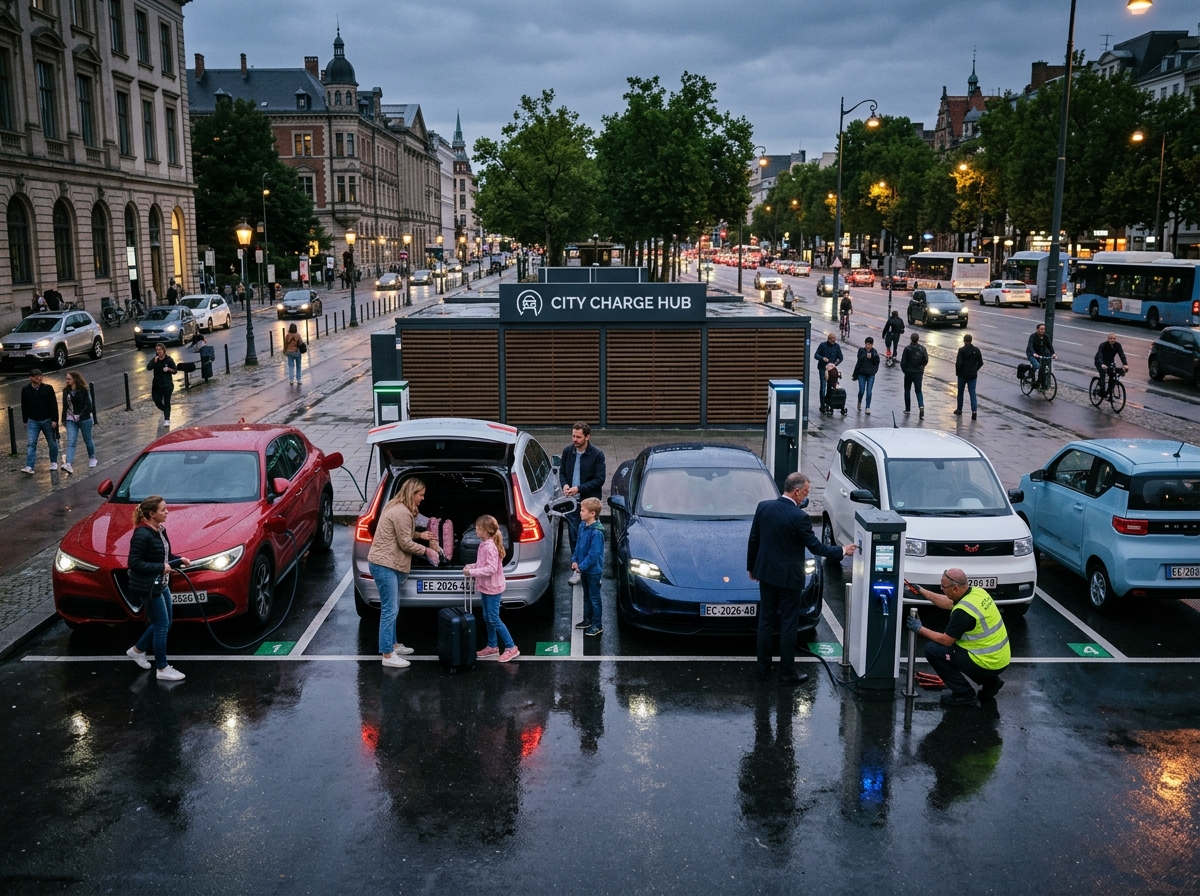
Alfa Romeo, Volvo, Jaguar and a wave of Chinese manufacturers are preparing new electric models for a year that may define the next phase of the global EV race.
The electric vehicle market entering 2026 looks very different from the one automakers imagined a few years ago. The early surge of optimism has given way to a more complicated reality: buyers want longer range, faster charging, better prices and fewer compromises, while governments are rethinking subsidies and trade barriers are reshaping where cars can be built and sold. Yet the product pipeline remains crowded. From Italian performance brands to Scandinavian safety specialists, British luxury makers and aggressive Chinese challengers, 2026 is becoming a pivotal year for new EVs.
Alfa Romeo is one of the most closely watched names in that transition. The Italian brand, long associated with emotional design and driver engagement, has been expected to use Stellantis’ STLA Large architecture as the basis for a new generation of electrified models. Stellantis has said the platform is designed for a wide range of large vehicles, with battery-electric capability, 800-volt technology and a projected range target of up to 800 kilometers, or about 500 miles, depending on configuration. The company has also said Alfa Romeo is among the brands scheduled to use the architecture.
For Alfa, the challenge is not simply to build an electric SUV or sedan. It is to prove that an EV can still feel like an Alfa Romeo. The next-generation Stelvio and Giulia have been widely discussed as key models in that effort, though the brand’s timing appears more flexible than earlier all-electric roadmaps suggested. Alfa Romeo’s 2026 European messaging has continued to support existing Giulia and Stelvio performance variants, including the Quadrifoglio, with availability extending through 2027. That signals a more cautious transition, one that may blend legacy performance models with electrified replacements rather than forcing an abrupt break.
The strategy reflects a broader recalibration across the industry. Carmakers that once promised rapid all-electric lineups are now watching regional demand carefully. Europe remains more receptive to EV adoption than the United States in many segments, while China is moving at a speed and scale that has surprised established manufacturers. But even in China, intense price competition and fast-changing consumer expectations are forcing brands to release new models quickly and cut margins.
Volvo enters 2026 from a different position. Its electric identity is already clearer, anchored by models such as the EX30, EX40 and EX90, and now strengthened by the new EX60. The EX60 is important because it targets the heart of the premium SUV market, a segment where global buyers still spend heavily and where electric vehicles must compete not only on efficiency but also on comfort, practicality and software. Volvo has presented the EX60 as a fully electric midsize SUV with fast charging, long range ambitions and safety technology consistent with the brand’s reputation.
The company has also previewed an EX60 Cross Country version, extending one of Volvo’s most recognizable badges into the electric era. The Cross Country treatment gives Volvo a way to link its past and future: a rugged, lifestyle-oriented vehicle with higher visual toughness, but built around electric hardware and modern driver-assistance systems. For a brand that has spent decades selling trust, durability and family security, the EX60 may be one of its most important EVs yet.
Jaguar’s 2026 story is more dramatic. The British marque is attempting a full luxury reinvention, moving away from its traditional lineup and toward a new generation of high-end electric vehicles. Its first major model in that reset is expected to be a four-door electric grand tourer. Jaguar has said the vehicle is undergoing extensive global testing and is being developed to deliver a driving character that feels distinctly Jaguar. The company has emphasized in-house propulsion technology, performance tuning and a luxury positioning that moves the brand into a more exclusive space.
That approach carries risks. Jaguar is not trying to fight mass-market EV makers on price. It is trying to convince wealthy buyers that an electric Jaguar can offer design, performance and status compelling enough to compete with the upper end of the premium market. The production version is expected to appear after the 2026 reveal period, meaning the car may shape perceptions before it reaches showrooms. For Jaguar, the reveal itself will be a test of whether its radical repositioning can generate confidence after years of uneven sales and strategic uncertainty.
The most disruptive force, however, may come from China. Chinese automakers are no longer merely domestic players or low-cost exporters. Companies such as BYD, Geely, Zeekr, Xpeng, Nio, Leapmotor, Chery and others are expanding abroad with increasingly sophisticated electric and plug-in hybrid models. At the Brussels Motor Show in early 2026, Chinese brands used new launches such as the Zeekr 7GT electric wagon and Leapmotor B03X affordable SUV to show how quickly they are filling gaps in Europe’s market. These vehicles are arriving alongside already visible names such as Nio’s Firefly and BYD’s expanding European range.
The appeal is clear. Chinese manufacturers often move faster than legacy competitors, update software more frequently and benefit from deep domestic battery supply chains. Some models offer high equipment levels at prices that undercut European rivals. Others compete on charging speed, connected features or cabin technology. At Auto China 2026 in Beijing, the scale of the Chinese industry was impossible to ignore, with global observers noting how rapidly the country’s brands are redefining expectations for value and technology.
Europe is becoming the central battlefield. The United States has largely shut out Chinese-built EVs through tariffs and security restrictions, while Europe has chosen a more complex path: investigating subsidies, applying duties in some cases, but still allowing Chinese brands to build market share. The United Kingdom, outside the European Union, has become especially open to Chinese entries. Chery’s Jaecoo brand has already shown how quickly a new Chinese name can gain attention when it combines strong pricing, SUV styling and a broad dealer push.
This pressure is forcing established brands to change. Volkswagen, Stellantis, Renault, BMW and Mercedes-Benz all face a market where Chinese competitors can launch quickly and price aggressively. Premium brands still have advantages in heritage, dealer networks and customer loyalty, but those strengths are less decisive when buyers compare range, screens, charging speed and monthly payments. In the EV era, brand prestige matters, but product execution matters more.
The 2026 EV wave also reflects a maturing consumer base. Early adopters were willing to accept quirks. Mainstream buyers are less forgiving. They want vehicles that charge quickly on long trips, hold value, integrate easily with phones, and cost no more to own than petrol or hybrid alternatives. They also want choice: compact SUVs, large family vehicles, wagons, sedans, luxury GTs and affordable urban cars. The new 2026 models suggest automakers understand that EV growth will not depend on one body style or one price point.
Still, the year will not be a simple celebration of electrification. High interest rates in many markets, uneven charging infrastructure, battery supply concerns and political uncertainty remain serious obstacles. Some manufacturers have delayed or softened earlier EV targets, while others are adding plug-in hybrids as a bridge technology. The result is a market moving forward, but not in a straight line.
That makes the 2026 launch cycle especially important. Alfa Romeo must show whether passion brands can survive electrification without losing their soul. Volvo must prove that electric family SUVs can become mainstream premium choices. Jaguar must persuade buyers that its luxury rebirth is more than a design experiment. Chinese automakers must demonstrate that their rapid rise can translate into lasting trust outside China.
The winners will not simply be the companies with the longest range or the fastest acceleration. They will be the brands that understand the new EV buyer: practical but curious, price-conscious but technology-aware, skeptical of hype but open to change. In that sense, the EVs arriving in 2026 are not just new cars. They are a referendum on what the electric vehicle market becomes after its first great burst of enthusiasm.