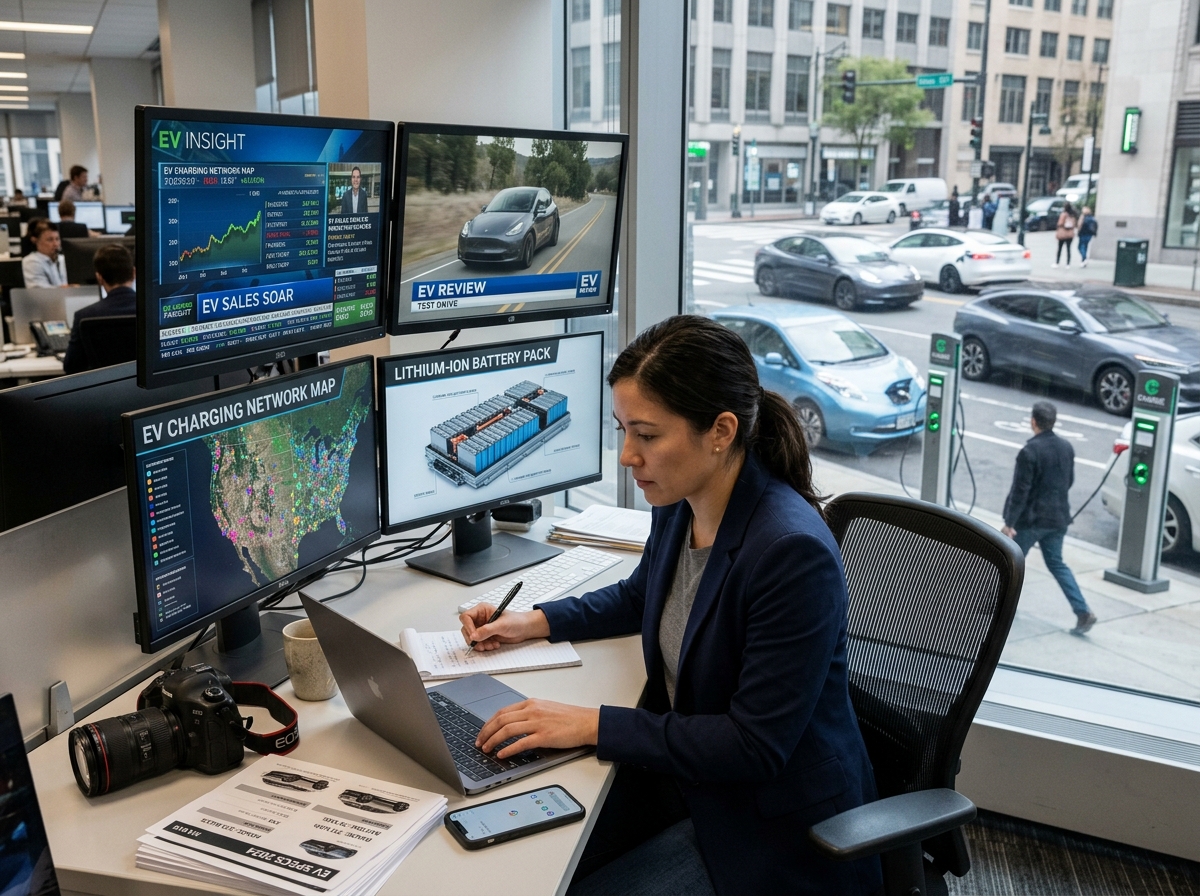
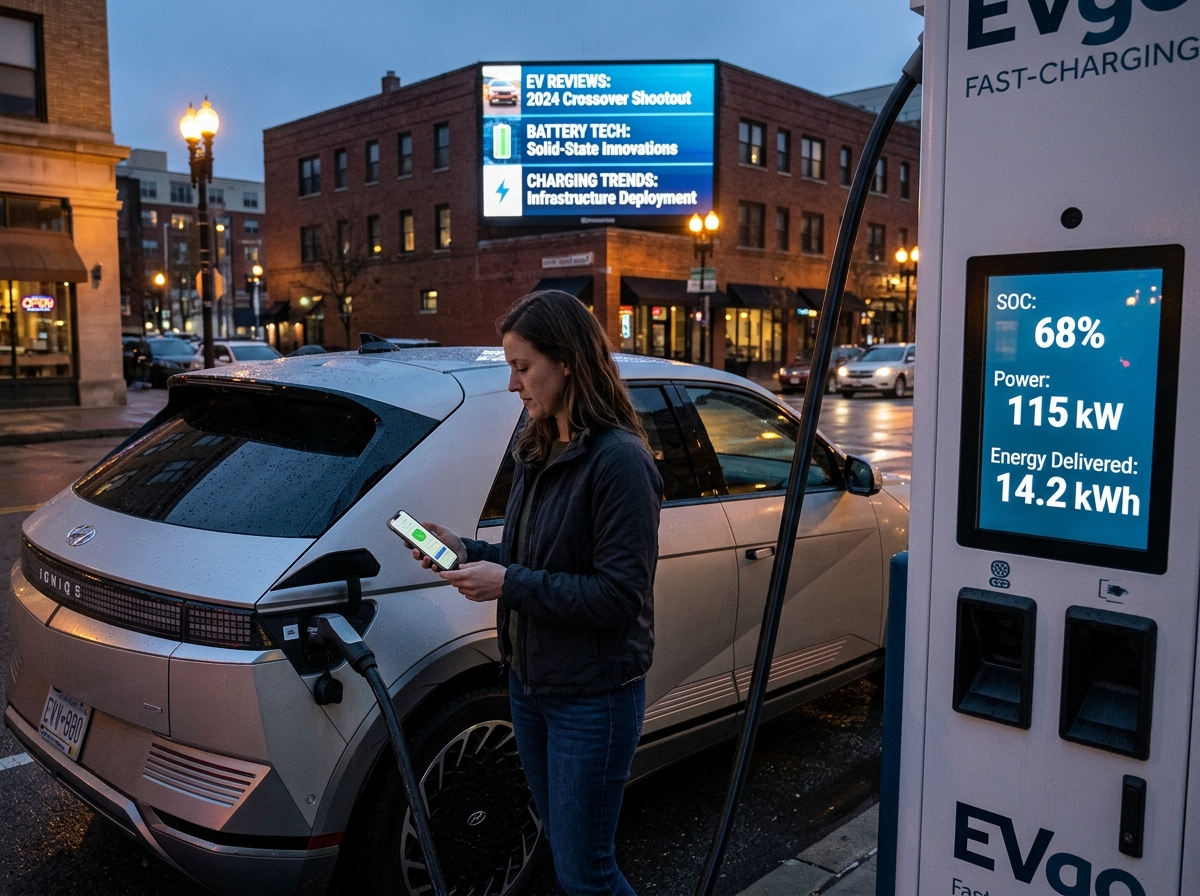
The publication’s latest coverage shows an industry moving beyond a simple EV-versus-gasoline debate toward software-defined cars, smarter driver assistance and more cautious product planning.
LOS ANGELES — MotorTrend is continuing to track the fast-changing 2026 automotive landscape, following a mix of new-vehicle rumors, emerging car technology and wider industry trends as automakers recalibrate their strategies in a market shaped by electrification, software, consumer uncertainty and intensifying global competition.
The publication’s recent coverage reflects the complexity of the moment. Its news and future-cars sections have highlighted everything from expected product debuts and revived nameplates to new electric platforms, advanced sensors, AI-powered cabins and the accelerating shift toward software-defined vehicles. For car buyers, investors and industry executives, that mix of reporting underscores a central reality of 2026: the future of the automobile is arriving unevenly, with bold innovation in some areas and renewed caution in others.
MotorTrend’s work has long combined enthusiast interest with industry analysis, but the current cycle is unusually dense. Automakers are not simply launching redesigned sedans, SUVs and trucks. They are rethinking how vehicles are engineered, updated, monetized and experienced after purchase. Electric powertrains remain central to the discussion, yet the industry is no longer treating battery-electric vehicles as the only headline. Hybrids, lower-cost EVs, software platforms, advanced driver assistance and physical controls are all competing for attention.
One of the clearest themes in MotorTrend’s 2026 coverage is the return of product speculation as a serious industry signal. Rumors around vehicles such as a reborn Chevrolet Camaro, future Nissan SUVs, Hyundai’s coming pickup plans and Ford’s affordable electric truck concept are not just enthusiast chatter. They reflect the strategic choices automakers face as they decide which segments still deserve investment, which nameplates can be revived and which models should be retired.
That matters because the industry is entering a more disciplined phase after several years of aggressive electrification targets. In the early 2020s, many automakers presented EV expansion as a straight-line transformation. By 2026, the picture is more complicated. Demand is still growing in many markets, but buyers are more selective, charging infrastructure remains uneven, and profitability pressures have forced manufacturers to rethink timing, pricing and production volumes.
MotorTrend’s attention to a possible $30,000 Ford electric truck platform captures that shift. Affordability has become one of the most important questions in the EV market. High-priced electric SUVs and performance vehicles helped establish technology credibility, but mass adoption depends on cars and trucks that can compete with gasoline and hybrid alternatives on monthly cost, usability and durability. A lower-cost electric pickup would speak directly to that challenge, especially in North America, where trucks remain central to both consumer identity and manufacturer profit.
At the same time, MotorTrend’s 2026 technology coverage shows that innovation is moving far beyond batteries. Its Best Tech Awards highlighted developments in infotainment, driver assistance, powertrains, charging experience, chassis systems and autonomy. The selected technologies point to a broader transformation: cars are becoming connected computing platforms in which hardware and software must work together seamlessly. Screens, sensors, over-the-air updates, voice systems and automated driving features are no longer peripheral luxuries. They are increasingly core parts of the ownership experience.
The rise of the software-defined vehicle is one of the most consequential industry trends MotorTrend is following. In this model, a vehicle is designed with electronic architecture capable of receiving updates, adding features and improving functions long after it leaves the factory. That can benefit customers if software fixes problems, improves efficiency or expands capability. It can also create new tensions if automakers use subscriptions, data collection or locked features in ways drivers view as intrusive or unfair.
MotorTrend’s 2026 Software-Defined Vehicle Innovator Awards emphasized how deeply code now shapes the automobile. The publication described vehicles powered by gasoline, electricity or hybrids as increasingly dependent on robust and flexible software, with code influencing automated driving, virtual assistants, entertainment applications and future feature updates. That framing is important because it cuts across powertrain type. Even internal-combustion vehicles are becoming software products.
Artificial intelligence is another area receiving growing attention. In-car AI is moving from novelty to practical interface, with automakers experimenting with voice assistants that can interpret natural language, explain vehicle functions, personalize navigation and manage entertainment. The promise is convenience. The risk is distraction, privacy exposure and driver frustration if systems overpromise. The most successful implementations are likely to be those that reduce complexity rather than add another layer of digital noise.
MotorTrend’s reporting on sensors at CES 2026 also points to the next phase of driver assistance. The long-promised fully autonomous consumer car remains elusive, but the technology stack is improving. Radar, lidar, cameras and sensor fusion systems are becoming more capable and more affordable. The publication noted that radar is becoming more image-like, while lidar is moving closer to the cost range once associated mainly with radar. That matters because better sensing could make advanced driver assistance more reliable, especially in bad weather, low light and complex urban traffic.
Still, the industry has learned caution around autonomy claims. Consumers have seen years of promises that self-driving cars were just around the corner. Regulators, safety advocates and insurers continue to scrutinize how these systems are described and used. MotorTrend’s coverage reflects that tension: the technology is advancing, but full autonomy remains a difficult engineering, legal and social problem. The more immediate battlefield is likely to be supervised driver assistance that reduces fatigue while keeping the human driver accountable.
Another trend is the battle over the automotive cockpit. After years of placing more functions behind touchscreens, several manufacturers are reassessing the balance between digital minimalism and physical usability. MotorTrend has tracked this debate through stories about future interiors, AI-assisted entertainment and automakers responding to complaints about touchscreens controlling too many basic functions. The lesson appears straightforward: digital sophistication must not come at the expense of intuitive operation.
Performance is also changing form. Electric power has made extreme acceleration more common, while advanced suspension systems, torque vectoring and brake-by-wire technologies are reshaping what performance cars can do. MotorTrend’s recognition of high-performance electric powertrains and active chassis systems reflects a market in which driving excitement is no longer tied exclusively to engine sound or mechanical tradition. Yet the continued interest in V-8 hybrids, sports-car revivals and enthusiast-focused models shows that emotional appeal still matters.
The global competitive landscape is another force behind the publication’s 2026 emphasis. Chinese automakers and technology companies are pushing aggressively into electric vehicles, software, smart cockpits and highly connected user experiences. European, Japanese, Korean and American manufacturers are responding with different strategies, from premium software ecosystems to lower-cost platforms and hybrid flexibility. The result is a more fragmented but more innovative market.
For legacy automakers, the stakes are high. They must satisfy regulators demanding lower emissions, shareholders demanding returns, dealers demanding sellable products and buyers demanding value. Product delays, platform revisions and shifting investment plans are not necessarily signs of failure. In many cases, they are evidence that automakers are adapting to a market that changed faster than their original planning cycles.
For consumers, MotorTrend’s continuing coverage offers a practical service. Rumors help buyers understand what may be coming before they commit to a long loan or lease. Technology reviews help separate useful innovation from marketing language. Industry trend reporting helps explain why certain models disappear, why prices change and why automakers sometimes reverse earlier decisions. In a period of rapid transition, context is as important as horsepower, range or screen size.
The 2026 market is unlikely to produce a single winning formula. Some buyers will choose affordable EVs. Others will wait for better charging access or buy hybrids. Enthusiasts may gravitate toward limited-run performance vehicles, while families prioritize reliability, safety and total cost of ownership. Fleet operators will watch depreciation, charging logistics and software support. Automakers will have to serve all of them while preparing for regulations and technologies that continue to evolve.
That is why MotorTrend’s focus on rumors, technology and industry trends remains relevant. The automobile is no longer changing in one direction at one speed. It is becoming electric in some segments, hybrid in others, software-defined across nearly all of them and increasingly shaped by global competition. The most important stories of 2026 may not be single model launches, but the pattern that emerges from dozens of decisions across design studios, engineering centers, factories and dealership showrooms.
MotorTrend’s coverage suggests an industry in motion, but not in agreement. The future car may be electric, connected, partially automated and AI-assisted, but it must also be affordable, repairable, safe and easy to use. The manufacturers that understand that balance will define the next phase of the market. The ones that do not may discover that in 2026, technology alone is not enough to win drivers over.