The singer’s return after a decade away from the Met Gala turned into one of the night’s defining fashion stories, as she moved from anatomical spectacle to celestial couture.
NEW YORK — Beyoncé returned to the Met Gala on Monday night with the precision of a performer who understands both timing and spectacle, drawing attention with two custom gowns that framed her comeback as one of the central moments of the 2026 event.
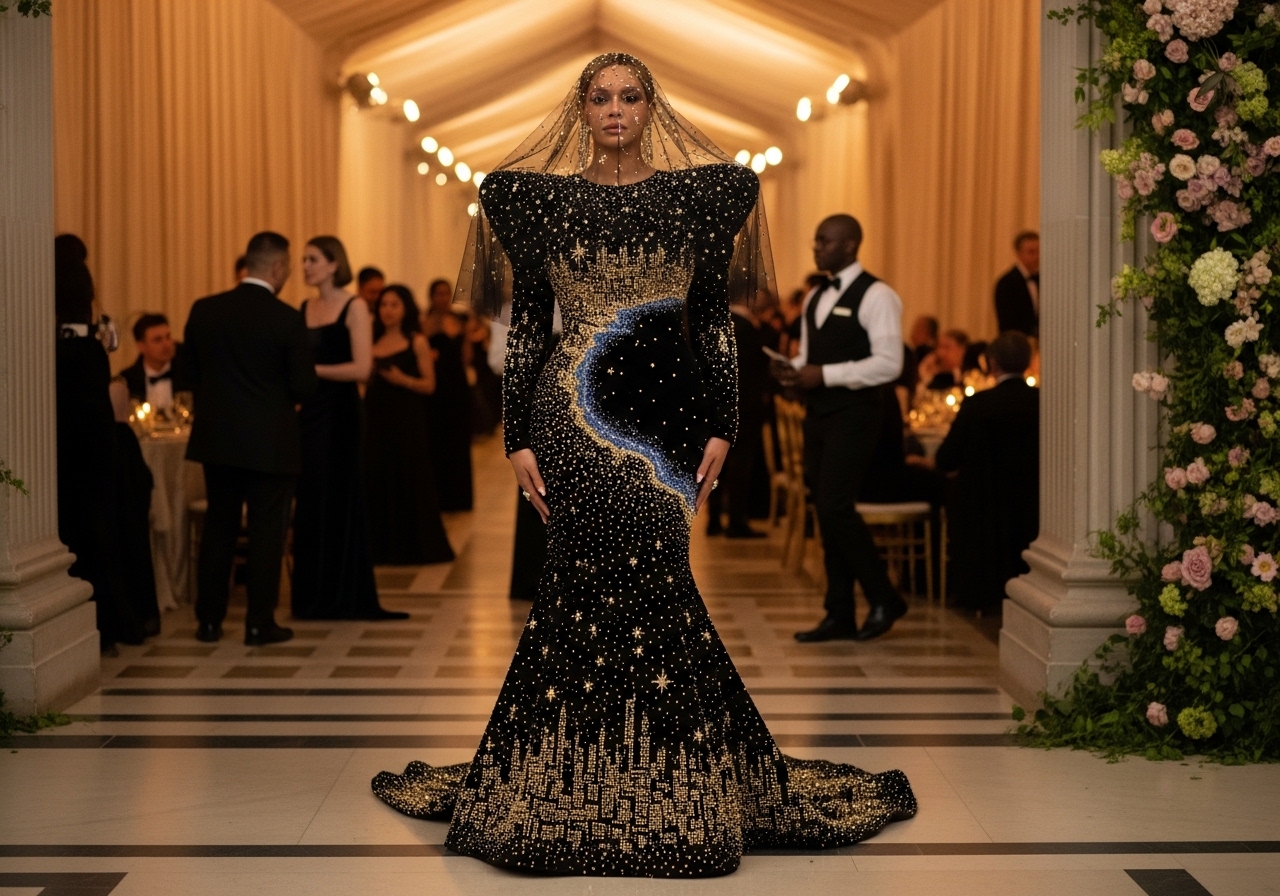
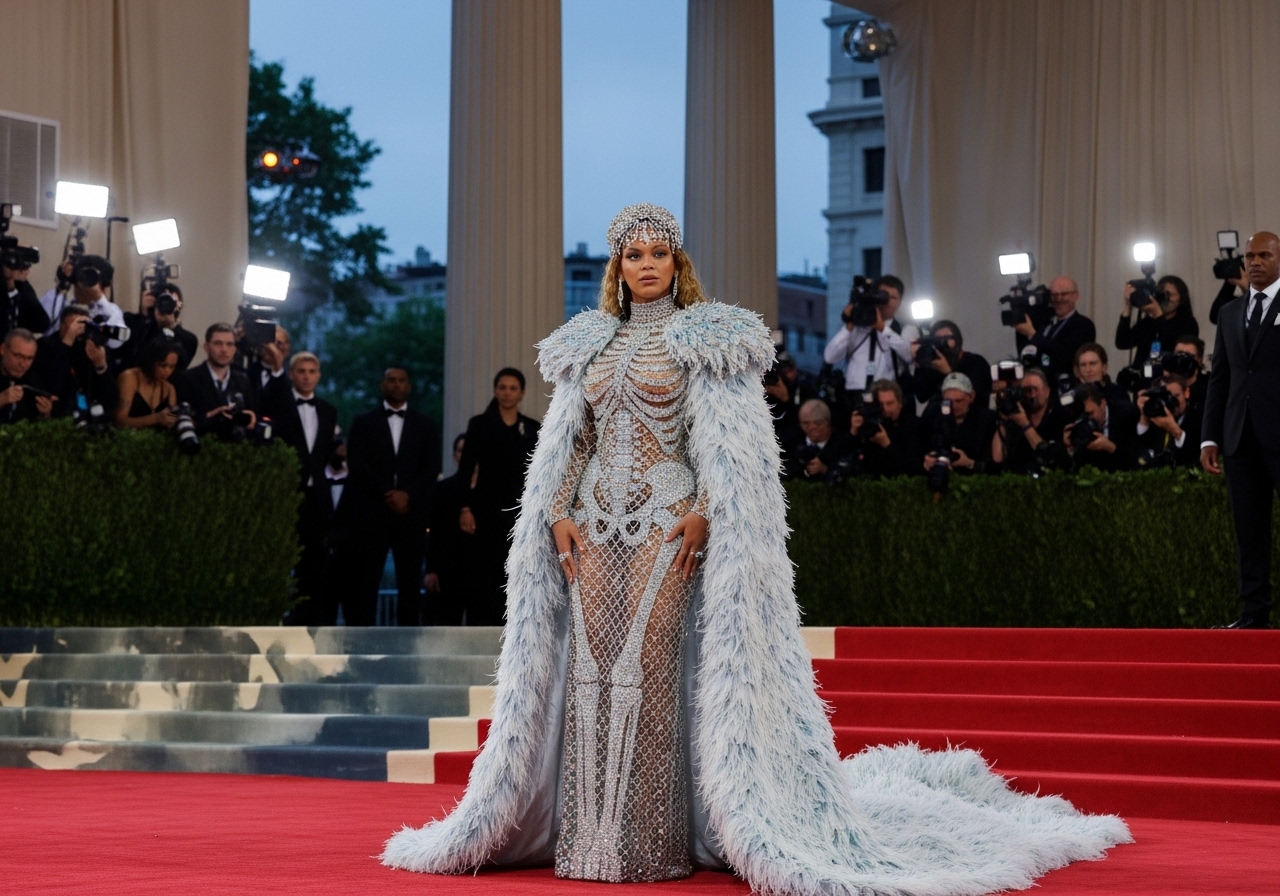
The singer, songwriter and businesswoman, who served as a co-chair of the gala alongside Nicole Kidman, Venus Williams and Anna Wintour, arrived at the Metropolitan Museum of Art in a crystal-covered, skeleton-inspired gown designed by Olivier Rousteing. Later, inside the museum, she changed into a black-and-gold custom Robert Wun design titled “The Stargaze Gown,” an intricately embroidered look finished with Swarovski crystals and a sheer black veil.
Together, the two ensembles offered distinct interpretations of the evening’s theme, “Costume Art,” and its dress code, “Fashion Is Art.” The first look emphasized the human form, using a sparkling anatomical motif that echoed the Costume Institute’s exploration of the relationship between clothing and the body. The second shifted the scale outward, replacing the body’s architecture with a night-sky vision of gold crystals, dark fabric and couture embroidery.
Beyoncé’s arrival carried unusual weight because it marked her first Met Gala appearance in 10 years. Her last appearance at the event was in 2016, when she attended the “Manus x Machina: Fashion in an Age of Technology” gala. In the years since, she has become increasingly selective about red-carpet appearances, often relying on carefully controlled imagery, surprise releases and major performance moments rather than routine celebrity visibility.
That scarcity helped turn her 2026 appearance into a major fashion event before she stepped onto the carpet. As co-chair, she was not simply another guest interpreting the theme. She was part of the evening’s public face, returning to a gala where celebrity, art, philanthropy and fashion industry power converge each year on the first Monday in May.
Her first gown, created by Rousteing, leaned into high drama. The design was described by multiple fashion outlets as a sparkling skeleton-inspired dress, paired with a dramatic feathered cape and a crystal-embellished headpiece. Its impact came from the tension between exposure and structure: a body-conscious silhouette overlaid with anatomy-like embellishment, transforming the idea of a “naked dress” into something closer to a jeweled study of the human frame.
Rousteing, the creative force long associated with Balmain, has worked with Beyoncé across several major public moments. Their collaboration at the Met Gala appeared to be both personal and strategic. The singer told Vogue’s livestream that she had created many iconic looks with Rousteing and wanted to represent him. In a setting where designers compete for cultural visibility as much as technical admiration, that statement placed the garment within a history of trust between artist and designer.
The look also fit the exhibition’s premise. The 2026 Costume Institute exhibition, “Costume Art,” explores the relationship between garments and the body beneath them, organized around different interpretations of the body. Beyoncé’s skeletal gown made that connection immediately legible to cameras and viewers: the dress was not merely decorative, but a visual argument about how fashion can map, exaggerate and mythologize the body.
The second gown offered a quieter but equally deliberate spectacle. Robert Wun’s custom “Stargaze Gown” was inspired, according to a press release cited by People, by the view from an airplane at night over a coastal city, with the Earth appearing as a golden constellation. The black-and-gold look featured golden faceted Swarovski crystals intended to evoke stars against a dark sky, and it was completed with a sheer, crystal-embellished black veil.
The construction details added to the attention. People reported that the gown required 4,340 hours of handwork and featured what the publication listed as 318,0000 stitches of embroidery, described as the highest amount of embroidery the fashion house had ever crafted. The unusually written figure circulated widely in coverage, reinforcing how the second look was received not only as celebrity styling but as a labor-intensive couture object.
Wun’s design moved Beyoncé from anatomy to astronomy. Where the Rousteing gown made the body its central subject, the Wun gown turned the wearer into a kind of night landscape. The mermaid silhouette and veil gave the look ceremonial weight, while the crystal placement created the impression of light scattered across darkness. In the context of the Met Gala, where garments must withstand both close inspection and instant global image circulation, the second dress delivered a visual story that translated clearly across photographs, social media clips and fashion commentary.
Beyoncé attended the evening with Jay-Z and their daughter Blue Ivy Carter, whose presence added another layer of attention. On Vogue’s livestream, Beyoncé said the return felt surreal because her daughter was there, and that she was excited to experience the night through her eyes. Blue Ivy’s own appearance was widely covered, underscoring how the gala has become a space not only for celebrity fashion but also for the staging of family, legacy and generational image-making.
The two gowns also arrived at a moment of speculation about Beyoncé’s next artistic phase. Vogue noted that her red-carpet appearance, with its heightened drama and departure from the visual codes of her recent country-influenced “Cowboy Carter” era, prompted discussion about whether she was signaling a new chapter. Beyoncé has often used fashion to mark transitions: album eras, tours, film projects and public appearances are frequently built around carefully managed visual language.
Still, the Met Gala looks should be understood first as responses to the museum’s theme. The evening asked guests to consider fashion as art, not merely as luxury branding or celebrity styling. Beyoncé’s two custom gowns answered that prompt in different registers. Rousteing delivered a sculptural red-carpet image built for immediate recognition. Wun delivered a more poetic interior look, rooted in craft, embroidery and atmosphere.
The effect was to create a two-act performance without a stage. Beyoncé’s entrance supplied the public drama: photographers, screams, flashbulbs, a crystal skeleton gown and a feathered cape. The later change inside the museum extended the narrative for those following the gala beyond the carpet, giving fashion media a second look to analyze and fans a second image to circulate.
That strategy reflects the modern Met Gala’s media structure. The red carpet remains the central broadcast event, but the most effective celebrity appearances now unfold across multiple platforms and moments: arrival photos, livestream quotes, designer credits, behind-the-scenes images, after-party looks and official museum coverage. A second custom gown can prolong attention well beyond the initial carpet walk.
Beyoncé’s appearance also highlighted the growing importance of custom fashion as a cultural instrument. At the Met Gala, a custom gown is not simply a matter of fit or exclusivity. It is a collaboration between celebrity, designer, stylist, artisan and institution. The garment must refer to the theme, flatter the wearer, reward close-up photography, survive instant criticism and produce a memorable image in a field crowded with other major names.
By that measure, both gowns succeeded. The Rousteing look was direct, legible and theatrical, using the body as spectacle. The Wun gown was more atmospheric, emphasizing couture labor and celestial imagery. Together, they gave Beyoncé a return that felt curated rather than merely glamorous.
For the fashion industry, the night reinforced the Met Gala’s role as an annual test of narrative discipline. Guests who dominate the event are rarely those who simply wear the most expensive or revealing garments. They are the ones who make the theme understandable through image, construction and timing. Beyoncé’s two-look sequence did exactly that, turning the museum’s body-focused exhibition into a public fashion story.
For Beyoncé, the evening was also a reminder of her unusual position in celebrity culture. She can disappear from the Met Gala for a decade, return as a co-chair, arrive with her family, wear two custom couture looks and instantly become one of the event’s most discussed figures. Few public figures can convert absence into anticipation so effectively.
By the end of the night, the message was clear. Beyoncé had not returned to the Met Gala simply to be seen. She returned with a visual program: the body first, the cosmos second; anatomy followed by stargazing; spectacle followed by craft. In a year dedicated to the idea that fashion can be art, she offered two arguments in fabric, crystal, feather and embroidery — and ensured that both would be remembered.