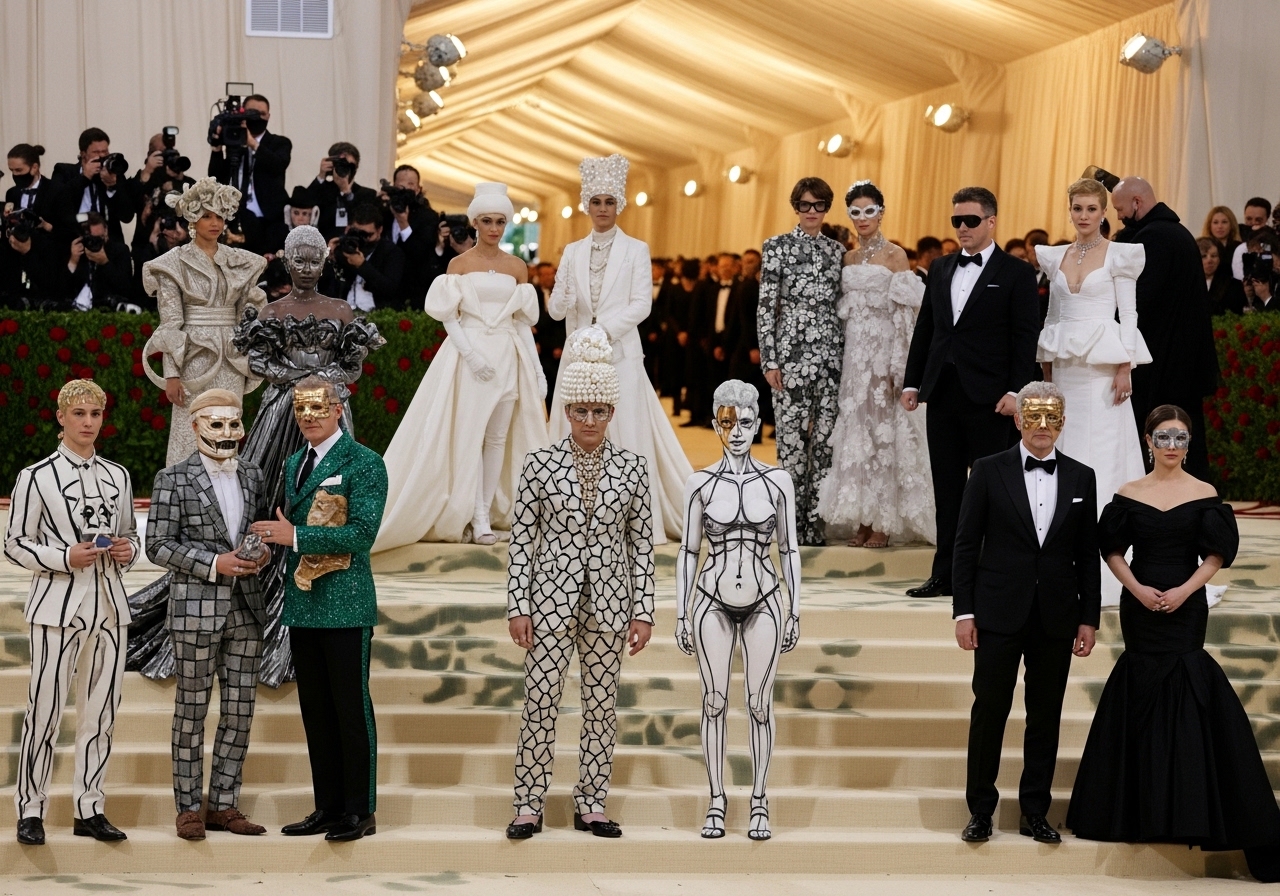
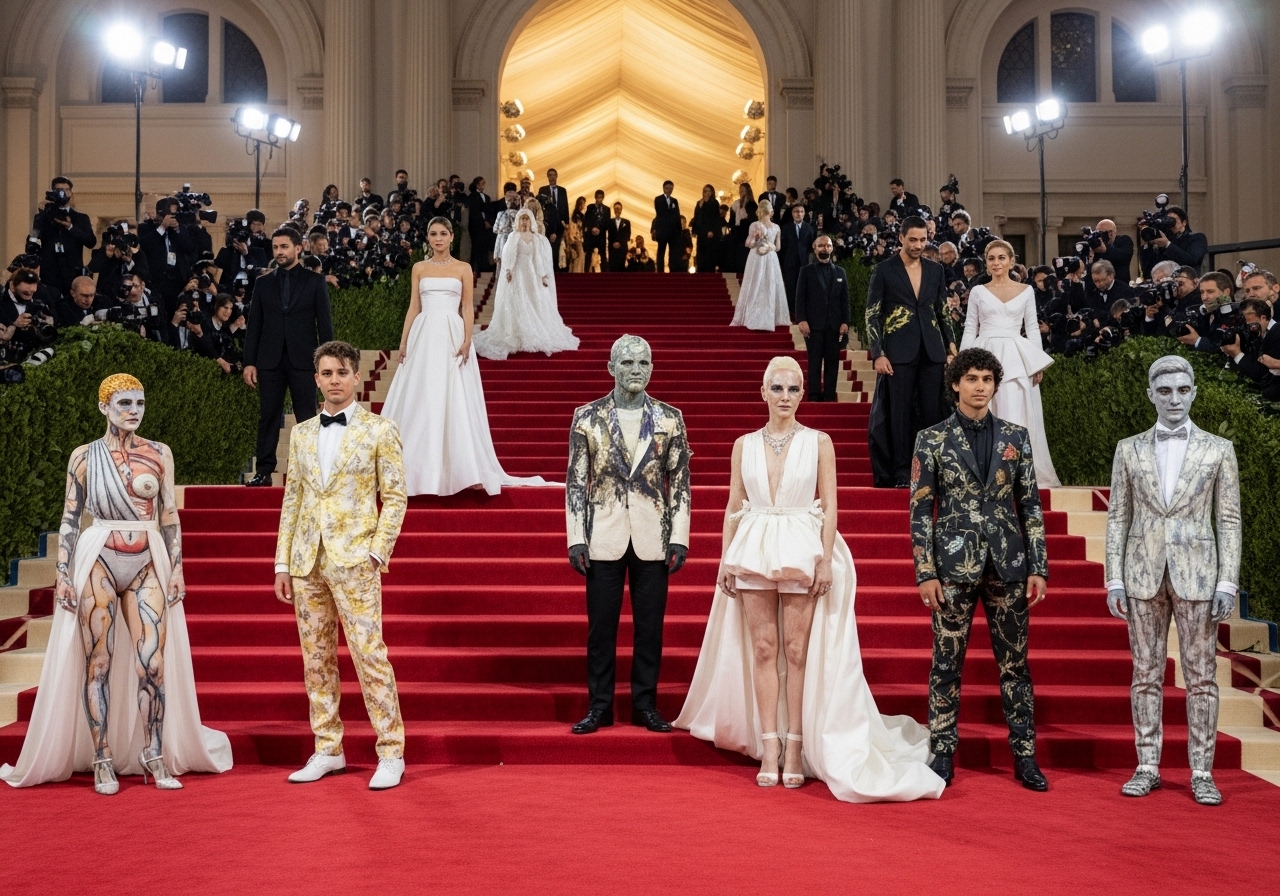
Under the “Fashion Is Art” dress code, stars used sculpture, painting, performance and body illusion to transform fashion’s most watched staircase into a global cultural stage.
NEW YORK — The Met Gala returned on Monday night with the kind of visual spectacle that has made the first Monday in May one of the most closely watched moments in global entertainment. But the 2026 edition did more than parade celebrity glamour. It turned the red carpet of the Metropolitan Museum of Art into a moving exhibition, where gowns resembled sculptures, suits referenced paintings and accessories became arguments about identity, wealth, memory and the body.
This year’s Costume Institute exhibition, “Costume Art,” gave guests an unusually direct invitation to treat clothing as more than adornment. The dress code, “Fashion Is Art,” was broad enough to encourage experimentation but specific enough to demand intellectual effort. The strongest looks did not merely imitate famous artworks. They translated artistic ideas into fabric, proportion, silhouette and performance.
That distinction mattered. On a carpet often criticized for prioritizing fame over interpretation, the 2026 gala rewarded those who understood that art-inspired fashion can be literal, conceptual or emotional. Some guests arrived as living paintings. Others used sculptural shapes, anatomical references, masks, metallic surfaces and exaggerated volumes to suggest the body as a site of display and transformation. The result was a red carpet that felt less like a sequence of arrivals and more like a curated procession.
Beyoncé’s return became one of the night’s defining entertainment moments. After a long absence from the gala, she appeared in a dramatic look that drew attention for its skeletal, body-conscious visual language and high-shine construction. The effect was theatrical without feeling detached from the theme. Her presence also gave the evening a rare pop-cultural charge: a global superstar re-entering fashion’s most elite room while embracing a concept centered on the relationship between art and the human form.
Madonna, another figure whose career has long blurred music, image-making and performance art, added a different kind of reference point. Her appearance was read as an homage to the surrealist spirit associated with Leonora Carrington, bringing the red carpet closer to the language of performance and artistic self-mythology. In a year when the dress code encouraged guests to think beyond beauty, such a choice felt particularly fitting. It reminded viewers that the Met Gala is not only about expensive clothes, but also about how a public figure constructs a visual narrative.
The most memorable outfits tended to fall into several categories. There were sculptural gowns that turned the wearer into an object of volume and architecture. There were trompe l’oeil looks that played with visual deception, using clothing to mimic painted bodies, shadows or anatomical forms. There were references to specific art movements, from surrealism to cubism, and to artists whose work has shaped modern visual culture. There were also pieces that drew on craft traditions and everyday materials, suggesting that art does not belong only to museums or auction houses.
One of the night’s most striking examples came from Ananya Birla, whose look incorporated a mask created with Indian sculptor Subodh Gupta. The headpiece, made with references to stainless steel kitchen utensils, transformed ordinary domestic objects into a severe, almost armored fashion statement. Styled with couture tailoring and a voluminous skirt, the look connected contemporary Indian sculpture with the mechanics of celebrity dressing. It was not simply decorative; it used material culture to raise questions about labor, memory and transformation.
The men’s fashion also carried more ambition than in many previous years. For a long time, the Met Gala red carpet has been divided between women taking risks and men retreating into formalwear. In 2026, that imbalance narrowed. Several male attendees embraced color, body emphasis, pearl embellishment, painterly tailoring and art-historical references. Colman Domingo’s Picasso-inspired Valentino suit, widely noted among the evening’s sharper interpretations, showed how menswear can engage the theme without abandoning elegance. Jeremy Pope’s pearl chest corset pushed further, treating the torso itself as a crafted surface.
Athletes brought another layer to the event. Figures from sports increasingly appear at fashion’s most prestigious gatherings not as outsiders, but as image-makers with their own cultural power. Tennis, skiing and other elite sports already rely on choreography, costume and bodily discipline. On the Met steps, athletes used fashion to signal that their public identities extend beyond competition. Their looks helped broaden the evening’s definition of performance.
The gala’s political and economic context was impossible to ignore. The Met Gala is a fundraiser for the Costume Institute, but it is also a gathering of wealth, power and cultural influence. This year’s sponsorship by Jeff Bezos and Lauren Sánchez Bezos drew scrutiny, and some guests appeared to answer the surrounding conversation through subtle visual commentary. Sarah Paulson’s reported use of a dollar-bill mask was interpreted as one such gesture, a reminder that even the most glamorous stage can carry unease about money and access.
That tension has always been part of the Met Gala’s appeal. It is at once an art-world fundraiser, a celebrity media event, a luxury fashion showcase and a social hierarchy made visible in real time. The 2026 edition leaned into those contradictions. “Fashion Is Art” could have produced a shallow parade of famous paintings turned into dresses. Instead, many guests used the theme to explore the body as a canvas, the garment as sculpture and the red carpet as theater.
The public response reflected the event’s unusual power in the digital age. Within minutes of the first arrivals, images spread across social media platforms, fashion websites and entertainment broadcasts. Viewers debated not only who looked beautiful, but who understood the assignment. That phrase, now a recurring part of Met Gala commentary, points to the event’s transformation into a mass-participation fashion critique. Millions of people who will never enter the museum still engage with the theme, judge the references and decide which celebrities successfully translated concept into spectacle.
For designers, the stakes were equally high. A successful Met Gala look can circulate for years, entering the visual archive of both fashion and celebrity culture. A failed one can become a missed opportunity amplified by global attention. The 2026 theme gave fashion houses and stylists a chance to demonstrate intellectual range. It also placed pressure on them to avoid costume-shop literalism. The best looks understood that art is not only a subject to quote, but a method of thinking.
The relationship between the red carpet and the exhibition inside the museum remained central. The gala exists to support the Costume Institute, and the exhibition’s framing of fashion as art gave the evening a strong institutional backbone. Curated around the dressed body, the concept encouraged viewers to consider clothing not as a secondary decorative form but as a serious visual and cultural practice. The red carpet became the public-facing extension of that argument.
There were, inevitably, moments of excess. Some outfits seemed engineered more for virality than interpretation. Others leaned on scale, sparkle or shock without offering much connection to the theme. But excess is part of the Met Gala’s grammar. The event works because it allows fashion to become larger than ordinary life. In 2026, that enlargement felt unusually aligned with the theme.
What emerged was an evening that treated celebrity not simply as fame, but as a medium. Beyoncé’s theatrical return, Madonna’s performance-art symbolism, Birla’s sculptural mask, Domingo’s painterly tailoring and the many illusion-based gowns all contributed to a broader statement: fashion can carry artistic meaning when it is constructed with intention.
The Met Gala has long claimed to be fashion’s biggest night. In 2026, it also made a persuasive case for being one of entertainment’s most visible art events. The carpet became a temporary gallery, the guests became moving installations and the audience became a global jury. For one night in New York, the boundary between museum object and celebrity image nearly disappeared.