
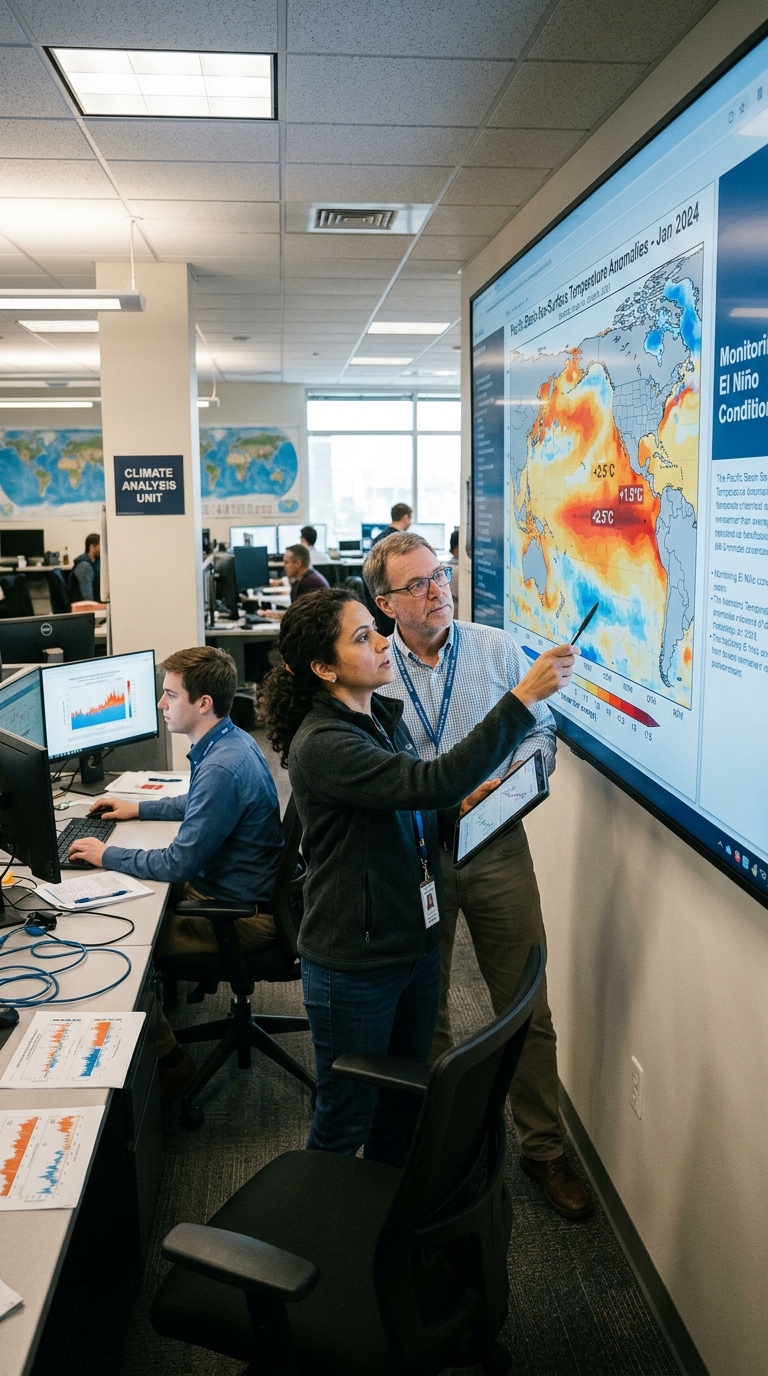
Forecasters warn that warming Pacific waters could reshape rainfall, food production and disaster risks across several regions in the months ahead.
The world is entering another climate watch period as forecasters track a rapid warming trend in the tropical Pacific.
The World Meteorological Organization says conditions are moving toward the development of El Niño from mid-2026, a shift that can alter temperature and rainfall patterns across continents. The warning comes as ocean heat remains unusually high, adding to concern that communities already strained by droughts, floods and heat waves may face another round of climate stress.
El Niño is a natural climate pattern, but its effects now unfold on a planet made warmer by greenhouse gas emissions. That combination increases the likelihood that familiar weather disruptions will arrive with greater intensity. Some regions may become hotter and drier. Others may face heavier rainfall and flood risk. Agriculture, fisheries, water supplies and public health systems can all be affected.
Governments have learned from past El Niño events that preparation matters. Early warnings can help farmers adjust planting decisions, water managers protect reservoirs, health agencies prepare for heat and mosquito-borne disease, and disaster officials pre-position supplies. But warnings only save lives when they reach communities in time and are backed by resources.
The risk is especially acute in countries with limited climate adaptation funding. A forecast of abnormal rainfall means little to a farmer without irrigation, crop insurance or access to timely market information. A heat alert does not protect workers if labor rules do not provide shade, rest and water. Climate information must be connected to practical action.
Ocean conditions are also being watched closely because high sea-surface temperatures can influence storms, marine ecosystems and coral reefs. Warmer seas can strengthen some weather systems and disrupt fisheries that support coastal livelihoods.
The economic effects could spread widely. Food prices may rise if harvests fail in major producing regions. Hydropower output may fall during drought. Flood damage can strain public budgets. Insurance costs may climb. El Niño is not only a meteorological event; it is a stress test for planning, infrastructure and inequality.
Climate scientists caution that no single forecast guarantees a specific disaster in a specific place. El Niño changes probabilities, not destiny. But the pattern is well understood enough for governments to act before losses mount.
The next several months will show whether early warnings translate into preparedness. The atmosphere is sending signals. The question is whether societies are listening quickly enough.
“””
