
TikTok, YouTube, Facebook and Instagram have turned short clips into cultural engines, changing how shows are promoted, judged, remembered and even produced.
Modern entertainment no longer begins when a television program airs, a film reaches theaters or a music performance appears on stage. Increasingly, it begins when a short clip travels across a phone screen. A punchline from a comedy show, a tense moment from a reality competition, a contestant’s emotional confession, a dramatic reaction shot or a 15-second dance challenge can now do what traditional advertising once struggled to achieve: place a program inside millions of conversations almost instantly.
Social media has become the informal broadcast network behind the formal entertainment industry. TikTok, YouTube, Facebook and Instagram do not simply distribute promotional material. They shape what audiences notice, how they interpret it and whether a moment becomes a trend. A program may still be produced for television, streaming platforms or cinemas, but its cultural life often depends on whether it can be clipped, remixed, quoted and shared.
TikTok has had the most visible impact on the speed of entertainment trends. Its short-video feed is designed around discovery rather than subscription. Users do not need to follow a broadcaster, celebrity or production company to encounter a clip. The platform’s recommendation system can push a moment from obscurity to mass attention if viewers repeatedly watch, like, comment, save or imitate it. This has changed the way entertainment producers think about scenes. A memorable facial expression, a surprising answer, a catchy sound or a conflict compressed into a few seconds may now carry more promotional value than a conventional trailer.
For music, TikTok has become especially powerful. Songs that appear in dance challenges, comedy sketches, fan edits or emotional montages can gain a second life, sometimes years after release. A chorus, beat drop or lyric fragment may become more recognizable than the full track. For singers and record labels, this has made social behavior part of the release strategy. The question is no longer only whether a song is good enough for radio or streaming playlists. It is whether listeners can use it to express themselves in a video.
For television and streaming entertainment, TikTok has created what might be called the “clip-first memory.” Audiences may remember a show not through its full episode, but through the fragments that circulate online: the judge’s shocked reaction, the contestant’s mistake, the host’s joke, the villain’s line, the romantic confession or the chaotic behind-the-scenes moment. These fragments become social currency. People share them to signal humor, taste, outrage, nostalgia or belonging. In that sense, TikTok does not merely promote entertainment; it translates entertainment into the language of everyday online identity.
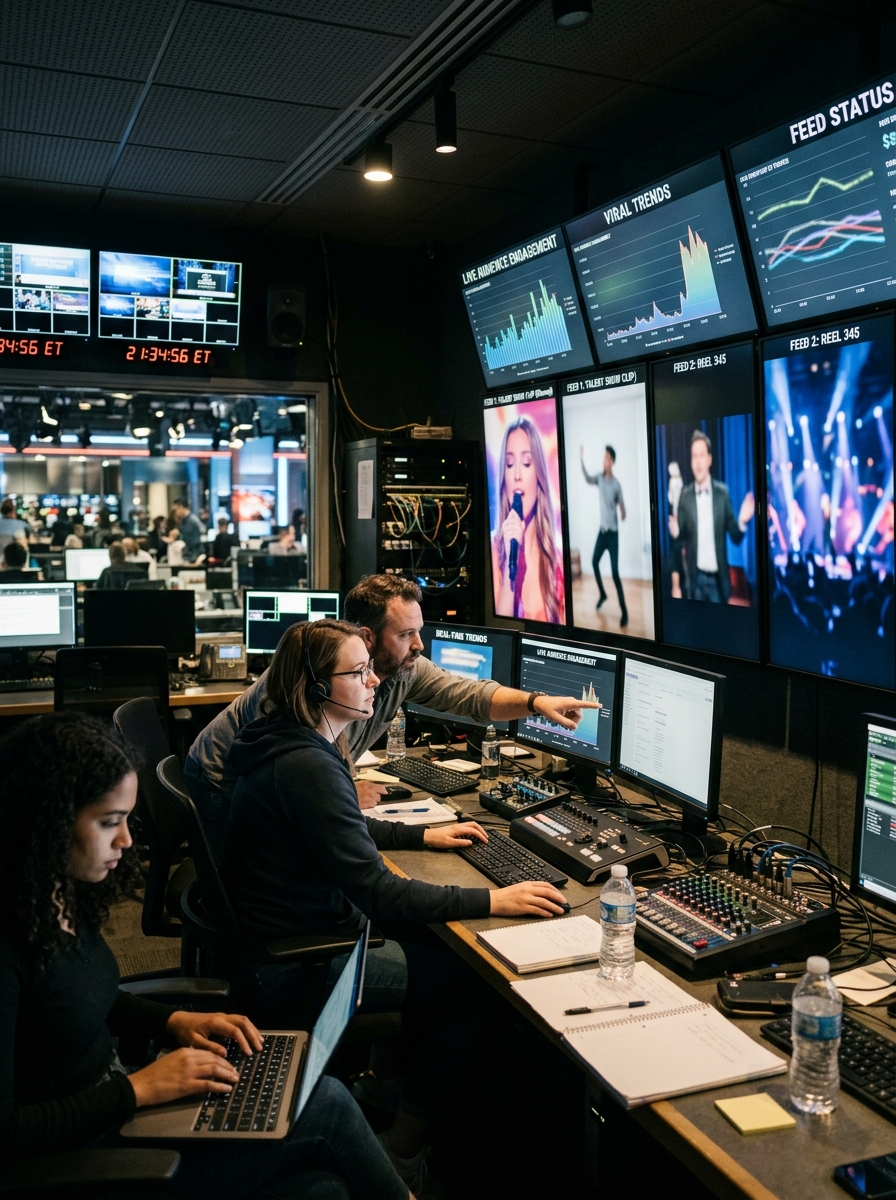
YouTube plays a different but equally important role. It is both a platform for short clips and a vast archive for longer entertainment. YouTube Shorts competes directly in the short-form space, but the platform’s broader strength lies in continuity. A viral clip can lead viewers to a full performance, a reaction video, an interview, a recap, a fan theory, a podcast discussion or an official behind-the-scenes feature. This makes YouTube a bridge between instant discovery and deeper engagement.
Entertainment companies use YouTube because it allows content to live longer than a fleeting trend. A clip from a late-night show, talent competition or music performance can continue attracting views for months or years. Fans can search for it deliberately, embed it in discussions and return to it after new developments. YouTube also supports a creator ecosystem around entertainment. Reviewers, commentators, comedians, musicians and video essayists extend the life of programs by analyzing, parodying and debating them. A hit show today is often surrounded by a secondary economy of explanation and reaction.
YouTube has also changed audience expectations. Viewers are increasingly accustomed to choosing scenes rather than waiting for broadcasts. They want highlights, rankings, compilations, alternate cuts and creator commentary. For producers, this means the official episode is only one version of the product. The show’s online afterlife may include short clips, long clips, cast interviews, livestreams, fan questions, deleted scenes and creator collaborations. The entertainment package has expanded beyond the main screen.
Facebook remains important because of its social graph and older, broader audience base. While younger viewers may discover trends on TikTok or Instagram, Facebook often carries clips into family groups, community pages and local discussion spaces. A moving performance, controversial statement or funny game-show moment can travel through Facebook not only as entertainment but as conversation among friends, relatives and neighbors. This gives Facebook a different emotional texture. It is less about being first to a trend and more about making that trend part of everyday social discussion.
Facebook’s role is especially visible in markets where community pages and fan groups are central to media consumption. Entertainment clips circulate with captions, comments and arguments attached. A short video from a reality show can trigger debate over fairness, manners, family values or national identity. A comedy sketch can become a meme used in political or workplace humor. A celebrity appearance can become the basis for admiration, criticism or gossip. Facebook turns entertainment into a public square, sometimes lively, sometimes polarized.
Instagram, meanwhile, has become the platform of visual image, celebrity identity and lifestyle amplification. Reels allows entertainment clips to circulate quickly, but Instagram’s wider culture gives those clips a polished social frame. Actors, hosts, musicians, influencers and production companies use the platform to build anticipation before a release and maintain emotional connection afterward. A program’s most shareable moments may appear as Reels, but its glamour often appears through Stories, behind-the-scenes photos, red-carpet images, cast selfies and brand collaborations.
Instagram is particularly influential in turning entertainment into aspiration. A performer’s outfit, makeup, travel location, gym routine or backstage moment can become part of the audience’s experience of a show. This is especially important for music competitions, fashion-driven reality programs, celebrity interviews and youth entertainment. Viewers are not only consuming the performance; they are consuming the lifestyle around the performance. The boundary between entertainment content and personal branding has become increasingly thin.
The spread of clips across these platforms has changed production itself. Producers now look for “moments” that can survive outside the full episode. Editors may emphasize reaction shots, emotional peaks, dramatic pauses, quotable lines and easily understood conflicts. Hosts and contestants may become more aware that a few seconds can define their public image. Promotional teams prepare platform-specific cuts: vertical video for TikTok and Reels, longer highlights for YouTube, emotionally framed clips for Facebook and polished celebrity content for Instagram.
This has clear benefits. Social media lowers the barrier between programs and audiences. A small show can reach viewers without a massive advertising budget if one clip resonates. Unknown performers can become famous quickly. Fans can participate by remixing, reacting, translating, subtitling and sharing. Entertainment becomes more democratic, more interactive and more global. A joke from South Korea, a song from Vietnam, a dance from Thailand or a reality-show scene from the United States can cross borders before traditional media has time to react.
But the same system also creates risks. When entertainment is judged by short clips, context can disappear. A contestant may be criticized for a sentence removed from a longer conversation. A comedy bit may be misunderstood outside its cultural setting. Producers may prioritize shock, conflict or humiliation because those moments travel faster than subtle storytelling. Viral fame can also be unstable. A performer can become globally visible in a day and forgotten a week later, or become the target of harassment because an algorithm delivered a controversial clip to the wrong audience.
There is also pressure on creativity. When platforms reward familiar formats, producers may repeat the same emotional beats: the tearful confession, the surprise reveal, the angry judge, the underdog victory, the awkward mistake. Social media can reward originality, but it can also reward imitation. Trends spread because they are easy to copy, and entertainment companies may be tempted to design content not for depth but for maximum shareability.
Still, the influence of social media on modern entertainment is irreversible. TikTok accelerates discovery. YouTube extends attention. Facebook turns clips into community conversation. Instagram transforms moments into identity and style. Together, they have shifted power from broadcasters alone to a network of viewers, creators, fans and algorithms. The modern hit is no longer only watched. It is clipped, captioned, challenged, debated, remixed and reposted.
For entertainment producers, the lesson is clear: a program must now live in two worlds. It must work as a complete show, film, performance or broadcast, but it must also produce moments that audiences want to carry into their own feeds. For audiences, the change is equally profound. They are no longer passive viewers waiting for entertainment to arrive. They are distributors, critics, editors and trend-makers. In the age of social media, the most powerful stage may be the one held in a viewer’s hand.
“””
