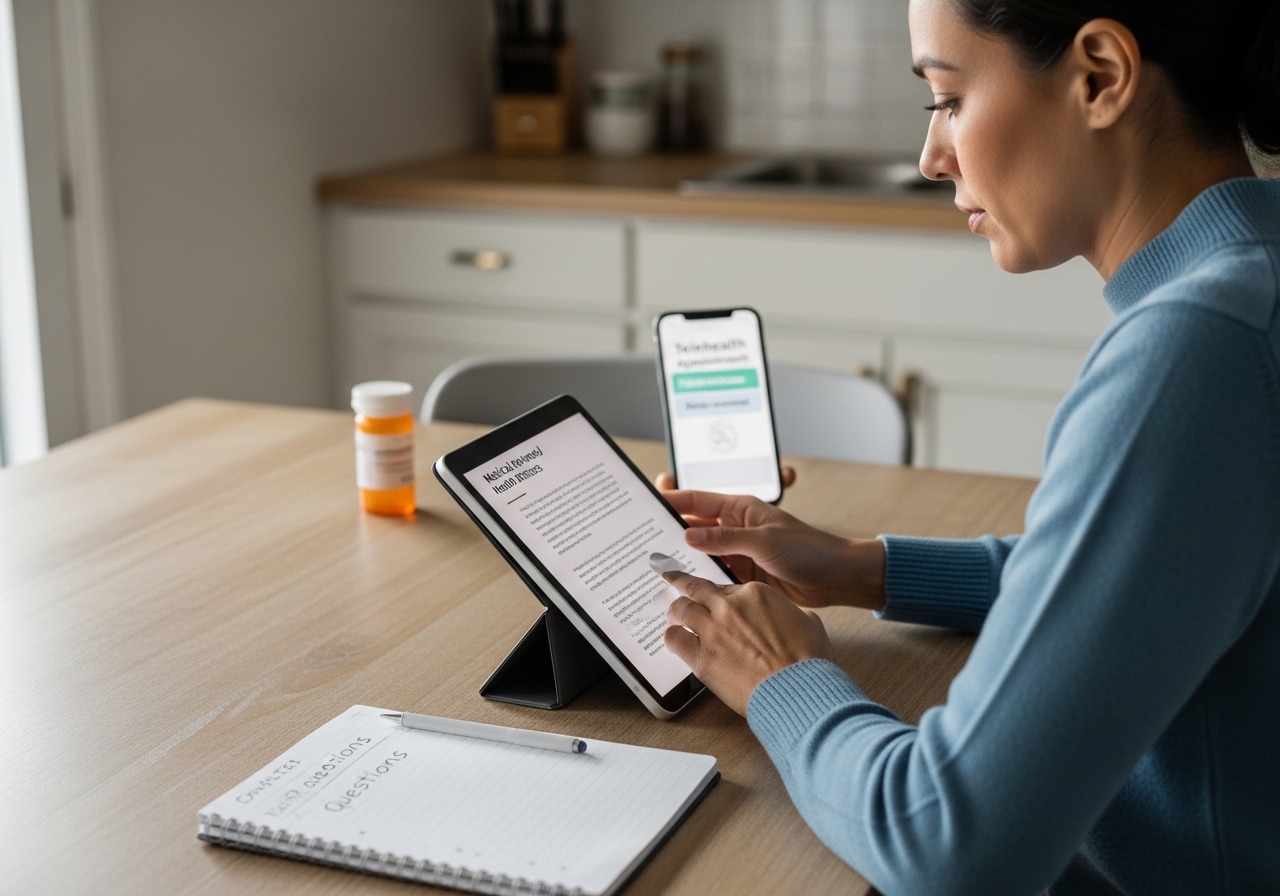

The digital health publication continues to track medical research, emerging treatments and wider trends in medicine, reflecting a broader public demand for timely but carefully reviewed health information.
NEW YORK — In a health information environment crowded with social media claims, wellness marketing and fast-moving scientific studies, Medical News Today has positioned itself as a continuously updated source for readers trying to follow new research, treatment developments and medical trends without losing sight of evidence.
The publication’s health news section says its team reports on emerging science, new treatments and trending topics across health and medicine, with articles reviewed for medical accuracy by a panel of experts. Its editorial process states that the news team takes a daily look at the latest medical research and that published content is checked for clarity, accuracy, sourcing quality and empathetic language.
That mission has become more consequential as health news has accelerated. A new drug approval, early clinical trial, nutrition study or artificial intelligence tool can move from a scientific journal into public conversation within hours. For patients, caregivers and general readers, the challenge is not simply finding information. It is knowing how much confidence to place in it.
Medical News Today operates in the middle of that challenge. Its coverage includes research updates on conditions such as cancer, heart disease, diabetes, neurological disorders and mental health, along with explainers on medications, prevention, lifestyle and healthcare access. The format is designed for non-specialist readers, but the subject matter often begins in complex scientific literature.
That translation role is increasingly important. Many medical findings are preliminary, based on small populations, animal models or observational data that cannot prove cause and effect. Yet headlines can make early discoveries sound definitive. A responsible health publication must therefore move quickly enough to be useful while remaining careful enough not to overstate what a study shows.
Medical News Today says its process involves editorial review, medical review and fact-checking, with medical network experts evaluating content before publication to ensure it is evidence-based, medically accurate and aligned with current care standards. The publication also says it monitors new clinical guidelines, drug approvals, recalls and major practice recommendations.
Those safeguards matter because health misinformation can cause direct harm. A misleading article about cancer treatment, vaccines, supplements or chronic disease can influence decisions that should be made with qualified clinicians. Even accurate research can be misused when stripped of context, especially when a study does not yet support changes in personal treatment.
The publication’s continued updates also reflect how medicine itself is changing. The most closely watched health stories now often sit at the intersection of biology, data science and public policy. Artificial intelligence is being tested in diagnostic support, hospital triage and imaging analysis. GLP-1 drugs have changed conversations about obesity, diabetes and cardiovascular risk. Cancer research is advancing through immunotherapy, targeted drugs and earlier detection tools. Mental health coverage increasingly includes sleep, neurodiversity, workplace stress and the biological effects of social isolation.
For readers, the appeal of a site such as Medical News Today is partly convenience. Instead of searching individual journals, regulatory notices and hospital press releases, they can follow a curated health news feed that summarizes developments in accessible language. But convenience also brings responsibility. A consumer health site must be clear about the difference between a peer-reviewed finding, a regulatory decision, expert opinion and a trend.
That distinction is especially important in coverage of new treatments. Early-stage clinical trial results can be encouraging, but they may not yet be available to patients. A drug may show benefit for one narrowly defined group but not for the broader population. A therapy may reduce symptoms without curing a disease. Side effects, cost and access can determine whether a medical advance changes real-world care.
The same caution applies to nutrition and wellness research, where public interest is high and evidence is often difficult to interpret. Diet studies can be affected by self-reported data, confounding factors and differences in population groups. Supplement research can be especially vulnerable to exaggerated claims. Medical News Today’s stated emphasis on sourcing and medical review is therefore central to its credibility in a category where commercial incentives can blur the line between education and promotion.
The publication’s model also shows how health journalism has moved beyond traditional breaking news. Readers increasingly want explainers that connect research to everyday questions: what a result means, who it may apply to, what is still unknown and when to speak with a clinician. That approach is different from academic publishing, which speaks primarily to specialists, and different from social media, which often rewards certainty over nuance.
Medical News Today is not alone in this space. Outlets such as Medscape, Medical Xpress, News-Medical and ScienceDaily also track medical research and health developments, each with a different audience and editorial style. Medscape is oriented more toward clinicians. ScienceDaily often summarizes research from universities and journals. Medical Xpress aggregates and reports across biomedical fields. Medical News Today’s role is more consumer-facing, aiming to make health information understandable for a broad readership.
The need for that work is likely to grow. Healthcare is becoming more personalized and more complicated. Genetic testing, wearable devices, digital therapeutics, remote monitoring and AI-assisted care are giving patients more data than ever before. But more data does not automatically mean better decisions. People need interpretation, context and warnings about uncertainty.
Health coverage also has to account for inequality. A treatment breakthrough may receive global attention while remaining inaccessible to people without insurance coverage, specialist care or nearby medical facilities. A screening technology may be promising but unavailable outside major hospitals. A digital health tool may work well for people with smartphones and stable internet access but poorly for older adults, low-income communities or rural patients.
That broader context is essential for medical journalism. A study can be scientifically important and still have limited immediate impact. A new drug can be effective and still raise questions about affordability. A prevention strategy can be well supported and still difficult to implement in communities facing food insecurity, unsafe housing or limited primary care.
Medical News Today’s continued focus on health trends therefore reflects more than the rhythm of daily science updates. It reflects the public’s need for a bridge between medical research and practical understanding. Readers want to know not only what scientists found, but whether it matters for them, whether it changes current care and what questions remain unanswered.
The risk for all health media is speed. Publishing quickly can help readers stay informed, but it can also amplify weak findings if editorial judgment is not strict. The best health journalism resists the temptation to turn every study into a breakthrough. It explains uncertainty, identifies limitations and reminds readers that medical decisions should be personalized.
That standard is particularly urgent in 2026, as artificial intelligence and biotechnology generate a wave of attention-grabbing claims. AI systems may improve parts of diagnosis, but they also raise questions about bias, accountability and clinical oversight. New medicines may transform care for some patients, but they must still pass safety, effectiveness and access tests. Research into diet, sleep and exercise may shape public health advice, but it requires careful interpretation rather than viral simplification.
In that environment, Medical News Today’s maintained focus on research updates, new treatments and medical trends places it within a crucial layer of the modern health information system. It does not replace doctors, medical journals or public health agencies. Its value lies in helping readers approach new health information with more structure, more context and less confusion.
The public appetite for health news is unlikely to slow. People are living longer with chronic disease, navigating more treatment options and encountering more claims about wellness and prevention. The question is whether digital health publishers can keep pace without sacrificing accuracy.
Medical News Today’s answer is an editorial model built around continuous reporting, accessible explanation and medical review. In a field where the difference between hope and hype can be measured in real patient decisions, that balance is not just a publishing strategy. It is the central test of modern health journalism.