
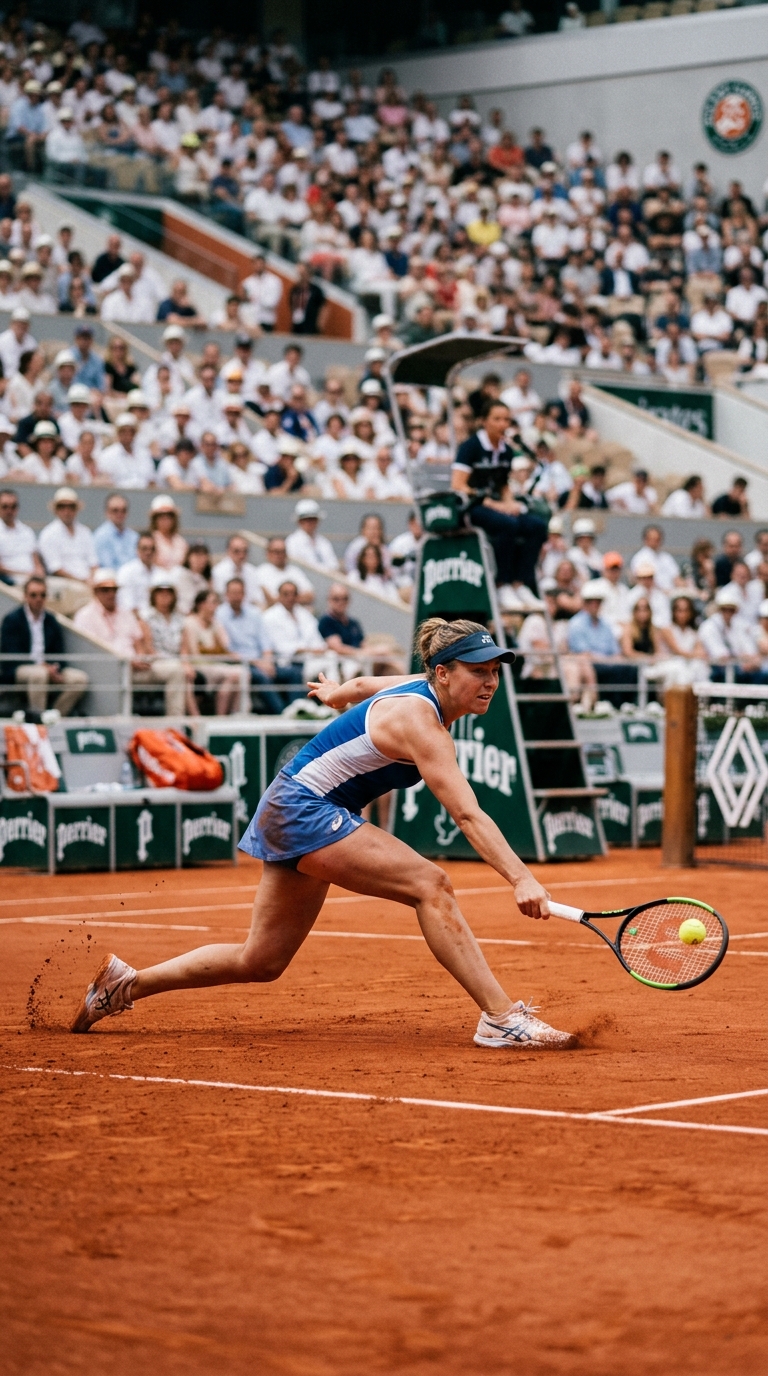
The Paris clay rewards patience, defense and imagination, turning every match into a test of endurance as much as shot-making.
There is no Grand Slam quite like Roland-Garros. The red clay slows the ball, extends rallies and exposes impatience. Power matters in Paris, but it rarely travels alone. Champions need balance, stamina, spin, tactical discipline and emotional control.
The 2026 tournament returns to Stade Roland-Garros with the familiar rhythm of spring tennis in Paris. For players, the event is both beautiful and unforgiving. A hard-court winner may become a clay-court rally. A confident server may be dragged into long games. A small lapse in footwork can change a set.
Clay-court tennis rewards problem-solving. Players must build points rather than end them too quickly. Sliding becomes a skill. Drop shots become weapons. Heavy topspin can push opponents backward, but variety can pull them forward. The best clay players make the court feel larger than it is.
Roland-Garros also creates one of tennis’s clearest psychological tests. Momentum can shift slowly, then suddenly. A player may dominate for an hour and still find the match slipping away as physical fatigue and tactical pressure accumulate.
For younger players, Paris is a proving ground. Winning on clay signals more than talent. It suggests patience and resilience. For established stars, Roland-Garros can define legacy because the tournament is so difficult to control.
The sport’s business debates continue around prize money, scheduling and athlete welfare, but once play begins, the clay imposes its own hierarchy. Reputation helps only until the first long rally.
Tennis has become faster in many places. Paris keeps asking an older question: can a player suffer, think and adapt long enough to win?
That is why Roland-Garros remains essential. It does not simply identify the best striker of a ball. It identifies the player who can solve tennis at its slowest and most exhausting speed.
“””
