
Checking air conditioning, coolant, tire pressure, paint protection and cabin safety can prevent breakdowns and protect passengers during extreme hot weather.
As temperatures climb, cars face a seasonal test that is often underestimated until something fails. A vehicle that runs smoothly in mild weather can quickly show weakness in summer heat, when the engine, tires, battery, air conditioning system and interior materials are all exposed to heavier stress. For drivers, the difference between a safe journey and a roadside breakdown can come down to a few practical checks before the hottest days arrive.
Auto technicians say summer maintenance is not only about comfort. Air conditioning may be the first concern for passengers, but the broader issue is heat management. A car must cool its cabin, regulate its engine temperature, maintain stable tire pressure and protect sensitive surfaces from sun exposure. At the same time, drivers must be aware that items left inside a parked vehicle can become dangerous within minutes under direct sunlight.
The air conditioning system is usually the most visible sign of whether a vehicle is ready for hot weather. Drivers often notice weak cooling, unusual odors or loud fan noise only after the system has already been under strain. A basic check should begin with turning the air conditioner on before a long trip, setting it to the coldest level and confirming that cool air reaches all vents. If the air remains warm, cooling is uneven, or the system takes too long to lower the cabin temperature, the vehicle may need professional inspection.
Several common problems can reduce air conditioning performance. Low refrigerant, a clogged cabin air filter, a failing compressor, electrical faults or blocked condenser fins can all prevent the system from working efficiently. A dirty cabin filter can also reduce airflow and create unpleasant smells, particularly in humid weather. Replacing the filter according to the vehicle manufacturer’s schedule is a relatively simple task, but it can significantly improve comfort and air quality inside the car.
Drivers should also use the air conditioning system correctly. Opening the doors briefly or lowering the windows for the first minute after entering a very hot car can help release trapped heat before the air conditioner begins cooling. Using recirculation mode after the cabin has started to cool can reduce the load on the system because it chills air that is already cooler than the outside air. Parking in shade or using a windshield sunshade can also make the system’s job easier.
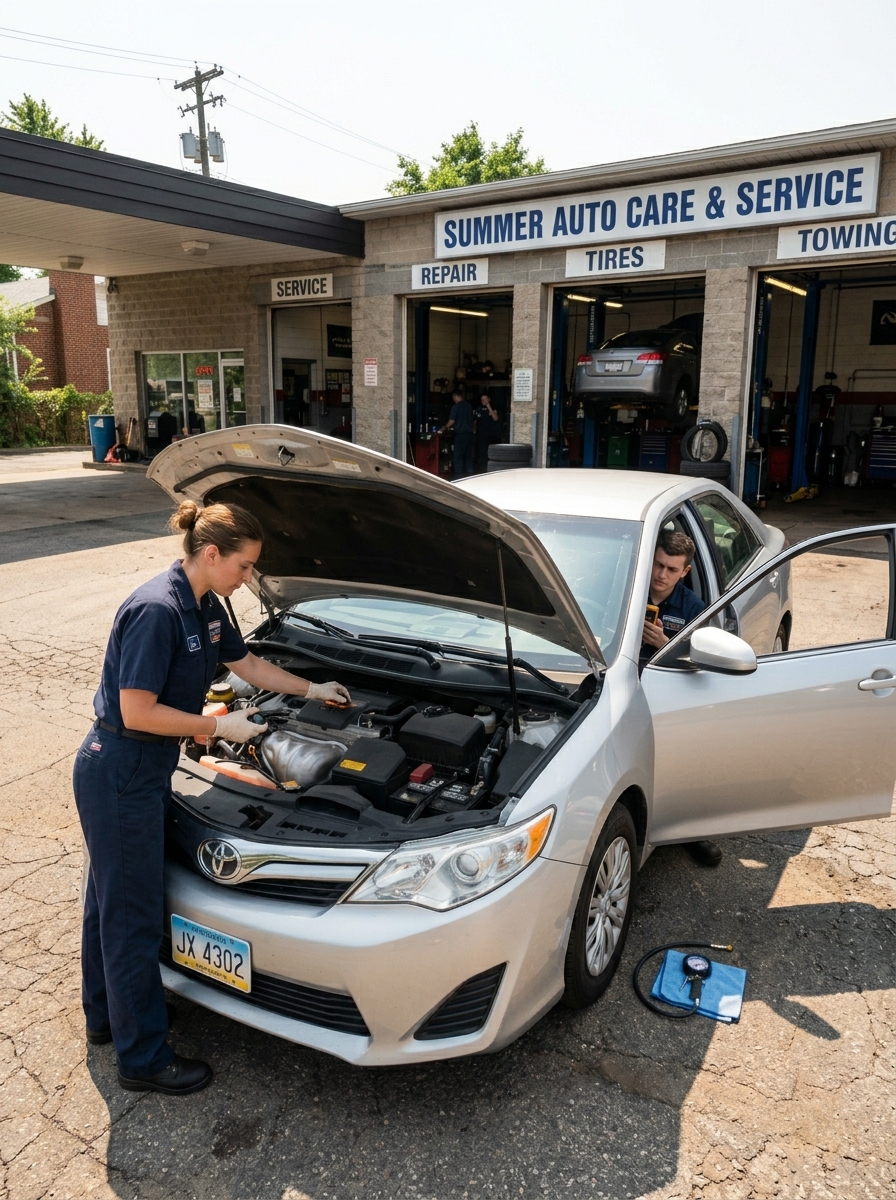
The engine cooling system is another critical area in summer. A vehicle’s engine produces intense heat even in normal conditions, and high outside temperatures reduce the margin for error. Coolant, often called antifreeze, does more than prevent freezing in winter. It raises the boiling point of the cooling liquid, protects internal components from corrosion and helps transfer heat away from the engine. If coolant is old, contaminated or too low, the risk of overheating rises.
Drivers should inspect the coolant level when the engine is cold, using the markings on the overflow reservoir as a guide. The radiator cap should never be opened when the engine is hot, because pressurized coolant can erupt and cause serious burns. Any repeated drop in coolant level should be treated as a warning sign. Leaks can occur from hoses, clamps, the radiator, the water pump or the heater core. Sweet smells, colored puddles under the vehicle, rising temperature gauges or steam from the engine bay require immediate attention.
Hoses and belts also deserve inspection before peak summer driving. Rubber parts can become brittle with age and heat. A cracked hose, loose clamp or worn drive belt may not fail during a short city trip, but it can break under the combined pressure of high speed, heavy traffic, steep roads and high temperatures. Long-distance drivers should have the cooling system pressure-tested if there is any doubt about its condition.
Tires are another summer safety priority. Hot pavement, heavy loads and high speeds increase tire stress. Underinflated tires flex more as they roll, building additional heat inside the tire structure. This can reduce fuel efficiency, shorten tire life and, in severe cases, contribute to tire failure. Overinflation is also unsafe because it can reduce traction and cause uneven wear.
The best practice is to check tire pressure when the tires are cold, meaning the vehicle has been parked for several hours or driven only a short distance at low speed. Drivers should follow the pressure listed on the placard inside the driver’s door frame or in the owner’s manual, not the maximum pressure printed on the tire sidewall. Pressure can change with temperature, so a tire that appeared correct in cooler weather may need adjustment during a heat wave. Spare tires should not be forgotten, especially before long trips.
Tread depth and visible damage are equally important. Drivers should look for cracks, bulges, nails, cuts or uneven wear. Uneven wear may indicate misalignment, poor balancing or suspension problems. In summer storms, worn tires are more likely to lose grip on wet roads. Heat and sudden rain can be a dangerous combination, making tire maintenance a central part of seasonal safety rather than a minor routine.
Protecting the vehicle’s paint is also more important in hot months. Strong sunlight, ultraviolet radiation, dust, tree sap, bird droppings and road grime can damage the clear coat that protects the paint surface. Once the clear coat deteriorates, fading and oxidation can follow. Regular washing removes contaminants before they bond to the surface. Drivers should avoid washing a vehicle under direct midday sun, because water and soap can dry too quickly and leave marks.
A layer of wax, sealant or ceramic coating can provide additional protection against sun and pollution. These products do not make a car immune to damage, but they help create a barrier between the paint and the environment. Parking in covered areas, using a car cover when appropriate and cleaning bird droppings or sap quickly can preserve the paint’s appearance and resale value. Interior surfaces also benefit from protection. Dashboards, leather seats and plastic trim can crack or fade when exposed to repeated high heat and sunlight.
The inside of a parked car can become hazardous very quickly. Drivers should never leave children, elderly passengers or pets inside a vehicle, even for a short stop. Cabin temperatures can rise rapidly, and partially opened windows do not provide reliable protection. Heatstroke can develop faster than many people expect, especially for children and animals, whose bodies may be less able to regulate temperature.
Objects left in the cabin can also create danger. Aerosol cans, lighters, power banks, electronic devices, medicines, cosmetics, bottled drinks and pressurized containers should not be left in direct sunlight. Some items may leak, expand, burst or degrade in high heat. Batteries can be damaged, screens can warp, and medications may lose effectiveness if stored outside recommended temperature ranges. Even ordinary plastic bottles can become unsafe if repeatedly heated, and they may roll under pedals if left unsecured.
Drivers should make a habit of checking the cabin before leaving the vehicle. Removing electronics, securing loose objects and keeping emergency items in shaded compartments can reduce risk. A small kit with water, a flashlight, gloves and basic tools can be useful, but it should be stored carefully and inspected regularly. In hot weather, even emergency supplies can deteriorate if forgotten for months.
Summer car care ultimately depends on prevention. Many heat-related failures give early warning signs: weak air conditioning, rising engine temperature, soft tires, unusual smells, visible leaks or fading paint. Acting on those signs early is usually cheaper and safer than waiting for a breakdown. For families preparing for vacations, commuters facing heavy traffic or commercial drivers spending long hours on the road, a seasonal inspection can be a practical investment.
The central message is simple: heat magnifies small problems. A slightly low coolant level, a dirty air filter, an aging tire or a neglected paint surface may not seem urgent in spring, but summer can expose every weakness. By checking the air conditioning, maintaining the cooling system, monitoring tire pressure, protecting the paint and keeping dangerous items out of the cabin, drivers can reduce risk, improve comfort and keep their vehicles reliable through the hottest months of the year.”””
