
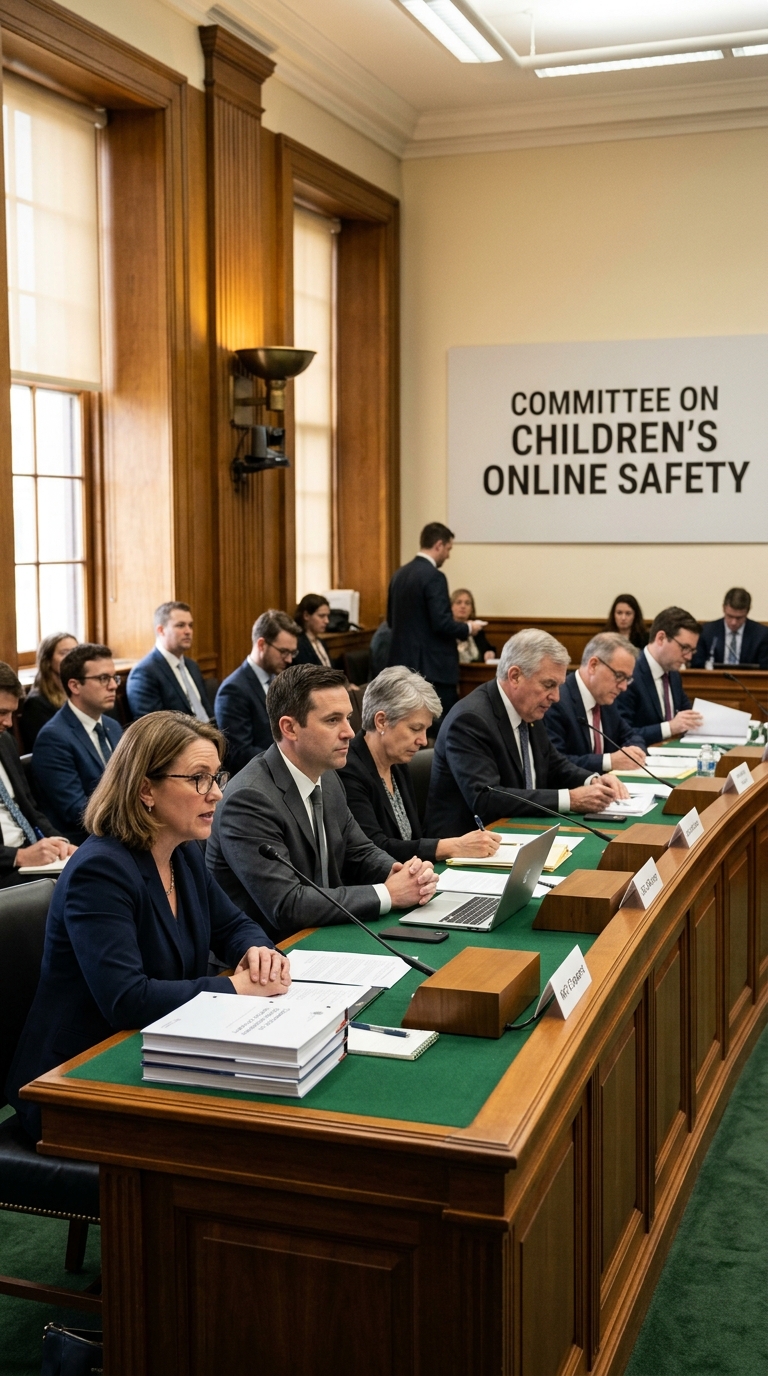
Governments are forcing social media platforms to prove they can protect minors, but the new rules raise difficult questions about privacy, speech and who controls childhood online.
The internet safety debate has entered a more forceful phase. Governments are no longer only urging platforms to protect children. They are requiring them to redesign services, restrict harmful content, assess age and reduce features considered risky for minors.
The European Commission has issued guidelines under the Digital Services Act on protecting minors online. The United Kingdom’s Online Safety Act has pushed platforms toward stronger age checks and child-safety duties. Australia has adopted age restrictions requiring major social media services to take reasonable steps to prevent under-16 users from holding accounts. Together, these measures signal a global shift from voluntary safety tools to enforceable obligations.
The political force behind the shift is easy to understand. Parents, educators and health professionals worry about cyberbullying, sexual exploitation, self-harm content, eating disorder communities, addictive design, algorithmic recommendation systems and sleep disruption. Tragic cases involving young people have intensified public pressure. Governments want to show they can act.
Technology companies argue that they have already invested heavily in safety, including parental controls, content moderation, teen account settings, reporting tools and AI detection. But regulators increasingly view those measures as insufficient. The question is not whether platforms have policies, but whether the design of the service reduces foreseeable harm.
Age assurance has become the central battleground. Platforms cannot protect children differently if they do not know who is a child. But proving age online is difficult. Strict identity checks may require documents or biometric estimation, raising privacy concerns. Weak self-declaration can be easily bypassed. Device-level or app-store verification may reduce repeated checks but shifts power to operating system providers.
Australia’s approach has drawn global attention because it places responsibility on platforms to prevent underage accounts while warning against intrusive verification for every user. That reflects the central tension: protect children without building a surveillance system for the entire population.
The European approach under the DSA focuses on privacy, safety and security by design. Platforms accessible to minors are expected to consider default settings, recommender systems, advertising practices and risk assessment. The principle is that children should not have to navigate adult-level data extraction and engagement tactics.
The UK’s Online Safety regime pushes platforms to prevent children from encountering harmful content, including material related to suicide, self-harm, eating disorders and pornography. Ofcom has laid out practical measures for services used by children. Enforcement will test whether rules can change global platforms that operate across many jurisdictions.
Algorithms are under scrutiny because they shape what children see. A teenager may search for fitness advice and be pushed toward extreme dieting. A child watching jokes may be guided toward harassment or conspiracy content. Platforms argue that recommendation systems can also promote helpful material and detect risk. Regulators want evidence that safety is built into ranking systems, not added after harm occurs.
Addictive design is another focus. Infinite scroll, autoplay, streaks, notifications and reward loops can increase time spent on platforms. Companies call these engagement features. Critics call them behavioral manipulation. The line between useful design and exploitative design becomes sharper when users are children.
Privacy advocates warn that child-safety rules can create unintended consequences. Age verification systems may collect sensitive data, exclude young people without documents, or create databases vulnerable to breach. LGBTQ youth, abuse survivors and politically active minors may rely on online spaces for support and information. A blunt ban can protect some children while isolating others.
Free expression concerns also matter. Rules against harmful content must be specific enough to avoid over-removal of legitimate discussion, news, health information or youth activism. Platforms may remove more content than necessary to avoid penalties. That can silence vulnerable communities.
Parents are divided. Some welcome stronger rules because household-level control feels impossible against billion-dollar platforms. Others fear that government restrictions are too broad or may undermine trust between parents and children. Many simply want tools that work and settings that are understandable.
Schools are increasingly affected. Teachers deal with conflicts that begin on phones at night and continue in classrooms the next morning. Phone bans, digital literacy lessons and mental health support are spreading. But schools cannot solve platform design problems alone.
The business model is at the center of the debate. Many social platforms profit from attention and advertising. If child safety requires reducing engagement, it may conflict with revenue incentives. Regulators therefore focus on systemic design rather than asking platforms to moderate individual posts after damage is done.
Artificial intelligence is now used by both platforms and regulators. Companies use AI to detect underage accounts, harmful content, grooming behavior and policy violations. But AI systems can make mistakes, especially across languages, cultures and contexts. False positives can remove legitimate users. False negatives can leave children exposed.
There is also a global inequality issue. Wealthy countries may force major platforms to build stronger protections, while children in lower-income countries receive weaker safety tools or less moderation in local languages. A truly global platform should not offer first-class safety only where regulators are powerful.
Enforcement will be difficult. Platforms are technically complex and change constantly. Regulators need expertise to inspect systems, evaluate risk assessments and challenge corporate claims. Transparency reports can help, but independent researchers often need access to data to verify whether harms are decreasing.
The future may involve layered systems: safer defaults for minors, privacy-preserving age assurance, restrictions on targeted advertising to children, limits on harmful recommendation patterns, stronger parental tools, school policies and digital literacy. No single measure will solve the problem.
The cultural question is deeper than law. Societies must decide what kind of digital childhood they want. Should children be treated as consumers, creators, citizens or data sources? How much risk is acceptable in spaces where young people learn, socialize and experiment with identity?
The online safety movement is not a rejection of the internet. Young people need digital access for education, friendship, creativity and participation. The goal is not to remove childhood from the online world, but to stop designing online spaces as if children were small adults with unlimited capacity to resist manipulation.
The fight over age checks and algorithms is therefore a fight over responsibility. For years, platforms placed much of the burden on users and parents. Governments are now saying that the architecture itself must change.
The outcome will shape not only social media, but the next generation’s understanding of privacy, trust and freedom online.
“””
