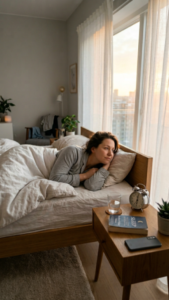
As sleep becomes a public health priority and a consumer-tech obsession, experts say the most effective strategies remain surprisingly basic: regular timing, morning light, quiet nights and medical care when poor sleep persists.
Sleep has become one of the defining health concerns of modern life, reshaped by late-night work, glowing screens, wearable trackers and a wellness market promising sharper minds by dawn. Yet behind the flood of data and devices, sleep specialists are converging on a simpler message: optimizing sleep is less about chasing a perfect score than protecting the biological conditions that allow the body and brain to recover.
For most adults, that begins with duration. Public health agencies and sleep medicine groups generally recommend at least seven hours of sleep a night for adults, while children and teenagers need more. The recommendation is not arbitrary. Sleep is tied to attention, memory, immune function, blood pressure, metabolism and mood. In daily life, too little sleep can mean slower reaction time, poorer judgment and a higher risk of errors on the road or at work. Over years, chronic sleep deficiency has been associated with higher risks of obesity, hypertension, diabetes, cardiovascular disease, depression and stroke.
The scale of the problem is significant. In the United States, federal survey data show that a large share of adults report sleeping less than seven hours in a 24-hour period. The pattern varies by state, age, sex and racial or ethnic group, but the larger finding is consistent: insufficient sleep is common enough to be treated not only as a private inconvenience but as a public health issue. Similar pressures are visible globally, as urbanization, shift work, long commutes and constant digital access compress the night.
The new language of “sleep optimization” often implies that rest can be engineered with precision. Consumers can now buy mattresses that cool automatically, rings that estimate sleep stages, apps that generate readiness scores and lamps that simulate sunrise. Some tools may help people notice patterns, especially when paired with a sleep diary. But clinicians caution that consumer sleep data can also create anxiety. A person may become so focused on improving a number that bedtime itself becomes stressful, a problem some researchers have described as an unhealthy fixation on achieving perfect sleep.
The strongest foundation remains consistency. Going to bed and waking up at roughly the same time each day helps anchor the circadian rhythm, the internal clock that coordinates sleep, hormones, temperature and alertness. Sleeping late on weekends may feel restorative after a hard week, but large swings in timing can shift the body clock and make Monday mornings harder. Sleep experts often advise people to protect a stable wake time first, then move bedtime earlier gradually if more sleep is needed.
Light is one of the most powerful signals in that system. Morning light helps tell the brain that the day has begun, supporting alertness and making it easier for sleep pressure to build by night. Evening light, especially bright light from screens or overhead fixtures, can delay the body’s preparation for sleep. The practical advice is familiar but still widely ignored: seek outdoor light early in the day when possible, dim the home in the evening, and reduce screen exposure close to bedtime. For people who must use devices at night, lowering brightness, using warmer tones and avoiding stimulating content may help, though these steps do not fully replace darkness.
The bedroom environment matters because sleep is fragile. A room that is quiet, dark, relaxing and cool supports fewer awakenings. Noise from traffic, neighbors or phones can fragment sleep even when a person does not fully remember waking. Alcohol may make some people feel sleepy at first, but it can disrupt sleep later in the night. Heavy meals close to bedtime can worsen reflux or discomfort. Caffeine, depending on the person and dose, may interfere with sleep many hours after it is consumed, which is why many public health recommendations advise avoiding it in the afternoon or evening.
Exercise is another pillar, though timing and intensity should be individualized. Regular physical activity is linked to better overall health and can support sleep, especially when it is part of a stable daily routine. A hard workout very late at night may energize some people, while others tolerate it well. The broader pattern matters more: a body that moves during the day is often better prepared to rest at night. Diet also plays a role, not through miracle foods but through regular meals, limited late-night overeating and moderation with alcohol and stimulants.
Stress may be the most stubborn barrier. Many people do not fail to sleep because they misunderstand sleep hygiene; they fail because the bed becomes the place where unresolved tasks, financial fears and personal conflicts return. For that reason, optimization is not only environmental but psychological. A wind-down routine can help separate the day from the night: dim lights, prepare for the next morning, read something calm, stretch lightly or practice slow breathing. The aim is not to force sleep, which often backfires, but to create a predictable descent.
When insomnia becomes chronic, experts increasingly emphasize cognitive behavioral therapy for insomnia, known as CBT-I. Unlike general sleep tips, CBT-I is a structured treatment that addresses the thoughts and behaviors that sustain insomnia. It can include stimulus control, sleep restriction, cognitive techniques and relaxation training. Sleep hygiene alone is usually not considered enough for chronic insomnia, because people with persistent insomnia often need targeted help to rebuild the association between bed and sleep.
Sleep optimization also requires knowing when the problem is not lifestyle. Loud snoring, choking or gasping during sleep, morning headaches, high blood pressure, severe daytime sleepiness, restless legs, sudden muscle weakness or repeated episodes of falling asleep unintentionally can signal a sleep disorder. Obstructive sleep apnea, in which breathing repeatedly stops or narrows during sleep, is especially important because it can strain the cardiovascular system and leave people exhausted despite spending enough hours in bed. Diagnosis may require a sleep study at home or in a laboratory, and treatment can include positive airway pressure devices, oral appliances, surgery or other medical approaches depending on the case.
Shift workers face a harder version of the same challenge. Nurses, factory employees, drivers, emergency responders and others who work through the night often sleep against their biology. For them, advice designed for daytime workers may not be enough. Strategic light exposure, dark sunglasses after a night shift, blackout curtains, protected sleep blocks and careful caffeine timing can reduce harm, but shift work remains a real health burden. Employers also play a role through scheduling policies that limit rapid rotations and allow sufficient recovery time.
The rise of sleep technology has added both opportunity and confusion. Wearables can estimate total sleep time and identify obvious disruptions, but they are less reliable at measuring precise sleep stages than medical-grade tests. Their best use may be behavioral: showing that late caffeine, irregular bedtimes or alcohol-heavy evenings correlate with poorer nights. Their worst use is moral: turning sleep into another performance metric that people blame themselves for failing.
Equity is often missing from the sleep optimization conversation. A person who works two jobs, lives near a noisy road, shares a crowded apartment or lacks access to medical care cannot solve sleep with a premium mattress or an app subscription. Public health researchers have increasingly linked sleep to housing, labor conditions, neighborhood safety and access to care. In that sense, sleep is not merely a wellness habit. It is shaped by policy, income and the design of cities and workplaces.
The most useful sleep plan is therefore practical rather than perfect. Keep a consistent wake time. Get bright light early. Move during the day. Limit caffeine late. Reduce alcohol near bedtime. Make the room dark, quiet and cool. Build a wind-down ritual that does not involve urgent work or endless scrolling. Track patterns only if tracking helps. Seek professional evaluation when sleep remains poor despite adequate opportunity, or when symptoms suggest a disorder.
In a culture that rewards constant availability, sleep optimization may sound like another productivity strategy. But its deeper value is protective. Sleep is not lost time. It is the nightly maintenance of attention, metabolism, immunity, emotional balance and safety. The evidence points toward a modest conclusion: the best sleepers are not those who control every variable, but those who give the brain and body a regular, safe and quiet chance to let go.