After years of microtrends moving at social-media speed, consumers are learning to curate their own style instead of copying every new aesthetic.
For years, the internet taught people to identify themselves through a rotating cast of aesthetics. There was clean girl, quiet luxury, cottagecore, coastal grandmother, mob wife, tomato girl, balletcore, office siren and dozens more. Each arrived with a mood board, a shopping list and a short shelf life. Many were fun. Some were inventive. But the pace eventually became exhausting.
A new cultural mood is forming in response: trend fatigue. Instead of asking what everyone is wearing, decorating, eating or buying this week, more consumers are asking what actually suits them. The shift is not anti-fashion, anti-beauty or anti-design. It is a quieter rejection of cultural whiplash. People still want inspiration, but they are less willing to surrender their identity to every algorithmic command.
Pinterest Predicts 2026 captured this pivot clearly. The platform’s annual trend forecast emphasized nonconformity, self-preservation and escapism, describing a consumer turn toward comfort, authenticity and optimism in response to the constant noise of social media. The more interesting message was not a single color, silhouette or décor style. It was the idea that trends are becoming raw material for self-expression, not instructions to be obeyed.
That distinction matters. A trend once moved from designer runway to magazine page to store window to consumer wardrobe. Today, it can be born in a TikTok clip, spread through screenshots, become a Shein haul, peak on Instagram and feel outdated within weeks. The cycle is faster, cheaper and more visible than before. It can make taste feel less like discovery and more like homework.
For Gen Z and millennials, the pressure is especially familiar. These are generations fluent in visual culture, mood boards and niche aesthetics. They know how to remix references, find vintage pieces, follow creators and build an identity online. But they also know the fatigue of being told that every season requires a new self. The same platforms that helped young people explore style have also made style feel like a performance review.
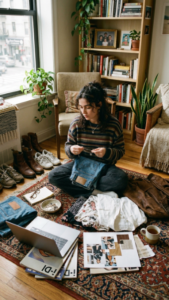
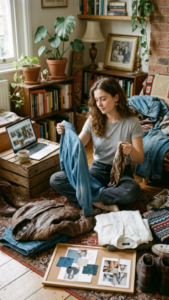
The new response is curation over copying. A person might borrow a color from one trend, a silhouette from another, a family heirloom from a third and a secondhand object that does not belong to any trend at all. The result is less polished than a viral aesthetic, but often more believable. It looks like a life, not a campaign.
This can be seen across fashion. Instead of chasing a full aesthetic uniform, shoppers are building wardrobes around repeatable pieces: good denim, old leather jackets, white shirts, comfortable shoes, personal jewelry, thrifted coats and one strange accessory that makes an outfit feel individual. Fast Company, citing Stitch Fix data, reported that two-thirds of the company’s customers expressed trend fatigue, with many turning toward classic staples and small statement pieces rather than full trend adoption.
Interiors are moving in a similar direction. The perfectly neutral room, once dominant across social feeds, is losing some of its authority. People are adding inherited furniture, handmade ceramics, saturated color, children’s drawings, old books, patterned textiles and objects collected from travel or family history. The room does not need to photograph like a hotel. It needs to feel inhabited.
Beauty is also becoming more modular. Instead of copying an entire viral face, consumers may choose one element that fits: a lip color, scent layer, haircut, nail texture or skin-care ritual. Pinterest’s 2026 forecast included trends such as scent stacking and tactile beauty, both of which point toward personalization rather than a single approved look. The signature is becoming more important than the template.
This shift also has an economic dimension. Constant trend participation is expensive. Buying the right boots, lamps, bags, makeup, coffee-table objects and vacation outfits for every new internet mood can strain budgets already pressured by rent, inflation, student debt and uncertain work. Personal style becomes not only expressive, but practical. Keeping what works is cheaper than reinventing oneself every month.
Sustainability strengthens the case. Microtrends encourage overconsumption because they turn clothing and objects into disposable signals. A trend that lasts three weeks can still leave behind thousands of low-quality garments and décor pieces. A more curated approach favors longevity: repair, reuse, tailoring, vintage shopping, slower purchases and emotional attachment. The most sustainable trend may be refusing to treat personality as seasonal inventory.
Brands are watching carefully. For years, marketers tried to identify the next aesthetic early, attach products to it and ride the wave before the audience moved on. That strategy is becoming riskier. Consumers who feel manipulated by trends may reject brands that look too eager to manufacture urgency. The more effective approach may be to offer adaptable products and styling ideas rather than rigid lifestyle scripts.
This does not mean trends are disappearing. They are too useful, too social and too enjoyable to vanish. Trends help people communicate, discover, experiment and belong. The difference is that consumers appear more selective about which trends they let into their lives. A trend must now pass a personal test: does it fit my body, my home, my budget, my culture, my memories and the person I am trying to become?
There is also a deeper emotional reason behind the shift. Online life has made identity both more fluid and more exposed. A person can try on a new aesthetic instantly, but can also be judged instantly. In that environment, personal taste becomes a form of privacy. It is the part of life that does not need to be optimized for engagement. Choosing a chair because it reminds someone of a grandmother, or wearing a jacket because it has survived ten years, can feel quietly radical in a culture built around novelty.
The phrase “living according to your own taste” may sound soft, but it reflects a serious cultural recalibration. It suggests that people are tired of being treated as trend receptors. They want to be editors. They want to choose, combine, ignore and reinterpret. They want to participate in culture without being consumed by its speed.
The danger, of course, is that “personal style” itself becomes another trend to monetize. Already, platforms can turn individuality into an aesthetic category: curated chaos, eclectic grandpa, bookshelf wealth, intentional clutter. The market is skilled at absorbing rebellion. The challenge for consumers is to keep personal taste personal, not just replace one label with another.
Still, the trend-fatigue moment is meaningful because it changes the direction of aspiration. Instead of asking how to look current, many people are asking how to look and live consistently like themselves. That is a slower question. It cannot be answered by one shopping link or one viral video. It is built through trial, memory, budget, comfort and time.
After years of scrolling through new identities, the most modern look may be continuity. A home with mismatched objects. A wardrobe with repetition. A beauty routine with a recognizable signature. A life that takes ideas from the internet but does not let the internet make every decision.
The future of trends may not be fewer trends. It may be more selective people. In a culture where everything can go viral, taste is becoming the ability to say no.