
A safe journey begins before departure, with careful vehicle checks, valid documents, planned rest stops and essential supplies packed within reach.
A long-distance drive can be one of the most convenient ways for a family, a group of friends or a solo traveler to move between cities, visit relatives or explore new places. It offers flexibility that buses, trains and flights often cannot provide. The driver can choose the route, stop when needed and carry more luggage. But distance changes the demands placed on both the vehicle and the person behind the wheel. A car that feels normal during short urban trips may reveal problems only after hours of highway driving, heavy braking, steep climbs or hot weather.
The most important preparation starts with the vehicle itself. A basic inspection several days before departure gives the owner time to fix problems instead of discovering them on the roadside. Drivers should not wait until the morning of the trip to check the car, especially if the journey involves mountains, rural roads, night travel or areas with limited repair services. A professional inspection is strongly recommended if the vehicle is older, recently purchased, used infrequently or already showing warning signs.
Tires deserve special attention because they are the only parts of the car that touch the road. Before a long trip, drivers should check tire pressure when the tires are cold and compare it with the recommended pressure shown in the owner’s manual or on the sticker inside the driver’s door frame. Underinflated tires can increase fuel consumption, reduce stability and overheat at high speed. Overinflated tires can reduce grip and make the ride harsher. The spare tire should also be checked, because an unused spare with low pressure may be useless in an emergency.
Tread depth and tire condition are just as important as pressure. Drivers should look for uneven wear, cracks, bulges, cuts or objects stuck in the rubber. Uneven wear may indicate poor wheel alignment, suspension problems or incorrect pressure. A bulge on the tire sidewall is a serious warning sign and should not be ignored. Families carrying passengers and luggage should remember that extra weight places more stress on tires, especially during hot weather or long highway sections.
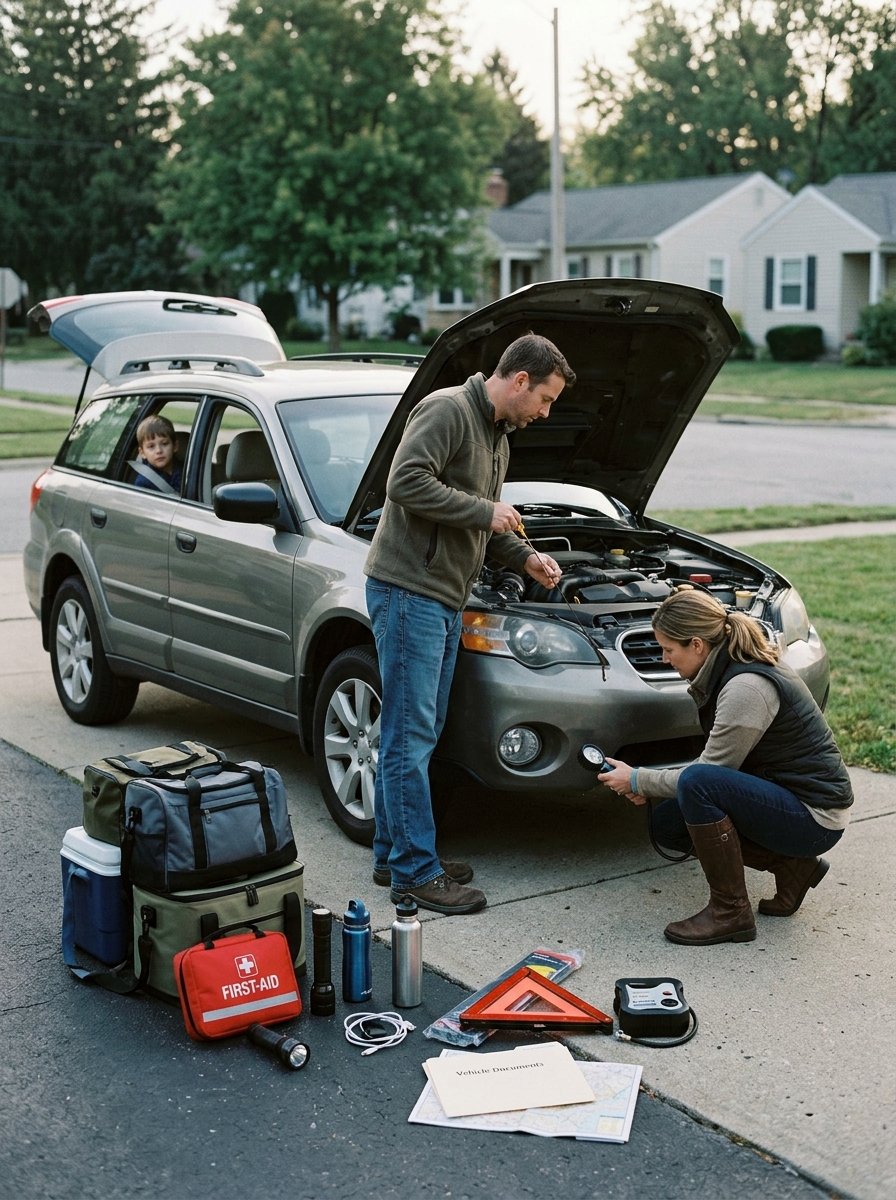
Engine oil should be checked before departure, ideally on level ground after the engine has been off for a few minutes. The oil level should sit between the minimum and maximum marks on the dipstick. Oil that is extremely dark, gritty or below the safe level may indicate the need for service. Drivers should also know when the last oil change was completed and whether the vehicle is due for scheduled maintenance. Long-distance driving with old or insufficient oil can increase engine wear and may lead to serious damage.
Other fluids should not be overlooked. Coolant helps prevent overheating, especially during slow traffic, steep climbs or hot conditions. Brake fluid, transmission fluid, power steering fluid and windshield washer fluid should also be checked according to the vehicle’s design. The cooling system is particularly important. A worn hose, leaking radiator or weak coolant level can turn a simple journey into a breakdown. If the temperature gauge rises unusually during normal driving, the car should be inspected before any long trip.
Brakes are another critical safety item. The brake pedal should feel firm, not spongy or unusually low. Drivers should listen for squealing, grinding or scraping noises and pay attention to vibration when braking. A vehicle that pulls to one side under braking may have uneven brake force, tire issues or suspension problems. Brake pads, discs and fluid should be inspected if there is any doubt. On long descents, weak brakes can become dangerous quickly, especially when the car is fully loaded.
Lights, wipers and visibility should be checked before leaving. Headlights, brake lights, turn signals, hazard lights and reverse lights must all work properly. Long trips often include sudden rain, fog, tunnels or night driving, making visibility essential. Wiper blades that leave streaks should be replaced. The windshield should be clean inside and outside because glare from sunlight or headlights can become tiring and dangerous over time. Mirrors should be adjusted before moving, not while the vehicle is already in traffic.
Documents are part of road safety as well. Drivers should carry a valid driving license, vehicle registration, insurance documents, inspection certificate if required, and any permits needed for the route. For cross-border travel, additional documents may be necessary, including international driving permits, vehicle authorization letters, customs papers or travel insurance. Drivers should keep physical copies where required and digital copies as backup. A missing document can cause delays, fines or even prevent the journey from continuing.
Planning the route is more than entering a destination into a navigation app. Drivers should review road conditions, tolls, fuel stations, rest areas, weather forecasts and possible alternative routes. Remote areas may have long distances between service stations, while popular holiday routes may face heavy congestion. It is wise to start with a full tank or sufficient battery charge for electric vehicles and to avoid waiting until the fuel warning light appears. Families traveling with children or elderly passengers should plan stops near clean restrooms and food options.
Rest is one of the most underestimated parts of long-distance driving. Fatigue reduces reaction time, judgment and awareness. A driver who has slept poorly can be as unsafe as one distracted by a phone. Before a long trip, the main driver should sleep well and avoid starting after a full workday if possible. During the journey, rest stops should be scheduled every two to three hours, or sooner if the driver feels tired, stiff or unfocused. Stretching, walking briefly and drinking water can help maintain alertness.
When more than one qualified driver is available, sharing the driving can reduce fatigue. However, each driver should be familiar with the vehicle, including lights, wipers, mirrors, cruise control and emergency procedures. A passenger should not pressure a tired driver to continue. Warning signs include frequent yawning, drifting within the lane, missing exits, heavy eyelids, impatience or difficulty remembering the last few kilometers. The safest response is to stop, rest and continue only when alert.
Packing should be practical rather than excessive. Essential items include drinking water, light snacks, a phone charger, power bank, first-aid kit, flashlight, reflective warning triangle, high-visibility vest, basic tools, jumper cables or a battery booster, tire inflator, tire repair kit if suitable, paper towels and emergency contact numbers. Families may also need child medication, wet wipes, plastic bags, blankets, spare clothes and entertainment for children. Items used during the trip should be kept accessible, while heavy luggage should be secured to prevent movement during sudden braking.
Drivers should also prepare for communication problems. Mobile signal may be weak in rural or mountainous areas, so offline maps can be useful. Important phone numbers should be saved and written down. A charged phone is essential, but it should not become a distraction. Navigation should be set before departure, and calls should be handled hands-free only where legal and safe. The driver’s attention must remain on the road.
Loading the car correctly improves safety. Heavy bags should be placed low and as far forward in the luggage area as possible. Loose objects should not be left on the rear shelf or seats, because they can become dangerous projectiles in a sudden stop. Roof boxes and bicycle racks should be installed securely and checked during stops. Overloading the car can affect braking, steering and tire performance. The vehicle’s maximum load limit should not be exceeded.
Before pulling away, drivers should complete a final walkaround. Check that doors, hood, trunk and fuel cap are closed. Confirm that children are properly seated and that seat belts are fastened. Make sure mirrors are adjusted, navigation is ready, climate control is set and essential items are within reach. A calm start reduces stress and mistakes.
Long-distance driving rewards preparation. The safest trips are usually not the ones where nothing unexpected could happen, but the ones where the driver is ready when something does. A well-maintained vehicle, correct tire pressure, sufficient fluids, reliable brakes, valid documents, planned breaks and sensible supplies can turn a demanding journey into a manageable one. For any driver preparing to cover hundreds of kilometers, the best advice is simple: inspect early, rest often, drive patiently and never ignore warning signs from the car or the body.”””
