
Beyond the podiums and national flags, the Olympic Games remain a global stage for discipline, sacrifice, resilience and the fragile seconds that separate victory from heartbreak.
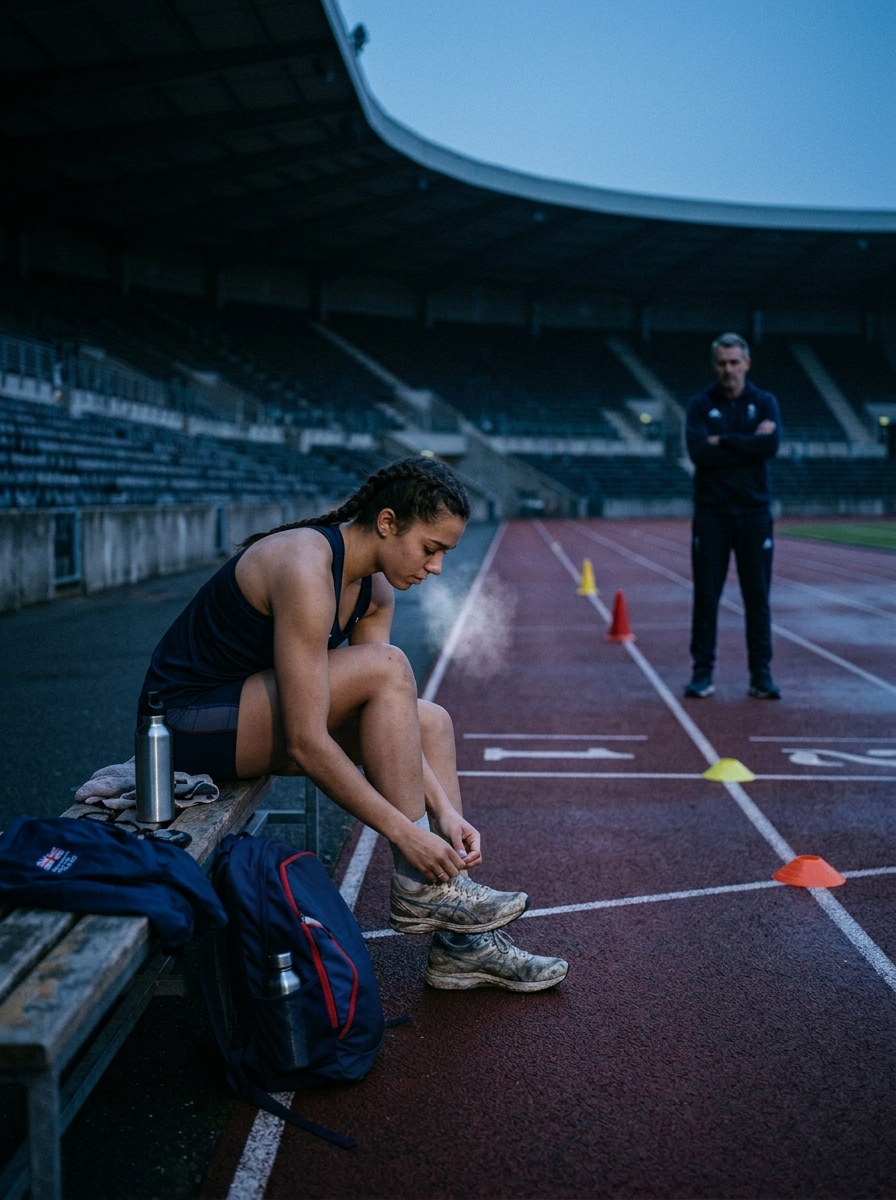
Every Olympic medal begins long before the world is watching. It begins in quiet training halls before sunrise, on running tracks still damp with morning air, in swimming pools where the only sound is breath and water, and in gyms where athletes repeat the same movement thousands of times for the chance to perform it once perfectly.
By the time an athlete walks into an Olympic stadium, the public sees the final image: the uniform, the flag, the focused face, the ceremony of competition. What remains largely invisible is the long private history behind that moment. Years of physical pain, financial pressure, lost childhoods, missed family milestones, strict diets, injuries, doubts and small acts of persistence are compressed into a race, a routine, a throw, a lift, a dive or a final shot.
The Olympic Games are often described through numbers: records broken, medals won, countries represented, times measured to hundredths of a second. But their deeper meaning lies in human transformation. The Games are where ambition becomes visible, where athletes from vastly different backgrounds arrive with the same basic hope: that preparation will survive pressure and that a dream carried for years can become something solid enough to hold in the hand.
For many competitors, the road to the Olympics begins with limited resources. Some train in world-class facilities with sports scientists, nutritionists and technology tracking every movement. Others grow up with secondhand equipment, crowded practice spaces and families who make difficult sacrifices to pay for travel, coaching or shoes. The Olympic ideal does not erase inequality, but it reveals how powerful desire can be when paired with discipline and opportunity.
Training at this level is not simply exercise. It is a life organized around improvement. Athletes learn to measure progress in details most people would never notice: the angle of a foot on landing, the rhythm of a breath before a sprint, the position of a shoulder in the water, the timing of a jump, the fraction of a kilogram added to a lift. Improvement can be invisible for months, then suddenly appear in a personal best. Failure can arrive just as quickly.
The body is both the athlete’s instrument and its limit. Injuries are among the most common shadows behind Olympic stories. A strained tendon, a torn ligament, a stress fracture or a concussion can interrupt years of planning. Recovery often demands the same discipline as training, but with less glory. Athletes must learn patience while watching competitors advance. They must rebuild trust in their own bodies. Some return stronger. Others never fully regain what was lost.
The mind faces its own contest. Olympic pressure is unlike ordinary competition because it concentrates years of expectation into a brief performance. A swimmer may train for four years for a race that lasts under a minute. A gymnast may see a medal vanish with one missed landing. A shooter or archer may lose focus for a single breath. A marathon runner may feel years of preparation threatened by heat, cramps or one poorly timed move.
This is why the Olympics are not only a celebration of strength and speed. They are a test of emotional control. Athletes must stand in front of millions, carrying the hopes of coaches, families and nations, while pretending the moment is simple. The best competitors often describe the same goal: to make the Olympic final feel like another day of training. That is one of the hardest illusions in sport.
Victory at the Olympics has a language everyone understands. It is the raised arms at the finish line, the stunned silence before a score appears, the hand over the mouth, the tears during the anthem, the embrace with a coach who has watched every failure that came before. A gold medal can change an athlete’s life instantly. It can bring national fame, sponsorships, political attention and a permanent place in sporting history.
Yet the most powerful Olympic moments are not always golden. A bronze medal won after injury can feel like survival. A silver medal can carry both pride and pain. A last-place finish may still represent the greatest achievement of an athlete’s life, especially for competitors from countries with small delegations or limited sporting infrastructure. At the Olympics, the definition of success is not the same for everyone.
Defeat is central to the Games because most athletes do not win medals. They arrive after years of sacrifice and leave without standing on the podium. Some lose by margins so small they are almost cruel: a fingertip at the wall, a stumble on the final turn, a judge’s deduction, a bar brushed by a heel, a shot that lands centimeters outside the mark. The public may forget these results quickly. The athletes often carry them for the rest of their lives.
But failure at the Olympics is not empty. It reveals the cost of trying at the highest possible level. The Games give the world rare permission to see strong people break down, and in those moments sport becomes more honest. The tears of defeated athletes are not weakness. They are evidence of how much the effort meant. To risk public failure is part of the Olympic bargain.
There is also a collective power in the Games. Athletes compete for themselves, but they rarely stand alone. Behind each Olympian is a network of parents, siblings, teachers, club coaches, doctors, training partners, volunteers and communities. A medal is officially awarded to an individual or team, but it often belongs emotionally to many people. When athletes point to the stands, call home after winning or wrap themselves in a flag, they are acknowledging that a dream is rarely carried by one person alone.
The Olympic Village adds another dimension. Inside one temporary community are people who have devoted their lives to different sports but understand the same discipline. A weightlifter may have little in common with a fencer or a sailor, yet all know the loneliness of training, the fear of injury and the strange pressure of representing more than oneself. The Games turn individual ambition into a shared human experience.
In an era of conflict, commercial pressure and political tension, the Olympics are not free from contradiction. They are expensive to host, difficult to organize and often surrounded by debates over fairness, doping, nationalism, athlete welfare and the long-term burden on host cities. But the emotional force of the Games endures because the competitions themselves remain direct. A line is crossed. A height is cleared. A score is given. A clock stops. Human effort is measured in public.
That simplicity is why the Olympics continue to matter. They offer a rare global ritual built around striving. Viewers may not understand every technical rule, but they understand the face of someone who has given everything. They understand the silence before a final attempt, the shock of an upset, the dignity of an athlete helping a rival, and the ache of seeing a dream fall short.
For young athletes watching at home, the Olympics can become a beginning. A child sees a sprinter explode from the blocks, a swimmer glide through the final meters, a judoka bow after victory, a basketball team celebrate, a high jumper fly over the bar, and suddenly the impossible feels less distant. Not every child will become an Olympian. That is not the point. The Games teach that greatness is constructed, not discovered fully formed.
For veteran athletes, the Olympics can be an ending. Some know before they compete that it will be their last appearance. Every warm-up, every handshake and every look toward the crowd carries the weight of farewell. The Games are filled with beginnings and endings occurring at the same time: teenagers arriving with fearless energy, champions defending legacies, older competitors trying to leave on their own terms.
In the end, the Olympic medal is both object and symbol. Physically, it is metal, ribbon and design. Emotionally, it is proof that a private dream survived the public test. It contains the mornings no one saw, the injuries endured, the failures absorbed, the people who believed, and the moment when effort met opportunity.
The Olympics do not promise fairness in every life. They do not guarantee that the hardest worker always wins. Sport, like life, contains luck, timing and heartbreak. But the Games remain one of the world’s clearest demonstrations of what human beings are willing to sacrifice for a chance at excellence.
On the podium, athletes may appear alone. In truth, they stand with every version of themselves that refused to quit. They stand with the child who first imagined the Games, the exhausted competitor who trained when motivation disappeared, the injured athlete who started again, and the dreamer who believed that one day the distance between hope and history could be measured in a medal.
