
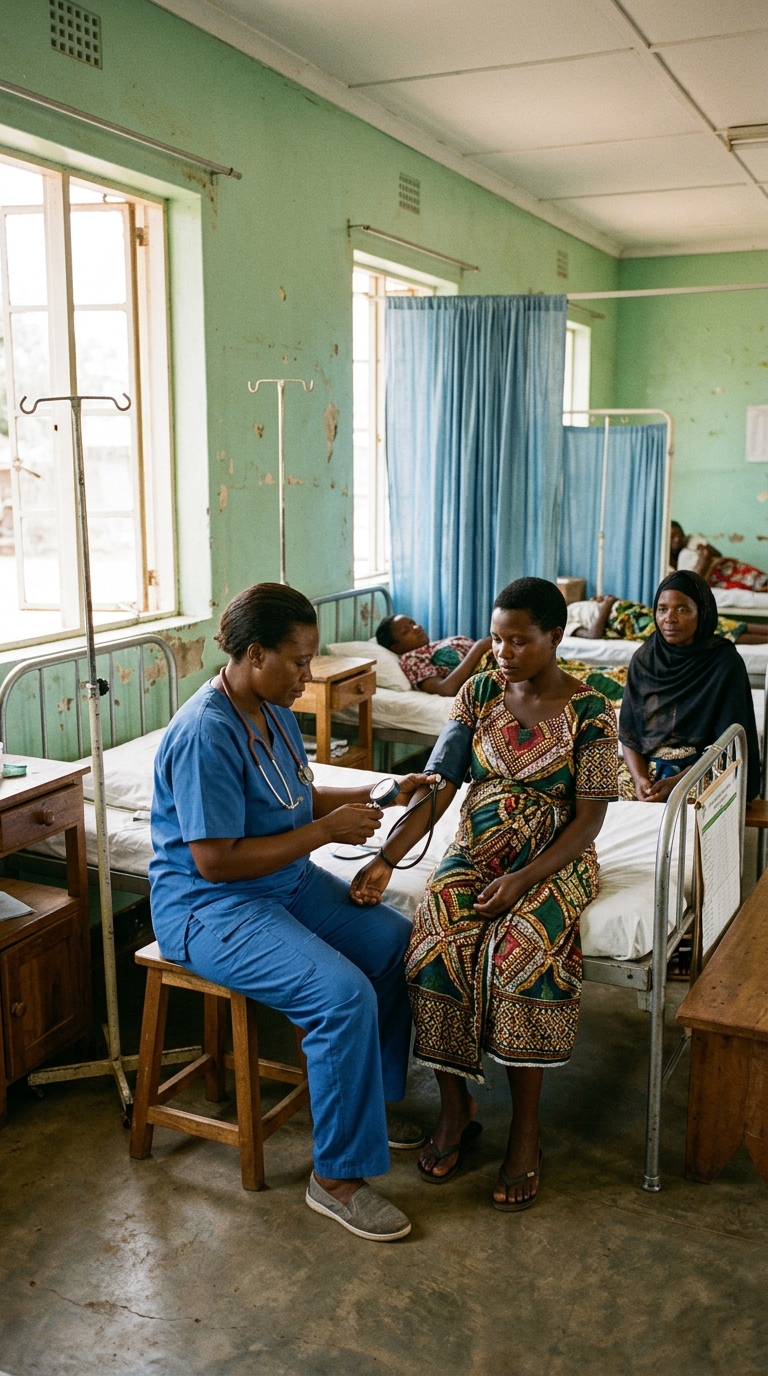
From traffic corridors to indoor cooking fires, polluted air continues to damage lungs, hearts and lives, especially among the poor.
Air pollution is often measured in invisible particles, but its effects are visible in clinics: children wheezing, older adults struggling to breathe, workers missing shifts, and patients admitted with heart attacks and strokes after pollution spikes.
The World Health Organization says almost all of the global population breathes air that exceeds its guideline limits. The combined effects of outdoor and household air pollution are associated with millions of premature deaths annually, with the greatest exposure often falling on low- and middle-income countries.
The most dangerous pollutants include fine particulate matter, nitrogen dioxide, ozone, sulfur dioxide and carbon monoxide. Fine particles are especially concerning because they can penetrate deep into the lungs and enter the bloodstream. Once there, they can contribute to inflammation, blood vessel damage and chronic disease.
Outdoor pollution comes from traffic, industry, power generation, construction, waste burning and dust. In cities, heavy traffic corridors often expose low-income communities to high levels of pollution. People living near ports, factories or highways may face daily risks they did little to create.
Household air pollution is another major burden. In many communities, families still rely on wood, charcoal, coal, dung or crop waste for cooking and heating. Smoke accumulates indoors, affecting women and children most because they often spend more time near cooking areas. Cleaner fuels and stoves can reduce exposure, but cost, infrastructure and cultural cooking practices influence adoption.
Air pollution harms health across the life course. During pregnancy, exposure is linked to adverse birth outcomes. In children, it can impair lung development and increase respiratory infections. In adults, it contributes to chronic obstructive pulmonary disease, lung cancer, ischemic heart disease and stroke. For people with asthma or heart disease, polluted days can quickly become medical emergencies.
The burden is not evenly shared. Wealthier households may afford air purifiers, sealed homes and cleaner neighborhoods. Poorer families may live near pollution sources, work outdoors and lack access to quality health care. Pollution therefore becomes both an environmental and social justice issue.
Climate change and air pollution are closely connected. Burning fossil fuels releases greenhouse gases and health-damaging pollutants. Reducing fossil fuel combustion can improve air quality while slowing climate change. Health experts increasingly argue that clean air policy is also climate policy.
Governments have tools that work. Strong vehicle emission standards, clean public transport, industrial controls, renewable energy, waste management, urban green space and household energy programs can all reduce exposure. But enforcement is often weak, and pollution data may be limited or inaccessible.
Monitoring matters. Communities cannot demand cleaner air if they cannot see what they are breathing. Low-cost sensors and satellite data have expanded awareness, but official monitoring remains essential for regulation and accountability.
Hospitals and doctors are becoming more vocal. Some clinicians now advise vulnerable patients to monitor pollution levels, avoid heavy outdoor activity during high-pollution periods and use masks or indoor filtration when appropriate. But medical advice cannot substitute for cleaner air at the source.
Children are among the strongest moral arguments for action. A child growing up beside a polluted highway or cooking fire has no meaningful choice in exposure. The health consequences can shape an entire life.
Businesses also face pressure. Investors, consumers and regulators increasingly scrutinize emissions. But voluntary pledges are not enough where public health is at stake. Clean air requires enforceable standards and political commitment.
The right to breathe clean air is becoming a defining public health demand. Air pollution may be invisible, but it is not abstract. It is present in every breath, and its toll is counted in hospital wards, school absences and shortened lives.
The solutions are known. The question is whether governments will treat clean air not as an environmental luxury, but as basic health protection.
“””
