The actor’s 2026 appearance turned a Spring 2006 Atelier Versace gown into a statement about fashion history, personal transformation and the enduring spectacle of the Met steps.
NEW YORK — Blake Lively returned to the Met Gala on Monday night in the kind of dramatic fashion moment that has long made her one of the event’s most closely watched red-carpet figures, choosing an archival Atelier Versace gown from Spring 2006 with a 13-foot train for her first appearance at the museum fundraiser since 2022.
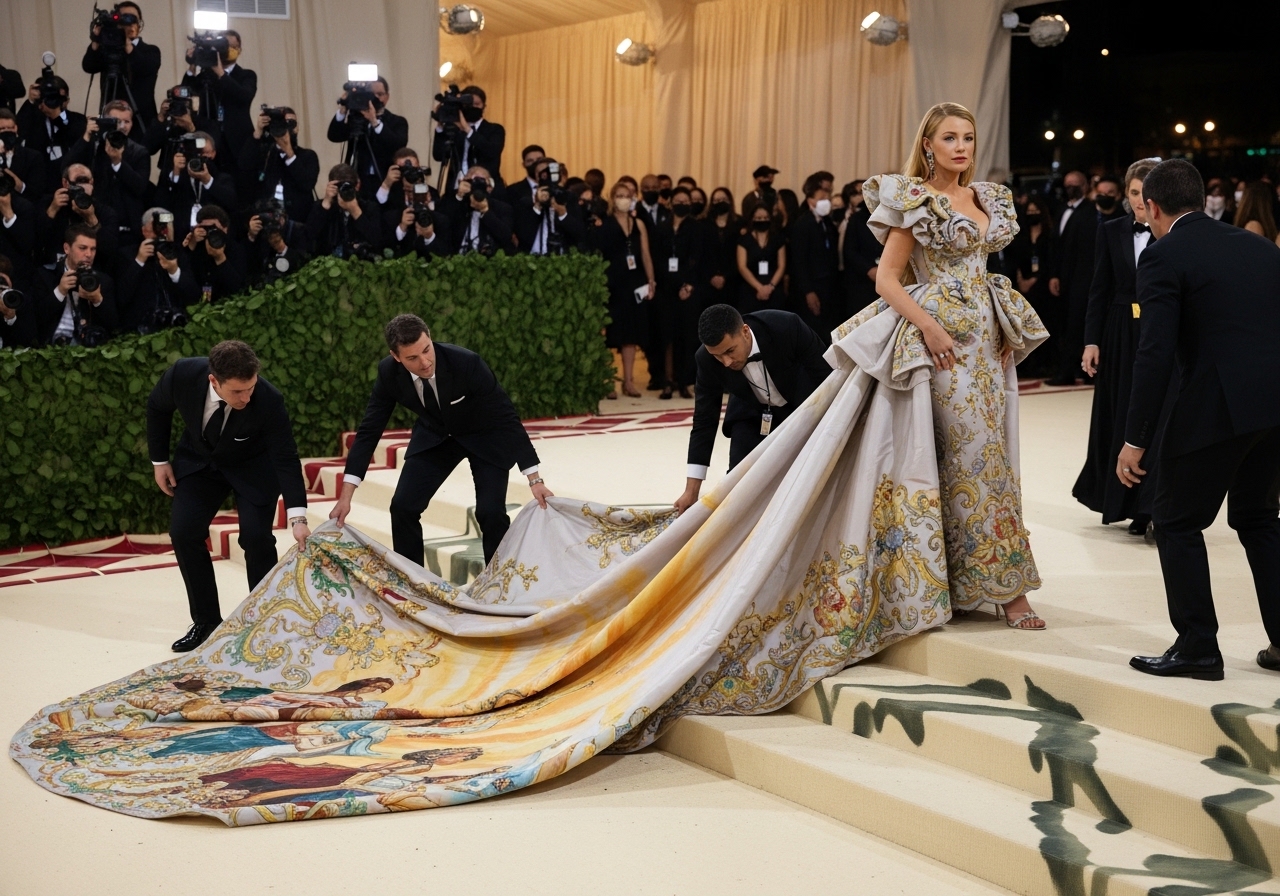
The gown, rendered in soft pastel tones and built with sculptural architectural elements, was selected for the 2026 Met Gala dress code, “Fashion Is Art.” It brought together several narratives at once: Lively’s history with Versace, the revival of a two-decade-old couture piece, the event’s ongoing fascination with fashion as museum-worthy object, and the actor’s own public return after several years away from the Metropolitan Museum of Art’s most photographed evening.
Lively’s arrival was immediately treated as one of the night’s major red-carpet events, not only because of the scale of the dress, but because of the timing. She had last attended the Met Gala in 2022, when she co-chaired the event and wore a transformative Versace gown inspired by New York architecture and the Statue of Liberty. That look became one of the defining images of the night. Her 2026 return invited inevitable comparison, but the new appearance carried a different tone: less about theatrical reveal, more about archival reverence and personal symbolism.
The dress came from Atelier Versace’s Spring 2006 archive, giving the look a built-in historical dimension. In an era when red carpets increasingly serve as platforms for vintage and archival fashion, Lively’s choice aligned with a broader movement among celebrities and fashion houses to treat past collections as living material rather than static museum memory. The decision also suited the Met Gala’s annual role as a bridge between celebrity spectacle and fashion scholarship.
The gown’s 13-foot train was central to its impact. Long trains have become a familiar part of Met Gala choreography, where movement up the museum steps is carefully managed by attendants, photographers, stylists and security staff. Lively’s dress required that same logistical precision. The extended train gave the gown a painterly sweep, turning the staircase into a stage and reinforcing the evening’s theme by allowing the garment to occupy space like a moving installation.
According to Vogue, the dress featured three-dimensional architectural details inspired by 18th-century Venetian Rococo paintings. The reference was important. Rococo art is associated with ornament, movement, pastel color, theatricality and decorative flourish. Those ideas translated naturally into a red-carpet gown designed to be seen from multiple angles, photographed in motion and understood not simply as clothing, but as an object of visual storytelling.
Lively has often approached the Met Gala as a narrative exercise rather than a standard formalwear assignment. Her most memorable appearances have tended to connect the theme of the evening to a specific idea, place or artistic reference. In 2026, that approach appeared again, but with a more reflective emphasis. The archival Versace gown was not newly made for the event, yet its reappearance gave it new context. A piece designed in 2006 was reintroduced two decades later on one of fashion’s most visible stages.
That act of revival is increasingly valuable to luxury houses. Archives have become a form of cultural capital, allowing brands to demonstrate continuity, craftsmanship and relevance across generations. For Versace, the moment placed a historical Atelier piece in conversation with a contemporary celebrity audience. For Lively, it reaffirmed her long-running relationship with the house and with Donatella Versace, who attended the event with her.
The pairing carried symbolic weight. Lively has worn Versace for several major Met Gala appearances, and her 2022 look remains closely associated with both the actor and the brand. In 2026, the archival gown created a different kind of brand statement. Rather than showcasing a newly commissioned transformation, it emphasized preservation, memory and the idea that a garment can gain meaning as it moves through time.
The 2026 Met Gala itself centered on the Costume Institute’s exhibition “Costume Art,” with the dress code “Fashion Is Art.” That framework gave designers and guests wide room to interpret clothing as sculpture, painting, performance, craft or cultural artifact. Lively’s look fit squarely within that mandate. It was not merely decorative; it asked to be read through art history, design history and personal history.
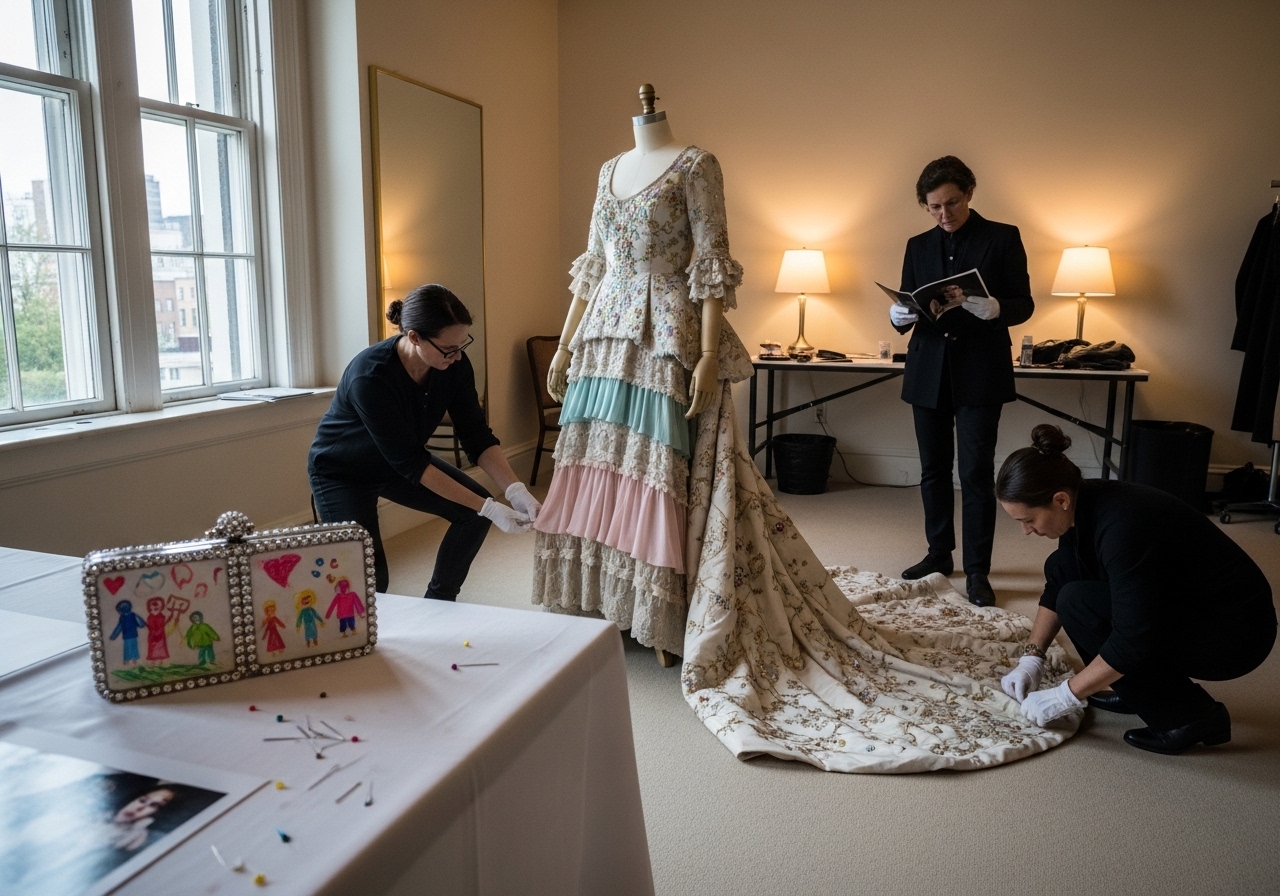
The personal dimension was also visible in Lively’s accessories. Vogue reported that she carried a custom Judith Leiber Couture clutch decorated with artwork by her four children. The detail brought a family element into an evening often dominated by grandeur and abstraction. Against the scale of the Versace train and the institutional backdrop of the Met, the bag offered a smaller, intimate counterpoint. It connected the public performance of fashion to the private life Lively referenced in discussing her return.
That contrast helped shape the meaning of the appearance. Met Gala looks are often judged instantly through images, rankings and social media commentary. But Lively’s 2026 ensemble depended on more than surface drama. The archival status of the gown, the Rococo inspiration, the train’s physical scale and the family-linked clutch all worked together to create a layered statement about time, identity and continuity.
Her return also underscored the continued importance of the Met Gala as a global fashion media event. The annual benefit, held for the Metropolitan Museum of Art’s Costume Institute, has become one of the few red carpets where clothes are expected to carry conceptual weight. Stars are not simply dressing for beauty or glamour; they are dressing in response to a curatorial premise. In that environment, Lively has built a reputation for understanding both the assignment and the optics.
The public response to her appearance reflected the special role she occupies in Met Gala culture. Some celebrities attend as regular fixtures of the entertainment industry. Others arrive as fashion risk-takers. Lively belongs to a smaller group whose appearances are treated as events in themselves, partly because she has developed a track record of highly constructed, theme-conscious looks. Her absence since 2022 made the 2026 return feel more deliberate.
The logistics behind the gown also pointed to the hidden labor of the Met Gala. A 13-foot train does not glide up the steps without planning. It requires handlers, timing, spacing and careful coordination with photographers. In that sense, the look was both an individual fashion statement and a collective production. The image that reached the public was the polished result of craftsmanship, styling and behind-the-scenes management.
Archival dressing can sometimes be framed as nostalgia, but Lively’s Versace gown showed how it can operate as renewal. A dress first introduced in 2006 was not treated as a relic. It was adapted to a new cultural moment, a new wearer’s chapter and a new theme. The result was a reminder that fashion history is not fixed; it can be reactivated when the right garment, person and occasion converge.
The choice also reflected a red-carpet sustainability conversation that has become more prominent in recent years. Rewearing and reviving archival garments does not eliminate the environmental footprint of celebrity fashion, but it does challenge the assumption that every major appearance requires something newly produced. At an event dedicated to costume and art, the use of an existing Atelier piece carried both aesthetic and symbolic force.
For Lively, the night marked a re-entry without needing reinvention. She returned to familiar territory — Versace, the Met steps, a sweeping train — but with a look that emphasized maturity, memory and continuity. It was grand, but not careless; dramatic, but grounded in the event’s intellectual theme.
By the end of the evening, the image was clear: Blake Lively had not merely come back to the Met Gala. She had returned with a gown that treated the red carpet as a gallery, the train as a canvas and archival fashion as a living form of art. In a night built around the idea that fashion belongs in conversation with painting, sculpture and performance, her 13-foot Versace train made the argument in motion.