The two Broadway musicals earned 12 nominations each, setting up a competitive race that also includes a strong revival field, major acting contenders and a ceremony scheduled for June 7 at Radio City Music Hall.
NEW YORK — Broadway’s awards season moved into sharper focus after the 2026 Tony Award nominations placed two musicals, The Lost Boys and Schmigadoon!, at the front of the field, with each production receiving 12 nominations in a year marked by prominent screen-to-stage adaptations, high-profile performers and a crowded contest for theatrical prestige.
The nominations, announced on May 5, confirmed what many theater observers had expected: the 2025-26 Broadway season has produced no single runaway contender. Instead, the Tony race is defined by a cluster of productions with broad support across acting, writing, design and direction categories. The Lost Boys and Schmigadoon! lead numerically, but the revival of Ragtime follows closely with 11 nominations, while Death of a Salesman emerged as the most-nominated play revival with nine.
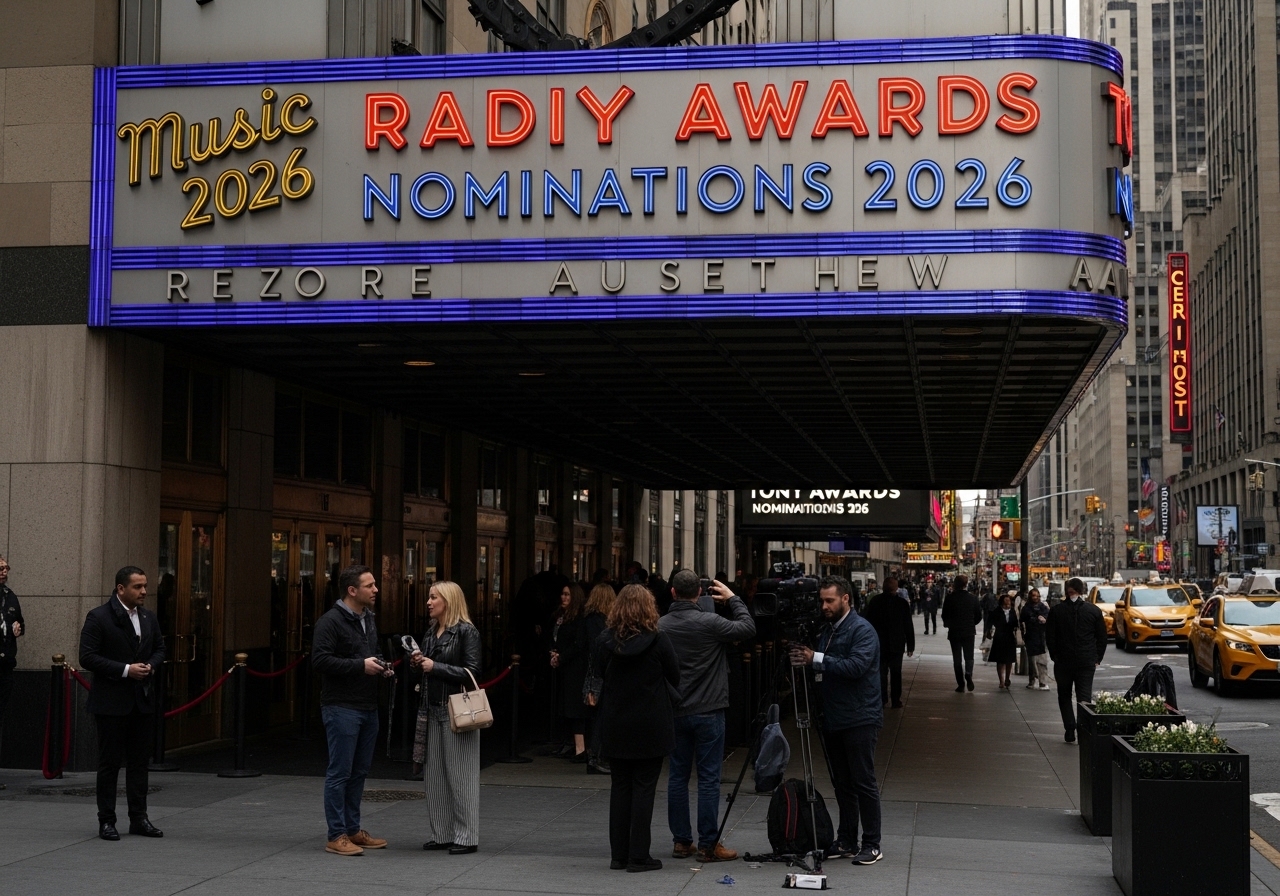
The 79th Tony Awards are scheduled for June 7 at Radio City Music Hall in New York, with the ceremony to be broadcast on CBS and streamed on Paramount+. The event will bring Broadway’s annual honors back to one of the city’s most visible stages at a time when the industry is still balancing post-pandemic recovery, rising production costs and renewed audience demand for recognizable titles.
For The Lost Boys, the nominations represent a significant Broadway breakthrough for a property rooted in pop culture memory. Based on the 1987 vampire film, the musical enters the Tony race with recognition across major categories, including best musical. Its success with nominators reflects Broadway’s continuing interest in film adaptations that can attract both theater regulars and audiences drawn by familiar stories.
Schmigadoon!, adapted from the television musical comedy that originally streamed on Apple TV+, also secured 12 nominations, confirming its transition from screen concept to Broadway contender. The show’s premise, built around affection for and satire of classic musical theater forms, has given it particular resonance in an awards season judged by voters deeply familiar with the history it references.
The best musical category includes The Lost Boys, Schmigadoon!, Titanique and Two Strangers (Carry a Cake Across New York). The lineup underscores the range of Broadway’s current commercial strategy: recognizable film and television inspirations, parody-driven entertainment, and original or less familiar stage works competing for attention in a market where ticket buyers often rely on strong branding before committing to premium prices.
The best play category presents a different picture, led by Liberation, Giant, The Balusters and Little Bear Ridge Road. Liberation arrives with added cultural weight after winning the Pulitzer Prize for Drama, giving it a prominent place in a race that may test how Tony voters balance literary prestige, Broadway impact and production execution.
Among play revivals, Death of a Salesman stands out not only for its nomination total but also for the enduring power of Arthur Miller’s work in the American theatrical canon. Its recognition places it in a category alongside Becky Shaw, Every Brilliant Thing, Fallen Angels and Oedipus, a field that mixes modern emotional intimacy, classic comedy and tragic reinterpretation.
The musical revival category is also highly competitive. Ragtime, Cats: The Jellicle Ball and The Rocky Horror Show all received nominations, offering voters three sharply different visions of revival. Ragtime carries the sweep of a major American historical musical, Cats: The Jellicle Ball reframes a long-running commercial phenomenon through a contemporary lens, and The Rocky Horror Show brings cult energy back into the awards conversation.
The acting races bring additional star power. Daniel Radcliffe, already a Tony winner, returned to the nominations list for his work in Every Brilliant Thing, competing in a leading actor in a play category that also includes Nathan Lane, Mark Strong, Will Harrison and John Lithgow. The category reflects the unusually strong presence of major film and stage names in this season’s Broadway lineup.
Rose Byrne received her first Tony nomination for Fallen Angels, joining a leading actress in a play field that includes Kelli O’Hara, Carrie Coon, Susannah Flood and Lesley Manville. The category combines established Broadway performers with actors known widely for screen work, reinforcing the increasingly fluid movement between theater, television and film.
The nominations also brought a historic milestone for June Squibb, whose recognition made her, at 96, the oldest acting nominee in Tony Awards history. Her nomination adds a notable human dimension to the season, highlighting both Broadway’s intergenerational reach and the continuing visibility of veteran performers in major productions.
Behind the headline nomination counts, the 2026 Tony race points to broader questions about Broadway’s direction. Producers have leaned heavily on known intellectual property, but the season’s nominations show that familiar titles alone are not enough. To dominate the Tony field, shows must demonstrate strength across the full theatrical apparatus: performances, books, scores, choreography, direction, scenic design, costumes, lighting and sound.
The Lost Boys and Schmigadoon! appear to have done that most effectively. Their shared lead with 12 nominations each suggests that voters saw them not merely as branded entertainment but as complete theatrical productions. That distinction matters in an industry where adaptation can be both an advantage and a liability. Familiar titles can sell tickets, but they can also invite skepticism from critics and voters wary of Broadway becoming overly dependent on pre-existing screen properties.
Ragtime’s 11 nominations complicate the race further. As a revival of a major musical with a long emotional and political reach, it may appeal to voters looking for scale, seriousness and musical craftsmanship. In many Tony seasons, a strongly received revival can shape the broader awards conversation even when it is not competing directly for best new musical.
For the producers and creative teams behind the nominated shows, the announcement begins a crucial five-week sprint. Tony nominations can significantly affect box-office performance, especially for productions that need national attention, touring prospects and cast album visibility. A best musical nomination can extend a show’s commercial life, while wins in acting, direction or design categories can help define its reputation beyond New York.
The awards also arrive during a period of continued adjustment for Broadway. Attendance has improved from the depths of the pandemic era, but production budgets remain high and many shows face intense pressure to build advance sales quickly. Awards recognition is not a guarantee of profitability, but it can provide the kind of validation that helps a production stand out in a crowded marketplace.
The 2026 nominations suggest that Broadway’s current identity is neither purely nostalgic nor fully experimental. It is a hybrid landscape in which classic revivals, screen adaptations, parody musicals, new plays and celebrity-led productions compete for the same cultural spotlight. That mix can frustrate purists, but it also reflects the practical realities of an industry trying to maintain artistic ambition while drawing audiences in an expensive entertainment economy.
As the Tony campaign moves toward June 7, the central contest will be whether The Lost Boys or Schmigadoon! can convert nomination dominance into major wins, or whether Ragtime, Liberation, Death of a Salesman or another contender can build momentum among voters. Nomination totals provide a map of support, but they do not always predict the final result.
For now, the message from Tony nominators is clear: Broadway’s biggest awards race of 2026 is wide open, energized by musicals that reinterpret popular culture, revivals that reconsider theatrical history and performers whose work bridges generations. The Lost Boys and Schmigadoon! may have started in front, but the final act of this awards season has yet to be written.