
New studies on blood biomarkers, early treatment and dementia risk are changing how scientists understand cognitive decline, but none amount to a cure.
Alzheimer’s disease research is moving into a more precise and more cautious phase. For decades, families often encountered the disease only after memory loss became unmistakable: missed appointments, repeated questions, confusion with money, changes in judgment or difficulty finding words. Diagnosis was largely clinical, based on symptoms, cognitive testing, brain imaging and the exclusion of other causes. Today, researchers are increasingly looking for biological signals that appear earlier, sometimes years before obvious decline.
That shift has created hope, but also a need for careful language. Alzheimer’s disease is not currently a condition that can be declared cured. New tests may help identify signs of disease more accurately. New drugs may slow decline in some people at early stages. Lifestyle and public health research may reduce risk or delay onset for many populations. But none of these advances should be understood as a guarantee that memory loss can be prevented, reversed or eliminated.
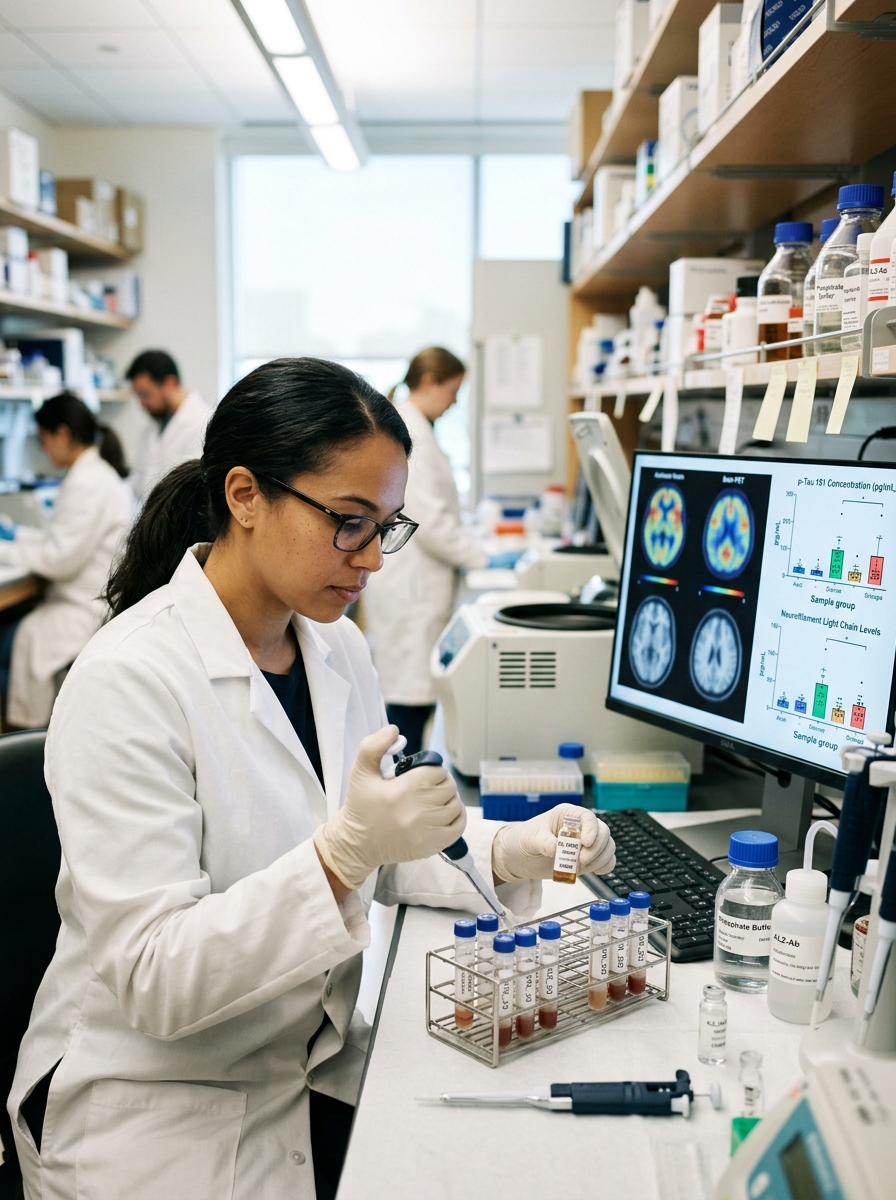
One of the most important developments is the rise of blood-based biomarkers. In simple terms, biomarkers are measurable biological clues. In Alzheimer’s research, scientists are especially interested in proteins linked to amyloid plaques and tau tangles, two hallmark changes in the brain. A blood test cannot explain every memory problem, but it may help determine whether Alzheimer’s biology is likely to be present.
This matters because many conditions can look like Alzheimer’s at first. Depression, sleep disorders, medication side effects, thyroid disease, vitamin deficiencies, infections, stroke, alcohol use and other neurological conditions can all affect thinking and memory. A more accurate test may help doctors avoid guessing. It may also help identify people who are eligible for specific treatments or clinical trials.
The 2025 clearance of the first blood test used to aid Alzheimer’s diagnosis was therefore a major milestone. The test measures proteins associated with amyloid plaques and is intended for adults 55 and older who already show signs or symptoms of cognitive impairment. That limitation is important. It is not a general screening tool for healthy people who are simply worried about their future memory. A positive result should not be treated as a diagnosis by itself, and a negative result does not answer every question. It is one piece of a broader medical evaluation.
Research into p-tau217, a form of tau protein measurable in blood, has drawn particular attention. Studies suggest it may be useful in identifying Alzheimer’s-related brain changes and, in research settings, estimating when symptoms might emerge. For families, this sounds powerful. For clinicians, it is also complicated. Predicting risk is not the same as predicting destiny. A biomarker may show that disease processes are more likely, but it cannot fully forecast how quickly a person will decline, how symptoms will appear or how other health factors will influence the course.
The second major area of research is treatment. The most discussed drugs in recent years have been monoclonal antibodies that target amyloid beta, including lecanemab and donanemab. These medicines are designed to help remove amyloid plaques from the brain. They are not used for all dementia, and they are not meant for advanced Alzheimer’s disease. Their main studied population has been people with mild cognitive impairment or mild dementia due to Alzheimer’s disease, with evidence that amyloid pathology is present.
For patients and families, the most accurate way to describe these drugs is that they may modestly slow decline for some people in early disease. They do not restore lost memory. They do not stop the disease completely. They require careful selection, monitoring and discussion of risk. One safety concern is amyloid-related imaging abnormalities, known as ARIA, which can involve brain swelling or bleeding seen on MRI scans. ARIA may be asymptomatic, but serious and even fatal events have been reported. This is why these treatments are not simple prescriptions. They involve brain imaging, specialist evaluation and ongoing monitoring.
The debate around these drugs has become sharper in 2026. A recent Cochrane review concluded that amyloid-targeting monoclonal antibodies produce little or no clinically meaningful benefit while increasing the risk of ARIA. Some specialists argue that pooling older and newer drugs together may obscure differences among treatments, while others say the review is a necessary correction to excessive optimism. The disagreement itself is instructive. Alzheimer’s research is not moving in a straight line from discovery to cure. It is moving through evidence, uncertainty, risk assessment and debate over what level of slowing is meaningful to patients.
A third research direction is the search beyond amyloid. Alzheimer’s disease is biologically complex. Amyloid plaques are important, but they do not explain everything. Tau pathology, inflammation, immune system activity, blood vessel health, metabolism, genetics and brain resilience are all being studied. Scientists are increasingly asking whether future treatment will need to combine approaches: one therapy to target amyloid, another to affect tau, another to reduce inflammation, and broader strategies to protect vascular and metabolic health.
This is similar to the way other chronic diseases are treated. Heart disease is not managed by one drug or one behavior. It may involve blood pressure control, cholesterol treatment, exercise, smoking cessation, diet, diabetes management and procedures when needed. Alzheimer’s may ultimately require the same kind of layered strategy. That is why the current research environment is both promising and humbling. Removing one biological feature may help, but it may not be enough.
Prevention research is another field receiving renewed attention. The Lancet Commission has identified multiple modifiable risk factors for dementia, including education, hearing loss, high blood pressure, smoking, obesity, depression, physical inactivity, diabetes, social isolation, excessive alcohol use, traumatic brain injury, air pollution, high LDL cholesterol and untreated vision loss. These are not personal blame factors. They are public health targets. Many are shaped by income, environment, access to care and social policy.
The message is not that every case of Alzheimer’s can be prevented by lifestyle. Age and genetics remain powerful risk factors, and many people who live carefully still develop dementia. The better message is that brain health is influenced by the body and society across a lifetime. Protecting hearing and vision, treating high blood pressure, managing cholesterol and diabetes, staying physically active, reducing smoking, addressing depression and maintaining social connection may help reduce risk or delay decline at a population level.
Sleep is also increasingly recognized as part of brain health. Poor sleep can affect attention and memory in the short term, and researchers continue to study how sleep disruption relates to amyloid, tau and long-term cognitive decline. Again, the language must remain careful. Better sleep is not an Alzheimer’s cure. But sleep problems are worth evaluating because they can worsen thinking, mood and daytime function, and conditions such as sleep apnea may be treatable.
For ordinary people, the most useful takeaway from new research is not panic over every forgotten name. Occasional forgetfulness is common, especially under stress, fatigue or distraction. More concerning signs include getting lost in familiar places, difficulty managing finances, repeated confusion about dates or tasks, personality changes, poor judgment, or memory problems that interfere with daily life. When symptoms persist or worsen, medical evaluation is important.
The future of Alzheimer’s care is likely to be earlier, more biological and more personalized. Doctors may increasingly combine cognitive testing, blood biomarkers, brain imaging, genetic risk information and medical history to decide what is happening and what options make sense. Some patients may be candidates for amyloid-targeting therapy. Others may need treatment for depression, sleep apnea, vascular disease or medication side effects. Many will need family education, safety planning and social support.
The danger is overselling. A blood test is not a crystal ball. A new drug is not a cure. A lifestyle plan is not a guarantee. But the danger of dismissing the progress is also real. Earlier diagnosis can help families plan. More precise testing can reduce uncertainty. Even modest slowing may matter to some patients if it preserves independence, conversation or recognition for longer. Prevention research can guide public health choices that benefit millions.
Alzheimer’s research is entering an era of measured hope. The science is becoming more specific, but the disease remains difficult. The most responsible message is neither despair nor hype. It is this: brain health can be supported, cognitive symptoms deserve proper evaluation, new tools are improving diagnosis and treatment may change the course for some people, but claims of a cure are not supported by current evidence.
“””
