
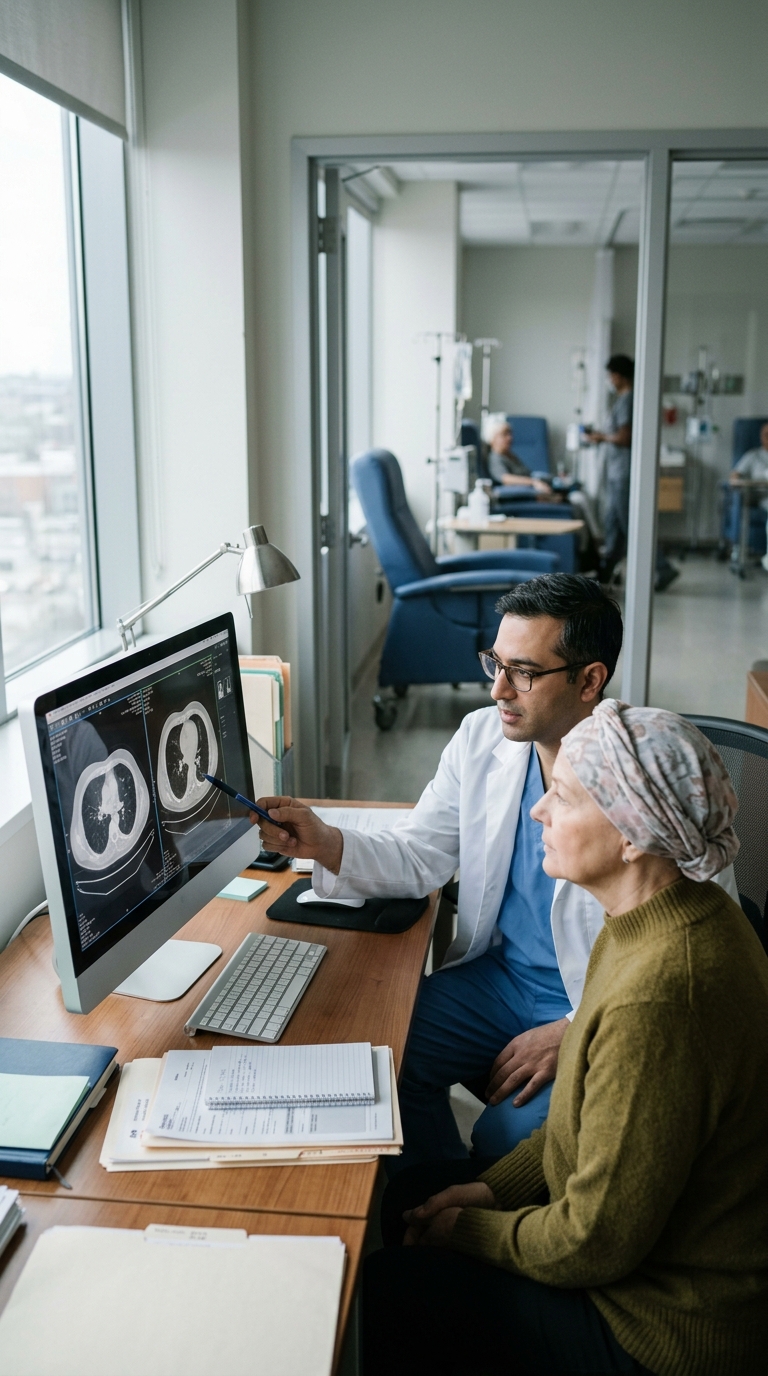
New treatments and earlier diagnosis are improving outcomes for some patients, while millions still lack basic cancer services.
Cancer is increasingly a story of medical progress and global inequality at the same time. In some countries, screening, targeted therapies, immunotherapy and advanced surgery have improved survival for several cancers. In others, patients still arrive too late, pay out of pocket or die without access to pain relief.
The World Health Organization identifies cancer as a leading cause of death worldwide. The burden is shaped by aging populations, tobacco use, infections, alcohol, obesity, environmental exposure and unequal access to prevention and treatment. The International Agency for Research on Cancer tracks the disease through global cancer data that help governments plan services.
The survival gap begins before diagnosis. In high-income countries, screening programs may detect cervical, breast and colorectal cancers early. In lower-resource settings, screening may be limited or unavailable. Patients often present with advanced disease because symptoms were ignored, clinics were distant, or diagnostic tests were too expensive.
Pathology is a hidden bottleneck. A cancer diagnosis depends on laboratory confirmation, but many health systems lack enough pathologists, equipment and reliable supply chains. Without accurate diagnosis, treatment can be delayed or inappropriate.
Treatment access varies sharply. Surgery can cure many early-stage solid tumors, but safe cancer surgery requires trained teams, anesthesia, blood supply and postoperative care. Radiotherapy is essential for many cancers, yet machines are scarce in some regions. Chemotherapy and newer medicines may be unaffordable or unavailable.
Prevention remains the most powerful tool. Tobacco control can reduce lung and other cancers. Vaccination against human papillomavirus can prevent most cervical cancers. Hepatitis B vaccination reduces liver cancer risk. Reducing harmful alcohol use, improving diets, promoting physical activity and limiting occupational and environmental exposures can lower risk.
Cervical cancer illustrates both tragedy and opportunity. It is highly preventable through HPV vaccination, screening and treatment of precancerous lesions. Yet many women still die from it, especially where reproductive health services are weak. Global elimination is possible in principle, but it requires sustained vaccination, screening and treatment.
Childhood cancer shows another divide. In wealthy countries, many children with cancer survive. In poorer countries, survival may be far lower because of delayed diagnosis, treatment abandonment, infection, drug shortages and limited specialist care. Parents may face impossible choices between treatment costs and household survival.
Palliative care is often overlooked. When cure is not possible, patients still need pain relief, symptom control and emotional support. Yet access to essential pain medicines remains limited in many countries. Dying in severe untreated pain is a health system failure.
Cancer also affects economies. Patients may stop working, caregivers may leave jobs and families may sell assets to pay for treatment. Universal health coverage can protect households from financial catastrophe, but cancer care is often only partially covered.
Researchers are investigating rising rates of some cancers among younger adults, including colorectal cancer. The causes are still being studied, with possible links to diet, obesity, sedentary behavior, microbiome changes and environmental exposures. The trend has prompted discussion about screening ages and prevention earlier in life.
The promise of precision medicine is real but uneven. Genetic testing can guide targeted therapy for some tumors, but it requires laboratories, specialists and affordable drugs. Without equity planning, the most advanced cancer care may deepen global divides.
Public awareness campaigns must be careful. Encouraging early diagnosis is important, but patients cannot seek care that is unavailable or unaffordable. Blaming individuals for late presentation ignores systemic barriers.
Governments need national cancer control plans that include prevention, vaccination, screening, diagnosis, treatment, palliative care and data systems. Fragmented programs cannot meet the scale of the disease.
Cancer is not one disease, and no single intervention will solve it. But the basic direction is clear: prevent what can be prevented, detect early where possible, treat effectively and relieve suffering for all patients.
The scientific advances of recent years have changed what cancer care can achieve. The next test is whether those advances can reach beyond elite hospitals and private insurance systems. Survival should depend on biology and timely care, not on a patient’s passport, income or postal code.
“””
