
As hackers, online scams, AI impersonation and malware grow more sophisticated, the central question for companies is no longer whether they hold sensitive data, but whether they can protect the people behind it.
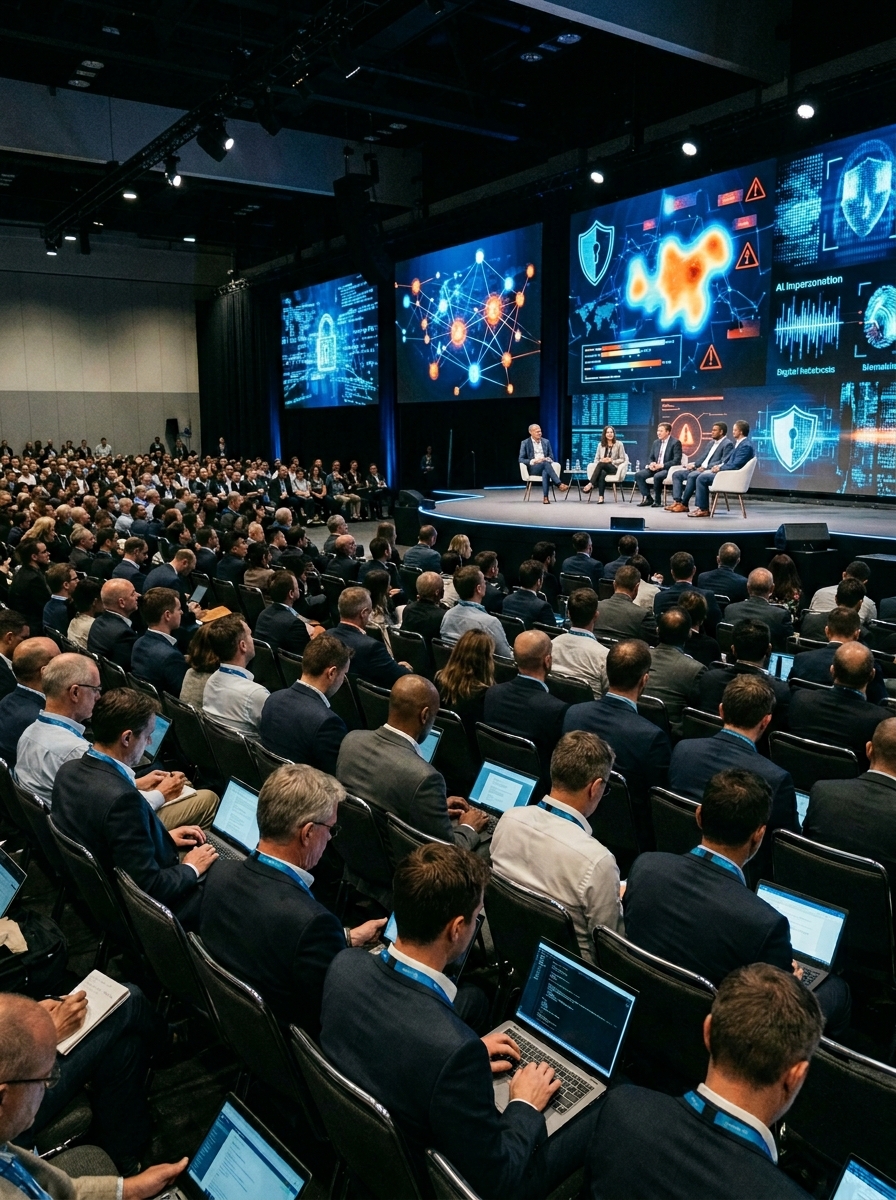
At a major cybersecurity conference, the most important object in the room is not a server, a laptop, a firewall or a piece of artificial intelligence software. It is something far more ordinary and far more valuable: personal data. A name, a phone number, a password, a bank account, a face scan, a home address, a medical record, a shopping habit or a message history can now be worth more to criminals than many physical possessions.
The digital economy was built on convenience. People can open bank accounts from phones, buy airline tickets in seconds, store family photographs in the cloud, unlock cars with apps, receive medical results online and work from almost anywhere. But every convenience creates a trail. That trail can become a profile, the profile can become a target, and the target can become a victim.
This is why cybersecurity has moved from the back office to the boardroom. It is no longer only a technical issue handled by specialists in dark rooms full of monitors. It is now a business risk, a consumer protection challenge, a national security concern and a test of public trust. A company that loses customer data does not only lose files. It can lose credibility, revenue, legal standing and the confidence of people who believed their information was safe.
The threat landscape has become both more industrial and more personal. Cybercriminals operate like businesses. They buy stolen credentials, rent malware, outsource phishing campaigns, sell access to compromised systems and negotiate ransomware payments. Some specialize in breaking in. Others specialize in laundering money, creating fake identities, calling victims or pressuring companies after data has been stolen. The result is a criminal supply chain that looks disturbingly professional.
Phishing remains one of the most common entry points because it attacks human trust rather than computer code. A fraudulent email may imitate a bank, a delivery company, a government agency or a colleague. A text message may warn of a fake account suspension. A social media message may pretend to be a friend in trouble. The goal is usually simple: make the victim click, sign in, approve a payment, install software or reveal information.
Artificial intelligence has made this harder to detect. In the past, scam messages often contained poor grammar, strange formatting or awkward translations. Today, generative AI can produce fluent, personalized messages in many languages. It can imitate writing styles, create fake customer service scripts and generate persuasive websites. Voice cloning can make a caller sound like a family member, a manager or a public official. Deepfake video can make fraud feel immediate and real.
The danger is not that every fake will be perfect. It is that criminals no longer need perfection. They need only enough credibility, at enough scale, to fool a small percentage of people. When millions of messages can be produced cheaply, even a low success rate can create enormous losses. Cybercrime has become a numbers game powered by psychology, automation and stolen data.
Account security sits at the center of the fight. A password is often the front door to an entire digital life. If criminals gain access to an email account, they may reset passwords for banking, shopping, cloud storage and workplace tools. If they enter a corporate account, they may move through internal systems, read messages, steal files or impersonate an employee. One compromised identity can become the starting point for a much larger breach.
This is why security experts increasingly urge users and companies to move beyond passwords alone. Multi-factor authentication adds a second proof of identity. Passkeys and hardware security keys can provide stronger protection against phishing because they are designed to verify the real website or service before allowing a login. Password managers can help people avoid reusing the same weak password across many accounts. These tools are not perfect, but they raise the cost for attackers.
Malware remains another major threat. Some malicious programs steal passwords and browser cookies. Others spy on users, encrypt files for ransom, open secret backdoors or turn devices into part of a botnet. Infostealer malware has become particularly damaging because it can quietly collect saved credentials, authentication tokens and financial details from infected machines. Once stolen, that information can be sold to other criminals who never had to infect the victim themselves.
Ransomware has changed the psychology of cybersecurity. In older attacks, criminals often focused on locking files and demanding payment for a decryption key. Now many groups steal data first, then threaten to publish it or contact customers, regulators and journalists. The victim is not only a company whose systems are disrupted. It may also be a patient, student, employee or customer whose private records become leverage in an extortion campaign.
For businesses, protecting users now requires more than buying security software. It requires a culture of security built into products, operations and leadership. Sensitive data should be collected only when necessary, stored only as long as needed and protected with encryption, access controls and monitoring. Employees should receive training that reflects real scams, not outdated warnings. Systems should be patched quickly. Backups should be tested. Incident response plans should be practiced before a crisis.
The principle known as “secure by design” is gaining force because it shifts responsibility closer to the makers of technology. Users cannot be expected to carry the entire burden. A safe product should not require every customer to become a cybersecurity expert. Strong default settings, clear privacy controls, automatic updates, phishing-resistant login options and transparent vulnerability reporting can protect people before they know they are at risk.
Artificial intelligence is also being used defensively. Security teams use AI to identify abnormal behavior, detect suspicious login patterns, summarize alerts, scan code for weaknesses and respond faster to incidents. In large organizations, analysts may face thousands of warnings each day. Machine learning can help sort noise from danger. But AI is not a substitute for judgment. It can make mistakes, miss context and create false confidence if deployed without oversight.
The conference discussions reflect a broader tension. The same technologies that make life easier also expand the attack surface. Cloud computing allows companies to scale quickly, but misconfigured cloud storage can expose huge datasets. Remote work creates flexibility, but unmanaged devices can become weak points. Digital payments reduce friction, but they also create new forms of fraud. AI improves productivity, but it gives criminals better tools for deception.
Consumers are not powerless. They can protect themselves by using unique passwords or passkeys, enabling strong multi-factor authentication, keeping devices updated, avoiding suspicious links and verifying urgent requests through a second channel. A call from a supposed relative asking for money, a message from a boss requesting a wire transfer or a link asking for a login should be treated with caution. In the age of AI impersonation, seeing or hearing is no longer always believing.
Still, the burden must not fall only on individuals. Companies that profit from personal data have a duty to protect it. Banks, hospitals, telecom firms, retailers, schools, social platforms and software providers hold information that can define a person’s life. When that information is stolen, the damage can last for years. Victims may face identity theft, financial loss, harassment, blackmail or the exhausting work of proving that they are who they say they are.
The future of cybersecurity will depend on trust. People will continue to use digital services only if they believe those services are safer than the alternatives. Businesses will adopt AI only if they can protect models, data and users from manipulation. Governments will digitize public services only if citizens believe their records will not become targets. Trust is becoming a form of infrastructure.
That is the deeper message of today’s cybersecurity conference. The fight against hackers is not only a contest between attackers and defenders. It is a debate about how the digital world should be built. Personal data is not just information stored in a database. It is a map of human lives.
Protecting that data means protecting identity, dignity, money, memory and freedom. In a connected world, cybersecurity is no longer about keeping machines safe from criminals. It is about keeping people safe inside the systems they now depend on every day.
