
With huge prize pools, professional clubs, young global audiences and Olympic attention, esports is moving from gaming culture into mainstream sports — while still facing questions over governance, identity and legitimacy.
RIYADH — The arena lights look familiar. There are walkout tunnels, national flags, screaming fans, broadcast desks, sponsors, coaches, analysts and athletes wearing team jerseys. The pressure is real, the money is real and the careers are real. Only the field of play is different: a digital map, a virtual pitch, a battle arena, a racing line or a chessboard on a screen.
The Esports World Cup has become one of the clearest signs that competitive gaming is no longer operating at the edge of global sports culture. In 2026, the event is scheduled to return to Riyadh from July 6 to August 23 with a $75 million total prize pool, 25 tournaments across 24 games, more than 2,000 players and about 200 clubs from more than 100 countries. By almost any commercial measure, that is not a niche gathering. It is a major international sports property.
The scale is deliberate. The Esports World Cup is not built around one game, one league or one publisher. It is designed as a multi-title championship, closer in ambition to a multi-sport festival than a conventional esports tournament. Its Club Championship rewards organizations that perform across different games, creating a structure in which teams are not only collections of players, but institutions competing for global status.
That model matters because esports has long been fragmented. League of Legends, Counter-Strike, Dota 2, VALORANT, Mobile Legends, Fortnite, Street Fighter, Rocket League and EA Sports FC each have different communities, rules, calendars and publishers. Traditional sports federations usually control their disciplines. Esports does not. The game owner often sets the rules, controls intellectual property and can change the competitive environment with a software update. The Esports World Cup attempts to bring those separate worlds onto one calendar and one stage.
The result is both impressive and complicated. For players, the prize money can be life-changing. For clubs, the cross-game format rewards investment in scouting, coaching, nutrition, content creation and international rosters. For sponsors and broadcasters, the event offers access to an audience that traditional sports leagues are urgently trying to reach: young, digital-native fans who watch on phones, follow streamers, consume highlights instantly and treat gaming as entertainment, competition and social space at the same time.
This audience does not behave like the older television sports audience. Many young viewers do not sit through a three-hour broadcast because a network tells them to. They move between livestreams, co-streamers, short clips, Discord conversations, statistics pages and creator reactions. They may follow a player more closely than a club, or a streamer more closely than a league. Esports grew inside that behavior rather than adapting to it later.
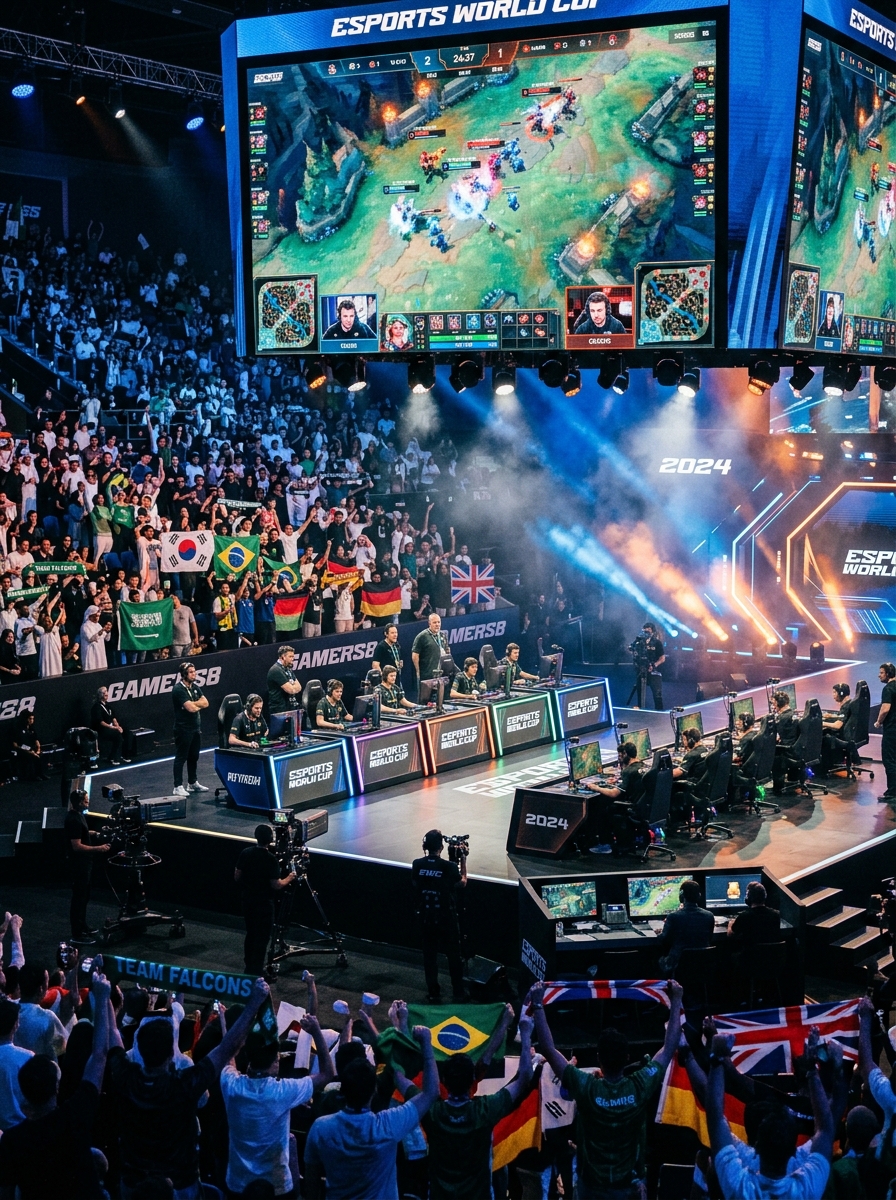
That is one reason brands and sports organizations are paying attention. Esports does not need to persuade young audiences to enter a digital environment. They are already there. A teenager watching a professional VALORANT match, a Mobile Legends final or a Fortnite tournament is not only watching competition. They are often chatting, clipping, reacting, learning strategy and comparing themselves to the players. The distance between fan and participant can feel smaller than in traditional sport.
The professionalization of teams has accelerated that transformation. Leading esports clubs now resemble modern sports franchises in several ways. They sign players to contracts, operate training facilities, employ coaches and analysts, produce daily social content, negotiate sponsorships and build fan communities across borders. Some clubs have teams in several games, making them less dependent on a single title. Others are tied closely to star players whose personal brands can be as powerful as team identities.
The athletes themselves face pressures that are increasingly similar to those in traditional sports. Elite players train for long hours, study opponents, review match footage, practice communication, manage public expectations and compete under intense psychological pressure. Reaction speed matters, but so do strategy, teamwork, discipline, stamina and decision-making. At the highest level, the difference between winning and losing can be a split-second choice under conditions most casual players would never experience.
This is where the question becomes unavoidable: is esports really sport?
The answer depends partly on what one thinks sport must be. Critics argue that esports lacks the physical exertion, bodily risk and athletic movement central to football, basketball, tennis or swimming. They see competitive gaming as skilled entertainment, not sport. They also point to the dependence on commercial game publishers, the instability of titles and the absence of a unified global governing structure.
Supporters respond that sport has never been defined only by running, jumping or physical contact. Archery, shooting, motorsport, chess-like strategic disciplines and precision events all rely on concentration, control, technique and competitive structure. Esports demands hand-eye coordination, tactical intelligence, teamwork and mental endurance. It has rules, training systems, spectators, rankings, coaches, referees, sponsors and professional consequences. If sport is organized competition requiring exceptional skill under pressure, esports has a strong claim.
The world’s sports institutions are already moving toward a practical answer. Esports became an official medal event at the Asian Games in Hangzhou, a significant step in regional sports recognition. The International Olympic Committee approved the creation of Olympic Esports Games, although its approach has evolved and remains separate from the traditional Summer and Winter Olympic model. The Olympic movement’s interest does not settle the debate, but it shows that the old boundary between physical sport and digital competition is no longer stable.
Still, esports has problems it must solve if it wants lasting legitimacy. Player welfare is one. Young professionals can burn out quickly, especially in games where careers peak early and training schedules are intense. Mental health support, contract protections, education, medical guidance and post-career planning remain uneven across the industry. A player can become famous before becoming legally or emotionally prepared for fame.
Governance is another challenge. Because publishers own the games, esports competitions can be more vulnerable to commercial decisions than traditional sports. A game can lose popularity, change format or shut down. A publisher can alter a league structure. A sponsor can influence tournament economics. Clubs and players need stability, but the industry is built on products that evolve rapidly.
There is also a political and ethical dimension. The Esports World Cup is hosted in Saudi Arabia, where major investments in sport, gaming and entertainment form part of a broader national strategy to diversify the economy and build global influence. Supporters view the investment as a serious commitment to a fast-growing industry. Critics, including human rights groups, argue that high-profile sports and entertainment events can be used to soften scrutiny of Saudi Arabia’s rights record. Esports, with its young and globally connected audience, cannot avoid that debate.
The future of esports will depend on whether it can balance opportunity with trust. Big prize pools attract attention, but they do not alone create sustainable careers. Packed arenas create spectacle, but they do not guarantee fair governance. Olympic interest brings prestige, but it also raises questions about values, eligibility, integrity and which games belong on a global sporting stage.
What is clear is that esports has already changed the sports economy. It has shown that young audiences will watch competition without a ball, a field or a national broadcaster. It has shown that a player can become a global star from a bedroom, a training house or a mobile game server. It has shown that fandom can be built through livestreams, memes, patches, creators and community servers as much as through stadium traditions.
The Esports World Cup is therefore more than a tournament. It is a test of whether competitive gaming can mature without losing the culture that made it powerful. It must serve professional clubs while remaining open to grassroots players. It must satisfy sponsors without alienating fans. It must accept the language of sport while acknowledging that it is also something new.
Esports may never look exactly like traditional sport, and that may be the point. Its future will not be decided by whether it imitates football or the Olympics perfectly. It will be decided by whether it can create fair competition, protect players, engage fans and produce moments of excellence that people remember.
When a team wins on a digital stage in Riyadh, Seoul, Shanghai, Berlin or Los Angeles, the celebration is not virtual. The pressure, skill and emotion are real. The debate over what to call it will continue. The audience, however, is already watching.”””
