
Mixed martial arts has transformed from a controversial spectacle into a global sports industry, but its growth continues to raise difficult questions about risk, safety and the human cost of fighting.
The rise of the UFC is one of the most striking stories in modern sport. What began as a rough experiment in style-versus-style fighting has become a global entertainment business, a training system, a media product and a cultural force. Mixed martial arts, once treated by critics as too violent for mainstream acceptance, now fills arenas, drives pay-per-view sales, produces international stars and shapes how a new generation understands combat.
The appeal of MMA is easy to identify but hard to simplify. It combines boxing, kickboxing, wrestling, Brazilian jiu-jitsu, judo, Muay Thai and other disciplines into a single competitive language. A fighter may win with a left hook, a double-leg takedown, a rear-naked choke, a leg kick, a spinning kick or a five-round tactical performance. Unlike traditional combat sports that reward specialization, MMA rewards completeness. The modern fighter must know how to strike, grapple, defend submissions, escape bad positions, manage distance, read fatigue and make decisions under extreme stress.
This complexity is central to the UFC’s success. Every fight carries several possible stories at once. A wrestler may try to neutralize a dangerous striker. A submission specialist may wait for one mistake on the ground. A champion may control a fight for four rounds and still lose in one sudden exchange. Fans watch not only for violence, but for the collision of skills. A clean knockout is dramatic, but so is a perfectly timed takedown, a guard pass, a scramble against the fence or the slow psychological pressure of a fighter imposing a game plan.
The UFC has also benefited from unforgettable fights that turned athletes into global figures. Khabib Nurmagomedov’s 2018 victory over Conor McGregor at UFC 229 was more than a lightweight title fight; it was a clash of personalities, cultures, promotion and pressure. Holly Holm’s knockout of Ronda Rousey at UFC 193 in 2015 showed how quickly dominance can collapse when tactics meet the right opponent. Leon Edwards’ late head-kick knockout of Kamaru Usman at UFC 278 in 2022 became a modern example of why no fight is truly over until the final horn. At UFC 300, Max Holloway’s last-second knockout of Justin Gaethje captured the sport’s dangerous romance: courage, risk and spectacle compressed into one unforgettable moment.
These fights matter because MMA is built on uncertainty. In basketball or football, momentum may shift gradually. In MMA, one mistake can erase 24 minutes of control. The cage is small, the weapons are varied and the consequences of hesitation are immediate. That makes the sport thrilling for viewers and psychologically demanding for athletes. Fighters must remain calm while another trained professional is trying to hurt them, exhaust them or force them into surrender.
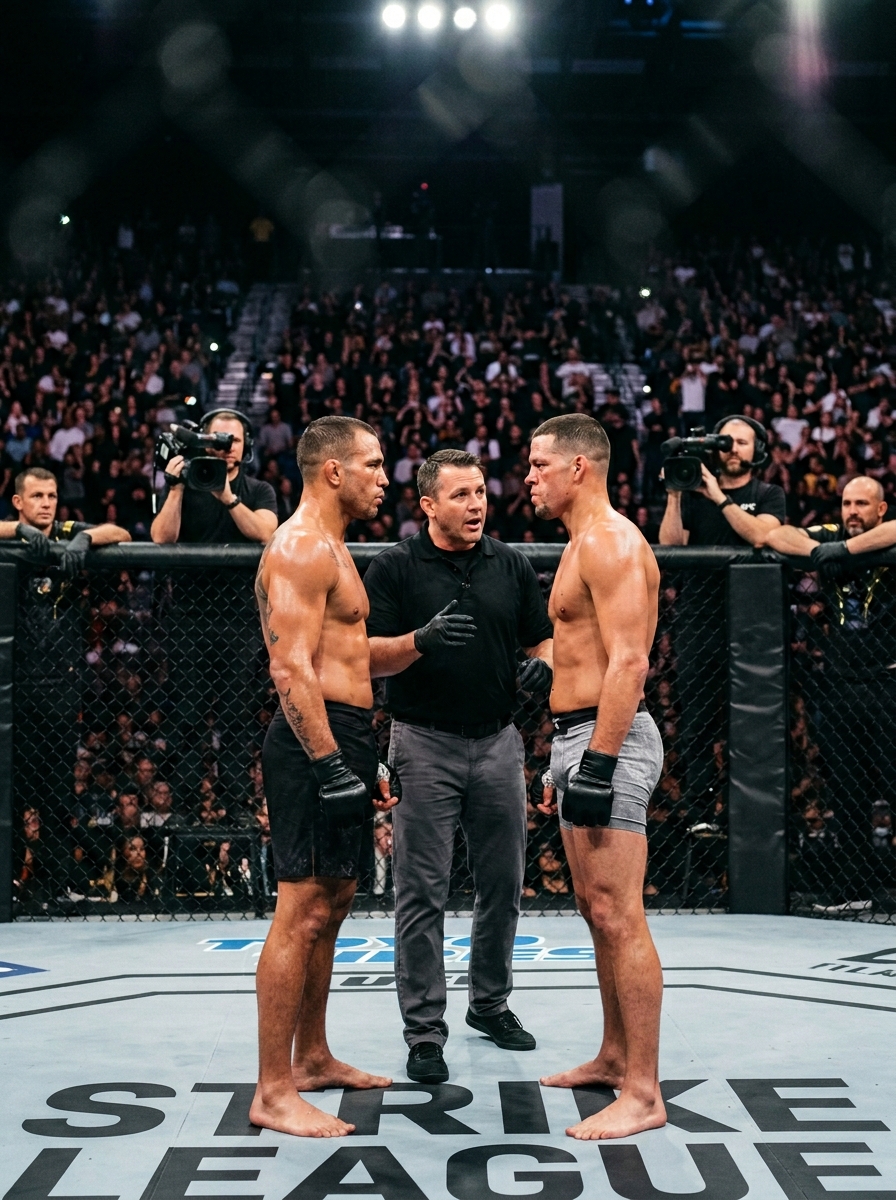
The mental side of MMA is often underestimated. A fighter does not enter the cage with only a body. He or she enters with fear, memory, ego, strategy, financial pressure and public expectation. The walkout can be as revealing as the fight itself. Some athletes smile. Some stare at the floor. Some look as if they are already fighting before the door closes. Behind the performance is a private battle: controlling adrenaline, avoiding panic, trusting training and accepting the possibility of pain in front of millions of people.
This psychological burden does not end when the fight is over. A knockout loss can alter a career and a self-image. A submission defeat can force an athlete to question years of preparation. A controversial judges’ decision can affect rankings, income and future opportunities. Fighters must manage victory as well as defeat. Fame can bring sponsorships, but it can also bring distraction, social media abuse and pressure to perform a public personality rather than a private discipline.
Training for modern MMA reflects that complexity. The old image of fighters simply sparring hard every day no longer describes elite preparation. A serious camp may include striking sessions, wrestling drills, jiu-jitsu rounds, strength and conditioning, sprint work, mobility training, film study, nutrition planning, weight management, recovery, physiotherapy and psychological coaching. The UFC Performance Institute describes its work in terms of technical skill development, performance nutrition, sports medicine, strength and conditioning, sport science, technology and mental coaching. MMA has become a laboratory sport as much as a fighting sport.
The best fighters train not only to become more dangerous, but to become more efficient. They learn when not to waste energy. They learn how to breathe during clinches, how to stand up without exposing the neck, how to cut off the cage, how to feint without overcommitting and how to hide injury during a fight. They study opponents’ habits: which way a fighter circles, when a jab drops, how a wrestler sets up entries, whether a champion fades in later rounds. At the elite level, instinct is built through thousands of rehearsed decisions.
Weight cutting remains one of the sport’s most controversial routines. Fighters compete in weight classes, but many reduce weight sharply before weigh-ins and then rehydrate before the bout. Supporters say weight classes are necessary for fairness. Critics say extreme cutting can damage health and may make athletes more vulnerable during competition. Promotions and commissions have improved medical oversight in many jurisdictions, but the tension remains: fighters seek every advantage, and the body pays for shortcuts.
The debate around safety is unavoidable. MMA is regulated under rules that define legal techniques, fouls, round lengths, judging criteria, gloves, weight classes and medical requirements. Referees can stop fights. Doctors can examine cuts or injuries. Athletic commissions can issue medical suspensions. Anti-doping programs aim to protect fair competition and athlete health. These systems make the sport more organized than its early critics often acknowledge.
But regulation does not remove risk. MMA is a full-contact combat sport in which strikes to the head are legal and, in many situations, strategically central. Concussions, facial injuries, broken bones, joint damage, cuts and long-term neurological concerns are part of the safety conversation. Medical experts in combat sports have argued that concussion management must be especially strict because head contact is not accidental; it is one of the possible objectives of competition. That reality separates MMA from many other sports where head impacts are incidental.
The strongest defenders of MMA point out that the sport has clear rules, referees, medical checks and fewer prolonged standing counts than boxing. A fighter knocked down can be submitted, controlled on the ground or stopped quickly by the referee. Grappling also creates ways to win without repeated head trauma. These are serious arguments. MMA is not simply uncontrolled violence. It is a regulated sport with trained athletes and evolving safety systems.
The strongest critics respond that the central problem remains unsolved: the brain is not built to absorb repeated blows. Even when a fight is legal and professionally supervised, damage can accumulate in training and competition. Sparring rounds may be invisible to the public, yet they can contribute to long-term risk. A fighter’s toughness, celebrated by fans and promoters, can become dangerous if it encourages athletes to hide symptoms, rush recovery or accept fights while compromised.
The future of MMA will depend partly on how honestly it confronts that tension. The sport cannot pretend to be safe in the same way as non-contact competition. It also cannot be dismissed as primitive spectacle. Its athletes are highly skilled, disciplined and strategic. The real question is whether the industry can continue growing while improving medical transparency, concussion protocols, weight-cutting safeguards, fighter education, recovery standards and long-term health support.
Commercially, the UFC has already proven the global appetite for modern combat sports. Parent company TKO reported UFC revenue of about 1.5 billion dollars in 2025, reflecting the promotion’s power across media rights, live events, sponsorships and licensing. The UFC sells more than fights. It sells stories: the undefeated champion, the comeback veteran, the fearless underdog, the rivalry, the rematch, the late replacement, the fighter carrying a nation’s flag.
That storytelling is why MMA has become so effective in the social media era. A knockout clip can circle the world in minutes. A weigh-in staredown can become a meme. A fighter’s post-fight interview can build a title shot. Fans do not follow only records; they follow arcs. The cage becomes the stage, but the drama begins weeks before and continues long after.
The rise of the UFC shows that modern audiences are drawn to sports that feel immediate, dangerous and emotionally legible. MMA offers a rare combination of technical sophistication and primal clarity. One person faces another, and preparation meets consequence. Yet the same qualities that make it compelling also make it ethically complicated.
The sport’s next chapter will not be defined only by bigger arenas or richer media deals. It will be defined by whether combat sports can protect fighters more seriously while preserving the competitive essence that made them compelling. MMA has already won mainstream attention. Its greater challenge now is to prove that growth, spectacle and responsibility can exist inside the same cage.
“””
