
From heatwaves and floods to wildfires and cold snaps, climate shocks are no longer distant disasters but forces changing how people work, travel, eat, insure homes and plan for the future.
The first months of 2026 offered a sharp reminder that extreme weather is no longer an occasional interruption to ordinary life. It is becoming part of the structure of daily life itself. Across continents, people began the year facing dangerous heat, severe cold, heavy rainfall, flooding and wildfires. For governments, businesses and households, the question is no longer whether extreme weather will arrive, but how often, how severely and how prepared communities will be when it does.
The World Meteorological Organization said the opening weeks of 2026 were marked by extreme heat, cold, precipitation and fires that imposed heavy economic, environmental and human costs. January was the fifth-warmest January on record globally, even as parts of the Northern Hemisphere experienced severe cold waves. This contrast is important. A warming planet does not remove winter storms or cold spells. Instead, it adds volatility to systems that people once assumed were more predictable.
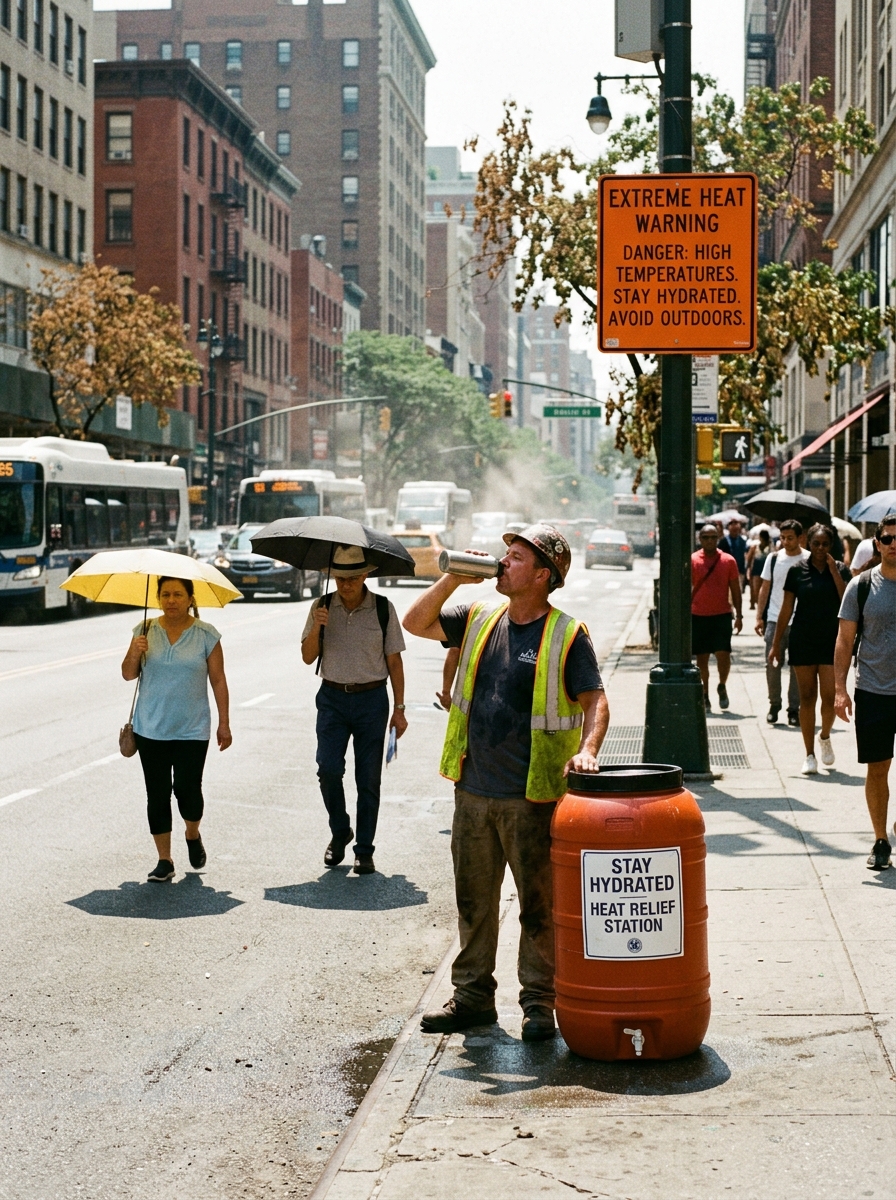
Heat is one of the clearest ways extreme weather is changing life. In Australia, large areas faced two January heatwaves, with the town of Ceduna in South Australia reaching 49.5 degrees Celsius on Jan. 26, a record for that location. Temperatures above 45 degrees were recorded in several other areas. Such heat changes the rhythm of cities and rural communities. Construction workers start earlier or stop altogether. Outdoor sports are cancelled. Schools reconsider activities. Elderly people, children, pregnant women and outdoor laborers face higher health risks. Hospitals prepare for dehydration, heat exhaustion and cardiovascular stress.
Heat also changes economics. Electricity demand rises as households and businesses rely on air conditioning. Families with low incomes may be forced to choose between cooling and other expenses. Farmers face heat stress in crops and livestock. Roads, railways and power systems can strain under temperatures for which they were not designed. In many places, heat has become a workplace safety issue, a public health issue and an inequality issue at the same time.
Wildfires show another side of the same pressure. In Chile, deadly fires burned across the Biobío and Ñuble regions, forcing tens of thousands of people to evacuate, destroying hundreds of structures and killing at least 21 people. In southern Argentina, high temperatures, drought and strong winds helped fuel fires in Patagonia. Fire is not only a rural threat. Smoke can travel far from flames, worsening air quality in cities, disrupting schools, closing airports and increasing respiratory problems. Tourism regions can lose entire seasons. Families may survive evacuation but return to homes, documents, farms and memories turned to ash.
Fire risk also changes how people think about housing and insurance. In fire-prone areas, the value of a home increasingly depends not only on location and design, but on defensible space, building materials, evacuation access and whether insurance remains available or affordable. Governments face growing pressure to manage forests, improve alerts, plan evacuation routes and stop development in high-risk zones. For residents, climate risk is becoming a factor in where to live.
Heavy rainfall and flooding are transforming life in a different way. WMO reported that Mozambique was among the worst-hit countries after weeks of downpours overwhelmed rivers and reservoirs. Flooding affected at least 650,000 people, displaced hundreds of thousands and damaged or destroyed at least 30,000 homes. Crops were destroyed, livestock killed and health officials faced increased concern about cholera and other water-borne diseases. In flood disasters, the damage does not end when the water recedes. Mud remains. Wells are contaminated. Schools become shelters. Roads disappear. Clinics lose access. Families lose income before they can even begin rebuilding.
Floods are particularly destructive because they expose weaknesses in planning. Homes built on floodplains, drainage systems blocked by waste, roads without proper culverts and settlements near unstable slopes all become danger points. A heavy rainfall event becomes a disaster when it meets vulnerable infrastructure and poverty. That is why adaptation is not only about weather forecasts. It is about land-use rules, housing policy, drainage investment, emergency shelters, public communication and social protection.
Cold waves and winter storms are also reshaping daily life, even in a warming climate. WMO noted that a weakened and distorted polar vortex helped push Arctic air into mid-latitudes, contributing to cold snaps in North America, Europe and Asia. A winter storm in late January crossed much of Canada and the United States, bringing snow, sleet, freezing rain, dangerous cold, flight cancellations, power outages and deaths. In Russia’s Kamchatka Peninsula, more than two meters of snow fell in the first two weeks of January after heavy December snowfall. In Aomori, Japan, snow depth reached 1.7 meters on Feb. 3, the most in 40 years.
These events show why resilience must cover both heat and cold. Power grids must withstand air-conditioning peaks and winter heating surges. Airports and railways need plans for heat buckling, wildfire smoke, ice and floods. Hospitals must prepare for heatstroke one month and hypothermia the next. Households must think beyond seasonal expectations. Extreme weather increasingly punishes systems built around old assumptions.
Food is one of the most direct channels through which weather enters daily life. Heat, drought, floods and storms can reduce yields, damage storage, block transport and raise prices. When crops are destroyed in one region, the effect may be felt in markets far away. Livestock losses reduce rural income. Flooded roads delay food distribution. Extreme heat can reduce labor productivity during planting and harvest. For families, climate disruption often appears first as higher grocery bills.
Water security is another growing concern. Too little rain brings drought, crop failure and wildfire risk. Too much rain brings flooding, contamination and disease. Cities must now prepare for both scarcity and excess. Reservoirs, drainage channels, wastewater systems and early warning networks are becoming as important to modern life as roads and power lines. The old division between environmental policy and urban planning is disappearing.
Extreme weather is also changing migration and family decisions. Some people move temporarily after floods or fires. Others leave permanently when rebuilding becomes impossible or when insurance and livelihoods disappear. Children may lose school months. Workers may move to cities after farms fail. Elderly people may become trapped in unsafe homes during heatwaves, storms or floods. Climate pressure does not always create dramatic border crossings. Often, it begins as quiet displacement within countries, from one district to another, from rural life to informal urban housing, from stability to uncertainty.
The insurance industry is becoming one of the clearest indicators of climate stress. As disasters become more frequent or costly, premiums rise and coverage narrows. In some high-risk areas, households may struggle to obtain affordable protection at all. This changes the meaning of property ownership. A house can no longer be judged only by size, location and price. It must be judged by flood maps, fire exposure, drainage, elevation and emergency access. Climate risk is becoming financial risk.
There is also a psychological cost. Living under repeated weather alerts can create fatigue. Families in fire zones watch wind forecasts with anxiety. Flood-prone communities track rainfall totals like medical readings. Farmers look at the sky with less trust. Parents wonder whether children can safely walk to school during heat, smoke or storms. Disaster preparedness is necessary, but constant preparedness can be emotionally exhausting.
Yet the first months of 2026 also show that lives can be saved when warnings work. WMO has emphasized the importance of accurate forecasts and early warning systems, noting that disaster-related deaths are much lower in countries with good early warning coverage. The challenge is to make warnings useful to everyone, not only those with smartphones, cars, savings and safe housing. A warning is only effective if people understand it, trust it and have somewhere safe to go.
The lesson from early 2026 is not simply that the weather is becoming more extreme. It is that modern society is being forced to reorganize around climate risk. Work hours, building codes, school calendars, hospital planning, insurance pricing, farming choices, emergency alerts and household budgets are all being reshaped. Extreme weather is no longer only a scientific issue or an environmental concern. It is a daily-life issue.
The world cannot prevent every heatwave, flood, fire or storm. But it can reduce the damage. That means stronger early warning systems, better urban drainage, heat-health plans, fire-safe land management, climate-resilient agriculture, safer housing and public communication that reaches the most vulnerable. The events of early 2026 are a warning, but also a test. The communities that adapt fastest will not avoid extreme weather. They will suffer less when it comes.
“””
