
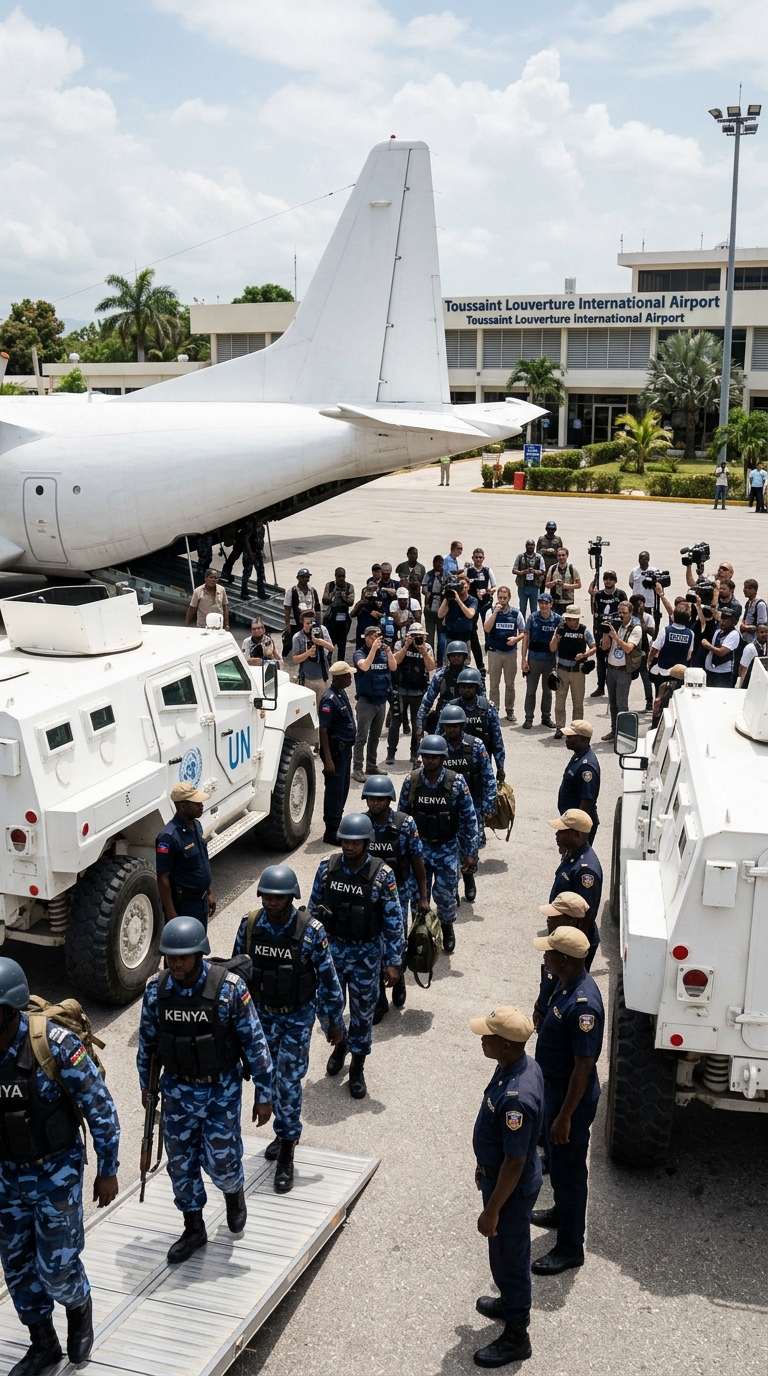
The deployment is intended to confront armed gangs, but restoring public trust may prove as difficult as retaking streets.
The arrival of a new international force in Haiti marks another attempt to confront a security collapse that has pushed the country toward deeper humanitarian and political crisis.
The United Nations-backed deployment is intended to replace and expand earlier efforts that struggled with limited personnel, funding and equipment. The mission comes as armed gangs continue to control large parts of Port-au-Prince and key transport routes, disrupting food supplies, health care, schools and government functions.
Haiti’s crisis is not only a policing problem. It is a breakdown of public authority. Gangs have filled spaces where the state has been absent or distrusted. They control roads, extort communities, attack neighborhoods and influence access to basic services. Many families have fled repeatedly, moving from one unsafe district to another.
The new force is expected to have stronger powers, including authority to detain suspected gang members. Supporters say this is necessary because previous missions lacked the scale and mandate to change conditions on the ground. Critics warn that outside interventions in Haiti have a troubled history and must avoid abuses, corruption or political manipulation.
For residents, the test will be practical. Can children return to school? Can markets reopen? Can hospitals receive supplies? Can people cross the city without paying armed groups? Security is meaningful only if it changes ordinary life.
Human rights officials say any operation must protect civilians and address impunity. Heavy-handed raids that produce civilian casualties could deepen fear and anger. At the same time, failure to act would leave communities under gang rule.
The political timetable remains uncertain. Haiti needs elections, but elections require security, voter registration, functioning institutions and public confidence. Holding a vote under coercion would risk legitimizing instability rather than ending it.
Humanitarian needs are severe. Displacement, hunger, sexual violence and health system collapse are all part of the crisis. Aid organizations face the same roadblocks and threats as civilians. Without secure access, even well-funded relief cannot reach the people most at risk.
The mission’s success will depend on funding, troop commitments, coordination with Haitian police and clear accountability. Announcements are easier than sustained operations in neighborhoods where gangs know the terrain and civilians fear retaliation.
Haiti has heard many promises before. This time, the stakes are immediate. A security force can help open space, but rebuilding the state will require justice, jobs, services and political legitimacy.
The first troops may signal a new phase. They do not guarantee a solution. Haiti’s future will be decided not only by who carries weapons, but by whether citizens can again believe that public authority exists to protect them.
“””
