
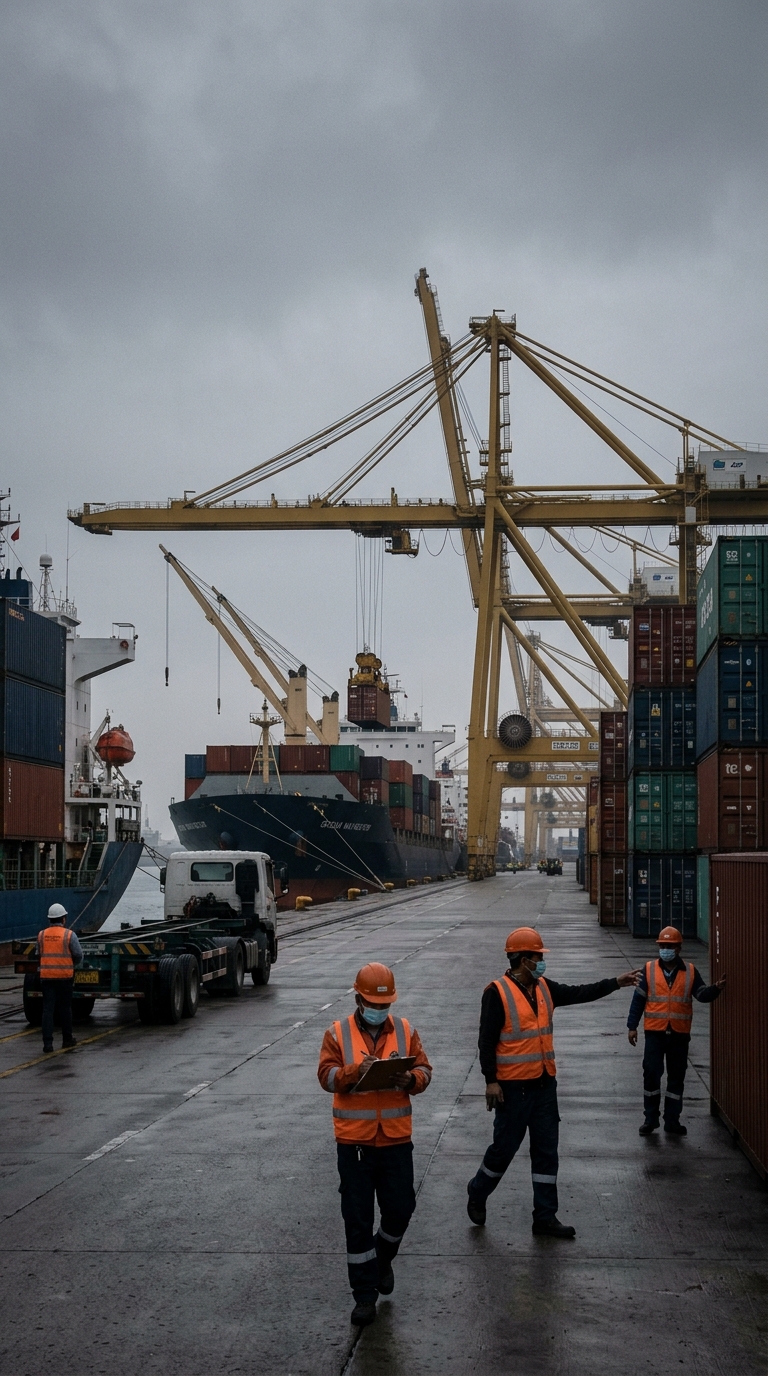
After a stronger year for commerce, governments and businesses now face a trading system shaped by tariffs, conflict risks and shifting supply chains.
Global trade is entering a more cautious phase.
UNCTAD says trade growth is expected to slow considerably in 2026, weighed down by geopolitical uncertainty, inflationary pressure and rising trade costs. The World Trade Organization has also projected weaker merchandise trade growth after a stronger performance in 2025.
For businesses, the slowdown is not only about demand. It is about uncertainty. Companies must decide where to source parts, how much inventory to hold, which markets to prioritize and whether tariffs or political tensions could change the economics of a deal overnight.
Supply chains have become more political. Governments increasingly view semiconductors, batteries, food, medicines and critical minerals through the lens of national security. That shift may make economies more resilient in some areas, but it also raises costs and complicates global production.
Developing countries face a difficult landscape. Many depend on exports to drive jobs and foreign currency earnings. Slower trade growth can reduce revenue, weaken investment and make debt harder to manage. At the same time, shifting supply chains can create opportunities for countries able to attract manufacturing and logistics investment.
Services trade remains an important source of strength, especially in digital services, travel, finance and professional work. But services cannot fully offset disruptions in goods for countries heavily dependent on commodities or manufacturing exports.
The politics of trade have also changed. Voters in many countries are skeptical of open markets if they associate trade with job losses, insecurity or foreign dependence. Governments now face pressure to protect domestic industries while avoiding retaliation that could hurt exporters.
Ports, shipping firms and logistics companies are watching conflict zones closely. A disruption in a major waterway or energy route can quickly affect freight rates, delivery times and insurance costs. Trade routes are efficient when they are predictable. The current environment is anything but.
Some companies are responding by diversifying suppliers, nearshoring production or holding more stock. These strategies reduce certain risks but often increase costs. The era of ultra-lean global supply chains is giving way to a more expensive model built around resilience.
The challenge for policymakers is to prevent fragmentation from becoming permanent. Trade rules, dispute settlement and transparency matter more when trust is low. Without credible rules, powerful countries can bend trade systems to their advantage while smaller economies absorb the shock.
Trade will not stop. Goods will still move, contracts will still be signed and consumers will still buy products assembled across borders. But the mood has shifted.
Globalization is no longer judged only by efficiency. It is being judged by security, fairness and political durability.
“””
