
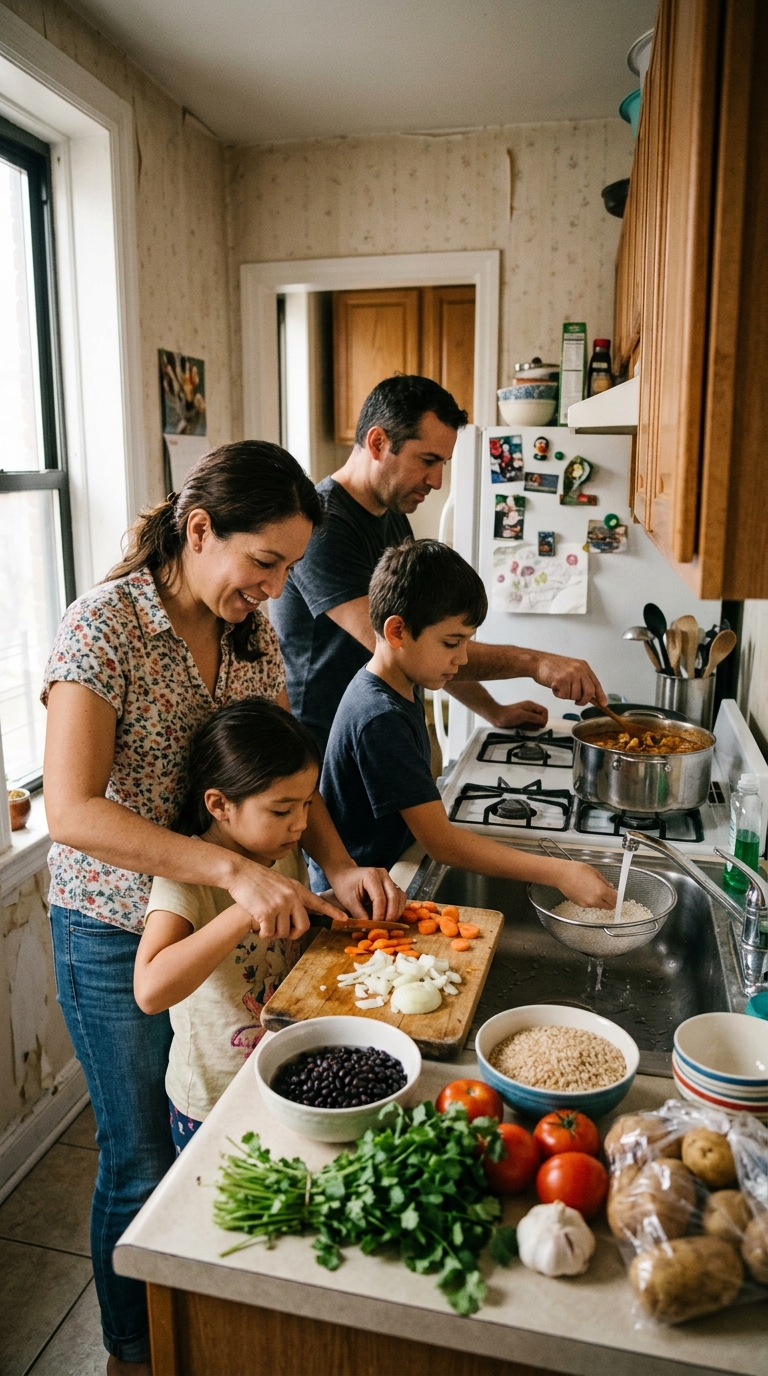
In an age of delivery apps and processed food, the kitchen is being rediscovered as a place of health, culture and economic control.
Home cooking is making a quiet return in many households, not as nostalgia but as adaptation. Rising food costs, health concerns and fatigue with ultra-convenience have pushed people back toward kitchens that were once treated as too slow for modern life.
The World Health Organization says a healthy diet depends on balanced, diverse foods and notes that many people consume too much salt, sugar and unhealthy fat while not eating enough fruits, vegetables and fiber. Those recommendations may sound simple, but they collide with the realities of daily life: long work hours, small kitchens, food deserts, advertising and the emotional exhaustion of planning meals.
For years, convenience shaped eating habits. Ready meals, delivery platforms and packaged snacks promised time saved. They still serve an important role for busy families and people with limited cooking facilities. But convenience can carry hidden costs: higher sodium, larger portions, more packaging and less control over ingredients.
The renewed interest in home cooking is not only about nutrition. It is about agency. Cooking allows people to stretch budgets, preserve family traditions, reduce waste and choose what goes into a meal. In uncertain economic times, the kitchen becomes a site of resilience.
Social media has helped and complicated the trend. Short cooking videos can teach simple techniques and make unfamiliar ingredients approachable. They can also turn meals into performances, making ordinary home cooking look inadequate. Many people do not need restaurant-style plating. They need reliable, affordable meals after a long day.
The most sustainable cooking habits tend to be modest. Batch cooking, freezing leftovers, using seasonal produce, learning a few flexible sauces and building meals around grains, legumes, vegetables and affordable proteins can reduce stress. A person does not need to become a chef to eat better.
Cultural identity is central. Food advice often fails when it treats healthy eating as one universal plate. Real diets are shaped by rice, bread, maize, noodles, beans, spices, religious rules, family memories and local markets. Public health messages work better when they adapt to existing food cultures rather than replacing them.
Time remains the biggest barrier. Many households are run by adults who work full time and still carry unpaid care responsibilities. Telling people to cook more without addressing work schedules, wages and child care can sound like blame. Home cooking is easier when life leaves enough energy for it.
Gender roles also matter. The return to cooking should not mean returning all responsibility to women. In many families, equitable cooking requires men, children and older relatives to share planning, shopping, preparation and cleanup. A healthy kitchen is not only about ingredients. It is about labor.
Cities can support better eating through markets, school meals, community kitchens and safe public spaces. Rural communities may need infrastructure that protects local food systems and reduces dependence on expensive packaged products. Food policy is lifestyle policy.
Restaurants and delivery services also have a role. Transparent menus, healthier defaults and reasonable portion sizes can support people who cannot cook every meal. The future is not home cooking versus eating out. It is giving people better options across the food environment.
The emotional value of cooking should not be overlooked. Preparing food can be stressful, but it can also be grounding. Chopping vegetables, stirring soup or sharing a meal creates a rhythm that many people miss in screen-heavy lives. The table remains one of the few places where families and friends can pause together.
The revival of home cooking is not a rejection of modern convenience. It is a search for balance in a food system that often rewards speed over nourishment. The kitchen, once seen as a symbol of domestic burden, is being reimagined as a practical space for health, culture and control.
“””
