
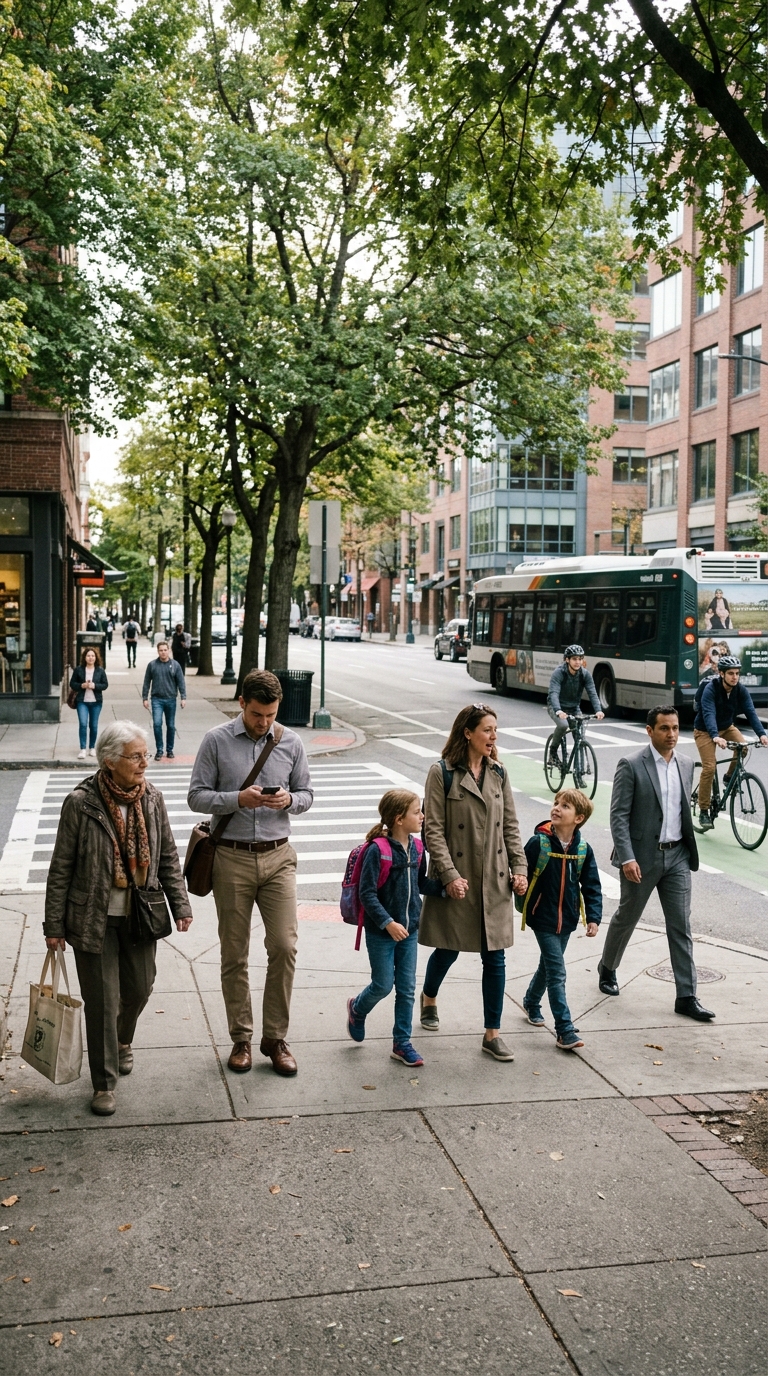
As cities rethink health and mobility, the simplest form of movement is becoming a symbol of independence, sustainability and everyday well-being.
Walking requires no membership, equipment or special identity. Yet in many modern cities, it has become harder than it should be. Wide roads, unsafe crossings, long commutes, heat, pollution and car-centered planning have pushed walking to the margins of daily life.
That is changing. Urban planners, doctors and residents are rediscovering walking as one of the most practical lifestyle interventions available. The World Health Organization identifies physical activity as essential for health and warns that inactivity contributes to disease burden worldwide. Walking is not the only answer, but it is one of the most accessible.
The appeal is partly medical. Regular movement supports cardiovascular health, mental well-being, mobility and weight management. It can reduce sedentary time without requiring people to enter a gym. For older adults, walking can help maintain independence. For children, walking to school can build confidence and routine.
But walking is also social. A walk through a neighborhood reveals what driving hides: shopkeepers opening doors, children waiting for buses, older residents sitting outside, trees that give shade and sidewalks that disappear. Walking turns the city from a route into a place.
The lifestyle trend has taken different forms. Some people schedule “hot girl walks,” walking meetings or evening family walks. Others use step counters or join community walking groups. In dense cities, residents are demanding safer crossings, wider sidewalks and lower speed limits. In suburban areas, walking is often a test of whether neighborhoods were designed for people or cars.
The barriers are real. In some places, walking is unsafe because of traffic or crime. In others, it is uncomfortable because of extreme heat, poor lighting or lack of benches. A doctor can advise daily walking, but a neighborhood must make that advice possible.
The rise of remote work has changed walking habits. Some people lost their daily commute and with it the incidental movement of reaching stations, offices and lunch spots. Others gained flexibility to walk during daylight. The challenge is building movement back into days that have become more stationary.
Walking is also being promoted as a mental health practice. The rhythm of movement, exposure to daylight and temporary separation from screens can reduce stress. Many people say conversations feel easier side by side than face to face. A walk can become informal therapy, though it does not replace professional care when needed.
Economic inequality shapes access. Wealthier districts often have parks, shade, clean sidewalks and traffic calming. Poorer neighborhoods may face broken pavements, dangerous roads and fewer green spaces. A walking lifestyle therefore depends on public investment, not just personal motivation.
Climate policy adds another dimension. Walking reduces dependence on cars for short trips when cities make it safe and convenient. Combined with cycling and public transport, it can lower emissions and improve air quality. But sustainable mobility cannot rely on moral appeals alone. People choose walking when routes are useful, safe and pleasant.
Businesses are adapting. Retail districts with walkable streets often attract customers who linger. Employers experiment with walking meetings. Tourism boards promote cities best explored on foot. At the same time, commercialization risks turning walking into another branded wellness product when its strength is simplicity.
Public health experts argue that movement should be built into daily life rather than added as another obligation. Stairs that are visible, parks that are nearby, transit stops that are accessible and streets that protect pedestrians all make activity easier.
Walking will not solve every health problem. It cannot replace medical care, safe housing or nutritious food. But it can reconnect lifestyle with place. It reminds people that health is not only found in clinics and apps. It is also shaped by the design of the street outside the front door.
In a fast-moving world, walking is a slow act with broad consequences. It gives the body motion, the mind space and the city a human scale.
“””
