
Smooth acceleration, correct tire pressure, regular maintenance and lighter loads can help motorists cut fuel use, reduce costs and extend vehicle life.
For millions of drivers, fuel economy is not an abstract environmental issue but a daily household expense. The price at the pump can rise quickly, commutes can grow longer, and small driving habits repeated every morning and evening can quietly determine how much money leaves a family budget each month. Yet many of the most effective ways to save fuel do not require advanced technology, expensive modifications or a new vehicle. They begin with how a driver uses the accelerator, how often the tires are checked, whether the car is serviced on schedule and how much unnecessary weight is carried from place to place.
Automotive engineers and driving instructors often point to one basic principle: a vehicle uses the least fuel when it moves efficiently and predictably. Sudden acceleration, hard braking and constant changes in speed force the engine to work harder than necessary. In daily traffic, especially in cities where vehicles often stop and start, aggressive driving can burn significantly more fuel without producing meaningful time savings. A smoother approach usually costs nothing and can begin on the next trip.
Steady throttle control is one of the simplest habits to develop. Instead of pressing the accelerator sharply after a traffic light turns green, drivers can apply gradual pressure and allow the vehicle to build speed at a measured pace. This does not mean driving too slowly or disrupting traffic. It means avoiding unnecessary bursts of power, especially when another stop is visible ahead. A driver who accelerates hard only to brake a few seconds later is turning fuel into heat and noise rather than useful distance.
Maintaining a consistent speed is equally important once the vehicle is moving. On open roads, small fluctuations in speed can increase fuel consumption because the engine must repeatedly adjust to changing demands. Where conditions allow, keeping a steady pace helps the engine operate more efficiently. Cruise control can assist on highways, though drivers should use it only when road, weather and traffic conditions are suitable. In heavy traffic or on slippery roads, attentive manual control remains safer.
Planning ahead in traffic also reduces wasted fuel. Looking farther down the road gives the driver time to lift off the accelerator early when traffic is slowing, rather than braking suddenly at the last moment. Modern vehicles often reduce fuel delivery when the driver eases off the throttle while the car is still in gear, making gentle deceleration more efficient than rushing toward a stop. This habit also reduces wear on brake pads and tires, creating savings beyond fuel alone.
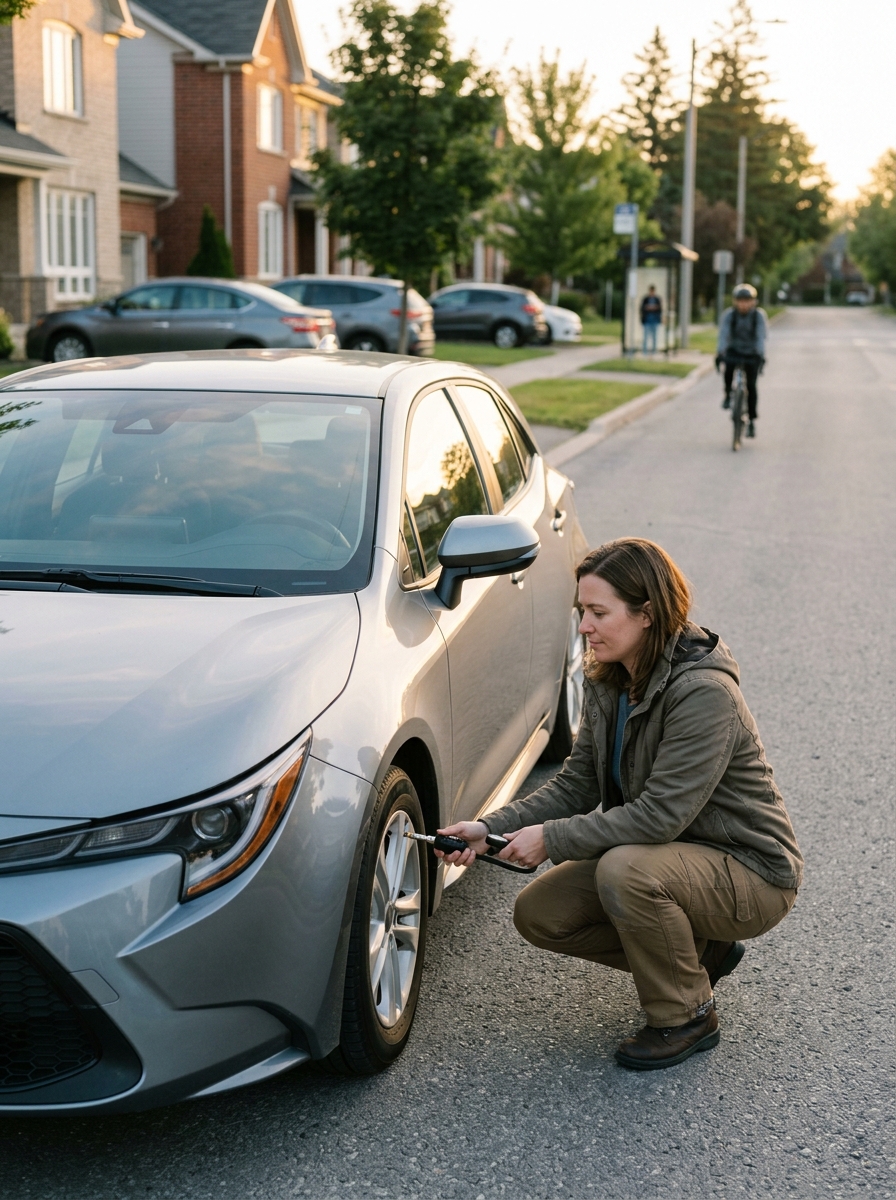
Tires play a less visible but major role in fuel economy. Underinflated tires increase rolling resistance, meaning the engine must work harder to move the same vehicle over the same distance. The effect may feel minor from behind the wheel, but over weeks and months it adds up. Incorrect tire pressure can also reduce handling, lengthen braking distance and cause uneven tire wear. For that reason, checking tire pressure should be treated as a regular safety and cost-saving routine, not an occasional chore.
Drivers should use the pressure recommended by the vehicle manufacturer, usually printed on a sticker inside the driver’s door frame or listed in the owner’s manual. The number on the tire sidewall is typically the maximum pressure for the tire, not the recommended operating pressure for the vehicle. Tire pressure should be checked when tires are cold, before a long trip or after the vehicle has been parked for several hours. Heat from driving can temporarily increase pressure readings and give a misleading result.
Regular maintenance is another practical route to better fuel economy. An engine that is running properly burns fuel more efficiently, while neglected components can gradually increase consumption. Oil changes, air filter replacement, spark plug inspection, fuel system checks and timely attention to warning lights all help keep the vehicle operating as designed. A driver may not notice a small decline in efficiency from one week to the next, but delayed maintenance can turn small problems into expensive repairs.
Using the correct engine oil also matters. Manufacturers specify oil grades for a reason, balancing lubrication, temperature performance and engine design. Oil that is too thick or unsuitable for the engine can increase internal resistance, making the engine work harder. Following the owner’s manual and service schedule is generally more reliable than relying on guesswork or outdated habits.
Air conditioning and electrical accessories can also influence fuel use, though the effect varies by vehicle and driving condition. In hot climates, using air conditioning may be necessary for comfort and safety, especially during long trips or when carrying children or elderly passengers. But setting the system to an extremely low temperature, running it at maximum power unnecessarily or cooling an overheated cabin without first ventilating it can increase engine load. A practical approach is to open windows briefly before driving to release trapped heat, then use air conditioning at a moderate setting.
At highway speeds, however, driving with windows fully open can create aerodynamic drag that may offset any fuel saved by turning off the air conditioner. The best choice depends on speed, weather and vehicle design. In city driving, open windows at low speed may be reasonable. On faster roads, moderate air conditioning with windows closed is often more efficient and more comfortable.
Excess weight is another overlooked factor. Many vehicles carry items that are rarely needed: old tools, sports equipment, boxes, water containers, roof racks or cargo accessories left in place long after a trip has ended. Every extra kilogram requires energy to move, especially during acceleration. The effect is greater in stop-and-go driving, where the vehicle repeatedly starts from rest. Removing unnecessary items from the trunk or cargo area is a simple fuel-saving step that also improves organization and safety.
Roof racks, cargo boxes and poorly secured external loads can reduce efficiency even when they are empty. They disturb airflow around the vehicle and increase drag, particularly at higher speeds. Drivers who use roof equipment for travel, work or recreation should remove it when it is no longer needed. The savings may seem small for one trip, but daily driving magnifies small inefficiencies.
Avoiding overload is also a safety issue. Vehicles are designed with maximum load limits that account for passengers, cargo and equipment. Carrying too much weight can strain the engine, suspension, brakes and tires. It can make the vehicle harder to control, especially during emergency maneuvers or on steep roads. Fuel economy should not be the only reason to respect load limits; safe handling and braking are more important.
Route planning can further reduce fuel use. The shortest route is not always the most efficient if it involves heavy congestion, repeated stops or steep climbs. A slightly longer road with smoother traffic may consume less fuel and reduce stress. Drivers who know their daily commute can identify patterns: which intersections cause long idling, which roads become crowded at certain times, and whether leaving a few minutes earlier or later avoids peak traffic. Reducing idle time is particularly useful because a stationary vehicle with the engine running is using fuel while traveling nowhere.
For short errands, combining trips can also help. A cold engine typically uses more fuel than one that has reached operating temperature. Several separate short trips from a cold start may consume more fuel than one planned route covering the same tasks. Grouping errands, sharing rides when practical or walking for very short distances can reduce fuel use while saving time.
Good fuel economy depends as much on attitude as technique. Drivers who view the road as a place to compete often accelerate harder, brake later and react more abruptly. Drivers who treat movement as a sequence of decisions tend to conserve momentum, anticipate traffic and reduce mechanical strain. The calmer style is usually safer, more comfortable for passengers and less expensive over time.
The shift does not require perfection. A driver can begin by checking tire pressure once a month, removing unnecessary cargo, following the maintenance schedule and practicing smoother acceleration. Over time, these habits become automatic. The vehicle feels less strained, trips become more predictable, and fuel stops may become less frequent.
In an era of rising living costs and growing concern over emissions, daily fuel savings offer a rare advantage: they benefit the driver immediately while also reducing waste. The most effective changes are often the least dramatic. Press the accelerator more gently. Look farther ahead. Keep the tires properly inflated. Service the vehicle before small faults become large ones. Carry only what is needed. For everyday motorists, efficiency is not a single device or a marketing promise. It is a routine built one careful kilometer at a time.
“””
