
Artificial intelligence, interactive television, virtual reality, livestreaming and personalized feeds are changing entertainment from a fixed broadcast product into a flexible experience shaped around each viewer.
The future of global entertainment will not be defined by one screen, one format or one schedule. It will be shaped by a deeper shift in the relationship between audiences and content. For decades, entertainment programs were designed as finished products: a variety show, a talent contest, a reality series or a live event was produced, scheduled and delivered to viewers at the same time. The audience watched, reacted and moved on. That model is not disappearing, but it is being surrounded by a new ecosystem in which viewers expect to participate, comment, remix, personalize and sometimes influence what happens next.
Artificial intelligence is likely to be the most disruptive force in this transformation. In the near future, AI will not simply help platforms recommend shows. It will help producers plan formats, test audience interest, translate programs, generate trailers, edit highlights, create visual effects and build localized versions for different markets. A global entertainment show may still have one central concept, but AI can help adapt its pacing, subtitles, promotional clips and companion content for viewers in Seoul, São Paulo, Lagos, Bangkok or Los Angeles.
For production companies, AI promises speed and scale. A talent show can be clipped into dozens of short videos within minutes. A livestream can be automatically summarized for viewers who missed it. A reality program can generate personalized recaps focused on a viewer’s favorite contestant. Translation and dubbing tools can reduce the time between a domestic hit and its international release. This means that entertainment formats may travel faster than before, reaching global audiences while online conversation is still active.
But AI also raises difficult questions. Viewers may enjoy faster, smarter and more relevant content, but they may also become suspicious of what is real. If a host’s voice can be translated perfectly, if a contestant’s image can be altered, or if a dramatic trailer can be assembled by an algorithm, audiences will demand clearer rules about authenticity. Entertainment companies will need to show when AI is being used and where human creativity remains central. The future will reward not only technological innovation, but trust.
Interactive television will also evolve. Earlier experiments allowed viewers to choose storylines or vote during live broadcasts. The next generation is likely to be more subtle and more continuous. Audiences may influence camera angles during concerts, select which contestant feed to follow during a reality show, vote on challenges in real time, or unlock alternate scenes after an episode. The boundary between a television program and a game will become less clear.
This does not mean every show will become interactive. Many viewers still want to sit back and watch a carefully edited story. The strongest entertainment companies will understand that interaction must serve emotion, not distract from it. A survival competition, for example, could let viewers explore behind-the-scenes maps, contestant diaries or live statistics without changing the core result. A music show could allow fans to follow backstage rehearsals before the main performance. Interactivity works best when it deepens attachment rather than turning every moment into a gimmick.
Virtual reality and mixed reality will add another layer. For years, VR has promised to transform entertainment but has struggled to become a daily habit for mainstream audiences. Hardware remains expensive for many consumers, and wearing a headset is still less convenient than watching on a phone or television. Yet the direction is clear: immersive entertainment will grow where it offers something ordinary screens cannot. Concerts, sports, travel programs, game shows and fan events are especially suited to this shift.
A viewer may one day watch a global talent final from a virtual front-row seat, stand inside a digital reconstruction of a historical drama, or join friends in a shared virtual room during a live comedy show. Mixed reality could bring performers into the living room as holographic-style figures, or turn a cooking competition into an interactive lesson on the viewer’s kitchen counter. The most successful uses will not ask audiences to abandon traditional viewing entirely. They will offer premium layers for fans who want deeper immersion.
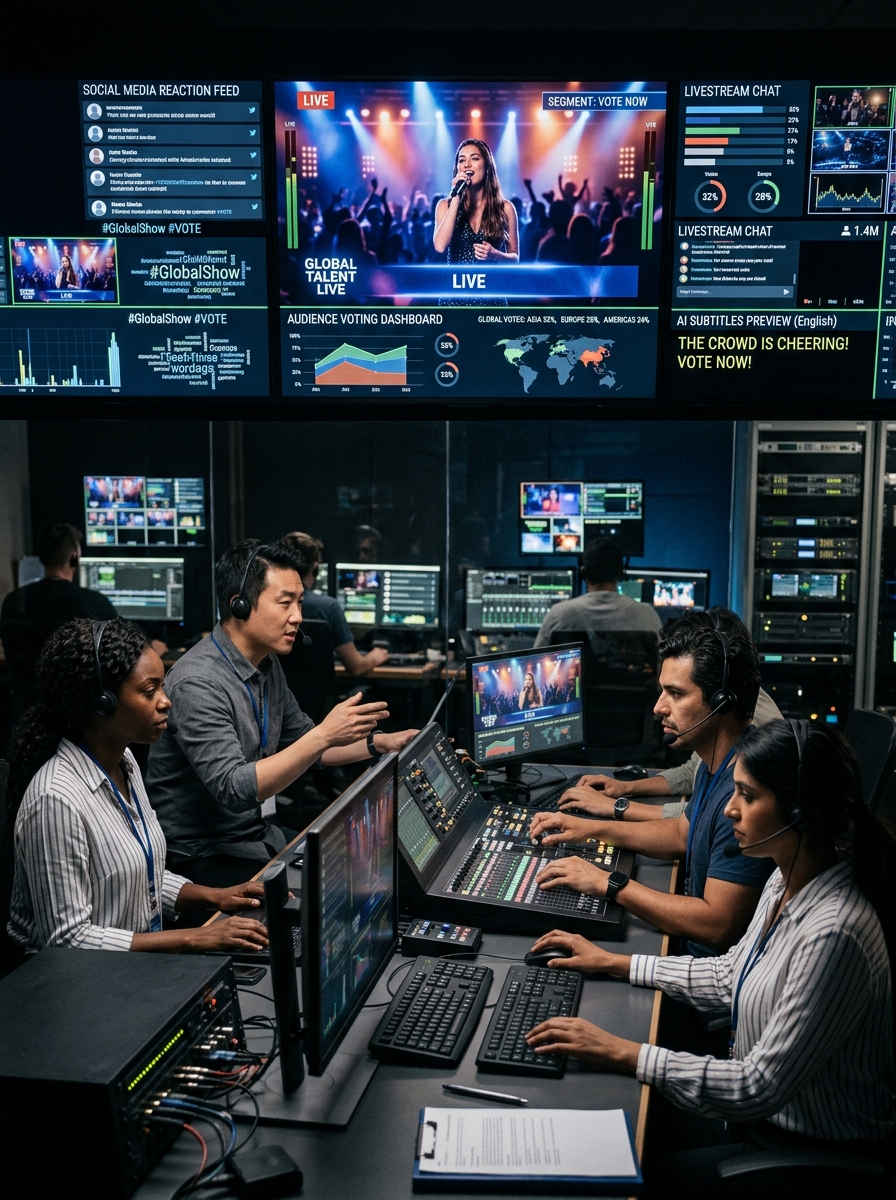
Livestreaming is already changing expectations faster than VR. Audiences, especially younger viewers, have grown comfortable with entertainment that happens in real time and feels less polished. Livestreams create urgency. Anything can happen, and viewers know they are present at the same moment as everyone else. That shared timing gives live content a power that on-demand libraries often lack.
The future of entertainment will likely combine the discipline of professional television with the directness of creator livestreaming. Major shows will increasingly include live aftershows, backstage streams, fan question sessions, real-time voting and creator-led commentary. A talent competition may no longer end when the broadcast ends. Contestants can continue streaming rehearsals, reactions and personal updates throughout the week, keeping audiences emotionally invested between episodes.
This is also why global entertainment is moving from “subscribers” to “communities.” A viewer who merely watches a program is valuable, but a fan who comments, shares clips, buys merchandise, joins livestreams and follows cast members across platforms is far more valuable. Entertainment companies are learning that the show is only the center of a wider fan universe. Around it are podcasts, short videos, memes, livestreams, games, concerts, social accounts and offline events.
Personalization will be the invisible engine behind much of this change. Platforms already recommend programs based on viewing habits, but future personalization will become more detailed. Two viewers may watch the same entertainment franchise but receive different trailers, episode reminders, recap styles and suggested clips. One may be shown emotional storylines, another comedy moments, another competition highlights. A viewer who likes one contestant may receive more content about that person, while another viewer may see a broader team-focused narrative.
This approach can make entertainment feel more relevant, but it also has risks. Excessive personalization can trap viewers in narrow taste zones, reducing the surprise that once came from shared broadcast culture. If every person receives a different version of entertainment, the public conversation may become more fragmented. The challenge for platforms will be to personalize discovery without destroying the common experience that makes global hits feel global.
The business model will change with it. Advertising will become more targeted, sponsorships more integrated and live commerce more common. A cooking show may sell ingredients during the episode. A fashion competition may allow viewers to buy outfits immediately. A music program may connect livestream performances with digital collectibles, fan memberships or exclusive virtual meet-and-greets. Entertainment will increasingly blend viewing, shopping, gaming and social interaction.
Creators will also gain more influence. Traditional studios and broadcasters once controlled access to global audiences. Now individual creators can build international fan bases from phones, livestreams and short-form video platforms. The future will not simply be a battle between old television and new media. It will be a merger. Broadcasters will borrow creator culture’s speed and intimacy, while creators will borrow television’s production values, narrative structure and brand partnerships.
For audiences, the result will be more choice and more pressure. Viewers will have access to entertainment in many forms: full episodes, short clips, livestreams, VR events, interactive voting, AI summaries and fan-made remixes. But abundance can become exhausting. When everything is available at once, attention becomes the rarest resource. The winners will be programs that create emotional clarity in a crowded environment. Viewers may try new technologies, but they will stay for characters, stakes, humor, music, conflict and surprise.
The future of entertainment will therefore be both high-tech and deeply human. AI can recommend a show, but it cannot replace the thrill of a live performance. VR can create immersion, but it must still give people a reason to care. Livestreaming can create immediacy, but it needs personality and tension. Personalization can bring content closer to the viewer, but shared emotion remains the foundation of popular culture.
Global entertainment is moving toward a world where a program is no longer a single broadcast. It is a living system: watched on television, discussed on social media, extended through livestreams, adapted by AI, personalized by platforms and possibly experienced in immersive spaces. The screen will not disappear. It will multiply.
The central question for the industry is not whether technology will change entertainment. It already has. The question is whether producers can use technology to make audiences feel more connected rather than more manipulated. The programs that define the next decade will not be the ones with the most advanced tools alone. They will be the ones that use those tools to create suspense, intimacy, participation and trust on a global scale.”””
