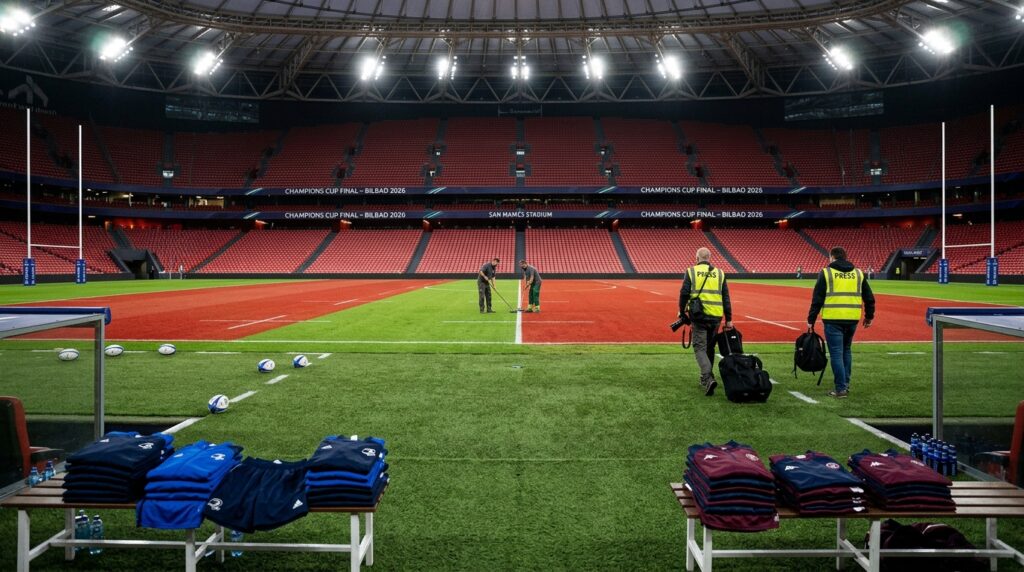
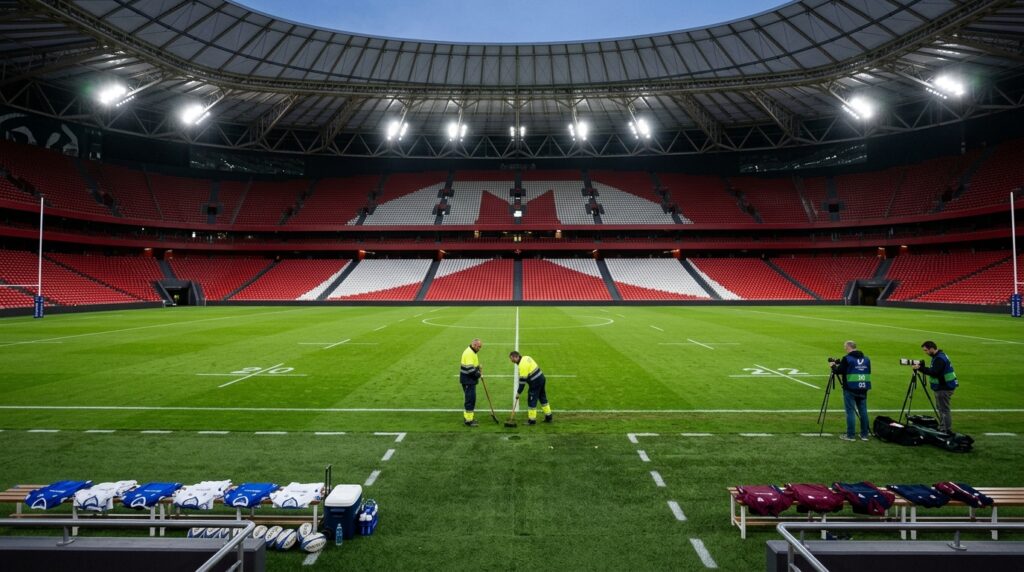
The Irish province will chase a fifth European title against the defending French champions at San Mamés Stadium on May 23.
BILBAO, Spain — Leinster and Union Bordeaux-Bègles will meet in the Investec Champions Cup final on May 23, setting up a heavyweight European club rugby contest between a province seeking to restore its continental dominance and a French side trying to confirm that last season’s breakthrough was the beginning of a longer reign.
The final, to be staged at San Mamés Stadium in Bilbao, brings together two teams with contrasting histories but similar levels of expectation. Leinster have long been one of the standard-bearers of European rugby, a club built around Ireland internationals, academy depth and a tactical identity sharpened over two decades of continental competition. Bordeaux-Bègles, by contrast, have emerged more recently as a defining force, combining the financial strength and weekly intensity of the Top 14 with a backline capable of changing games in minutes.
Their meeting is more than a final between Ireland and France. It is a test of old authority against new power. Leinster are trying to end a run of near misses and add a fifth star to their jersey. Bordeaux-Bègles arrive as defending champions, carrying the confidence of a team that has already learned how to win this competition and now has the chance to retain it.
Leinster booked their place with a 29-25 victory over Toulon at the Aviva Stadium, a match that seemed under control before becoming far more uncomfortable than the Irish side would have wanted. Leo Cullen’s team built a significant lead and scored through familiar sources of forward power and midfield precision, only to face a late Toulon surge that turned the final minutes into a defensive examination. Leinster survived it, but the closing stages served as a warning. Against Bordeaux, control will have to last longer.
The win over Toulon also carried emotional and historical weight. Leinster have repeatedly reached the latter stages of Europe without always finishing the job. Their last Champions Cup triumph came in Bilbao in 2018, when they edged Racing 92 in a tense final at the same stadium that will host this year’s decider. That return gives the venue symbolic force. For supporters, San Mamés is not simply a neutral ground; it is the site of the club’s most recent European coronation and the place where a long wait could end.
Bordeaux-Bègles reached the final by beating Bath 38-26 in a semi-final that showed the strengths that make them so dangerous. They started quickly, punished errors, trusted their half-backs and stretched the English side with pace outside. Maxime Lucu’s control, Matthieu Jalibert’s creativity and the finishing threat of Louis Bielle-Biarrey have become central to Bordeaux’s identity. When they are given front-foot possession, they can make a match feel as if it is moving too quickly for the opposition.
Bath stayed in the contest and created moments of pressure, but Bordeaux were ultimately more clinical. Their ability to score through both structure and instinct remains one of their greatest assets. They can attack from set-piece platforms, counterattack from broken field and pressure teams into chasing the scoreboard. Leinster will know that a few loose exits, missed tackles or soft penalties could become costly very quickly.
The final is likely to be decided by which team controls tempo. Leinster generally prefer to build pressure through phase accuracy, set-piece security, disciplined kicking and relentless defensive line speed. Bordeaux are comfortable playing at pace and can turn imperfect situations into attacking opportunities. If Leinster can slow the ball, dominate territory and force Bordeaux into repeated defensive sets, the Irish province will believe it can squeeze the champions. If Bordeaux can create speed around the ruck and isolate defenders in wider channels, the match could open in ways that favour the French side.
The forward battle will be central. Leinster’s European identity has often been based on breakdown intelligence, maul accuracy and an ability to generate quick ball without losing shape. Bordeaux, however, are not merely a team of backs. Their pack has developed the hardness required to survive in the Top 14 and the European knockout rounds. The collision area, especially after the first two phases, may determine whether Lucu and Jalibert receive the platform they need or whether Leinster can turn the contest into a more controlled territorial struggle.
Discipline will also matter. Finals are often shaped by narrow margins: a yellow card, a scrum penalty, an exit error, a missed touch-finder. Leinster’s semi-final showed both their quality and their vulnerability under pressure. They had enough resilience to withstand Toulon, but the late wobble will not have gone unnoticed. Bordeaux have the attacking range to punish the kind of momentum swing that Toulon nearly turned into a comeback.
For Leinster, the match offers a chance to answer a recurring question. They have remained one of Europe’s most consistent teams, but consistency without the trophy has brought frustration. The province’s supporters have seen deep campaigns end painfully, often against French opposition with power, depth and finishing accuracy. Beating Bordeaux would not erase those disappointments, but it would restore Leinster to the top of Europe and validate a group that has carried the burden of expectation for several seasons.
For Bordeaux-Bègles, the opportunity is different. Retaining the Champions Cup would move them from celebrated winners to a team with a claim to era-defining status. French clubs have increasingly shaped the competition through squad depth, financial resources and the weekly standards of the Top 14. Bordeaux’s rise fits that pattern, but their style gives them a distinctive identity. They are not only powerful; they are expressive, ambitious and willing to attack space early.
The setting adds another layer. Bilbao’s San Mamés, better known as the home of Athletic Club in football, has become an important venue in European rugby’s attempt to expand its major finals beyond traditional markets. The city hosted a memorable finals weekend in 2018, and its return as host underlines the competition’s interest in staging showcase events in destinations capable of drawing travelling supporters from several countries. Leinster fans are expected to travel in large numbers, while Bordeaux supporters will see the trip across the border into Spain as accessible and attractive.
The match will also carry broader significance for European rugby. The Champions Cup has often been framed as a contest among national club cultures: Irish provincial systems, French Top 14 heavyweights, English Premiership challengers and, increasingly, South African franchises adapting to northern competition. A Leinster-Bordeaux final places the two most convincing modern models of European success directly against each other: one rooted in academy continuity and international cohesion, the other in Top 14 scale, recruitment and attacking firepower.
There will be scrutiny around officiating and broadcast support after Bath raised concerns following their semi-final defeat, particularly over replay angles available to match officials. That debate should not overshadow the final, but it reflects how high the stakes have become. At this level, technology, refereeing process and transparency are part of the competitive environment. Both teams will want the outcome decided by rugby rather than controversy.
Tactically, the opening 20 minutes may reveal much. Leinster will try to establish field position, test Bordeaux’s discipline and prevent the French champions from feeding off transition. Bordeaux will look for early rhythm, using Lucu’s management and Jalibert’s vision to find width before Leinster’s defensive line is fully set. The first try may not decide the final, but the first sustained period of control could define its shape.
The individual matchups are compelling, but the deeper question is collective nerve. Leinster know finals can tighten. Bordeaux know champions are hunted differently when they return to the stage. Both sides have enough talent to win. Both have enough experience to manage pressure. The difference may come from which team remains truer to itself when the scoreboard, the crowd and the clock begin to compress decision-making.
For Leinster, Bilbao is a place of memory and unfinished business. For Bordeaux-Bègles, it is a chance to defend a crown and prove that their rise has substance beyond one triumphant season. On May 23, the Champions Cup final will offer a clear answer to one of European rugby’s central questions: whether the old masters can reclaim the summit, or whether the new champions are ready to stay there.”””